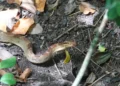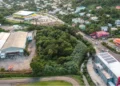















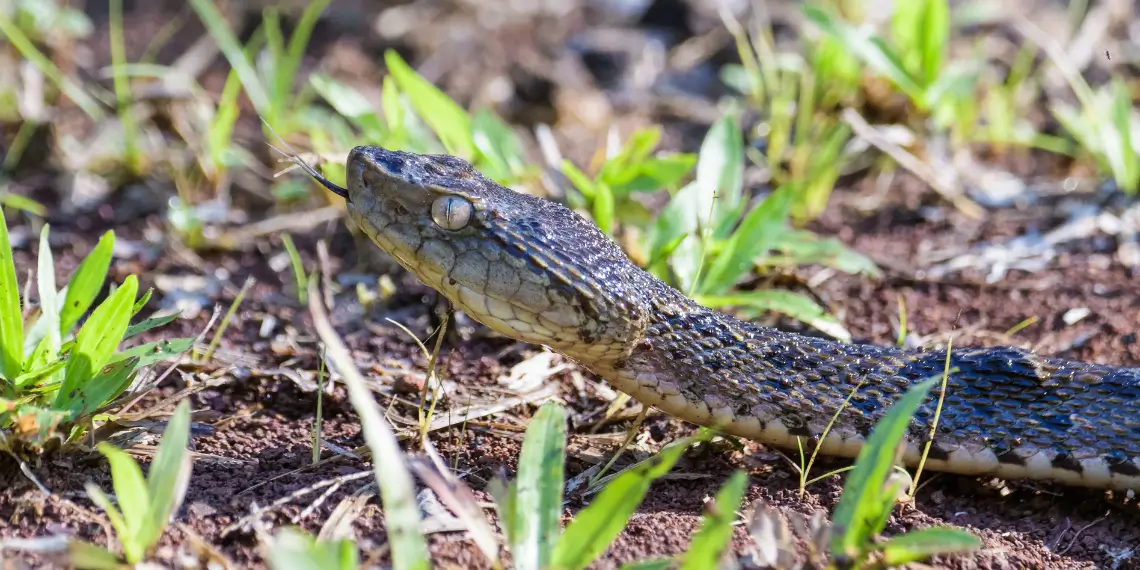
DENNERY, St Lucia — A fatal fer-de-lance attack that claimed the life of Valence Alfred has shaken the Thomazo community in Dennery, where residents say encounters with the venomous snake are increasingly being reported near homes and along routes used by workers and commuters.
Residents said Alfred was bitten on the afternoon of Jan. 20 while working at a house in the area. He later received emergency care at the Owen King European Union Hospital, including antivenom, but died the following day, according to accounts shared in the community.
Timeline of the bite and emergency response
A Thomazo resident identified as Eric said he found Alfred lying near a neighbor’s hedge while Alfred was making his way toward the main road. Eric said Alfred’s face and hand were swollen, and he called for an ambulance after learning Alfred believed he had been bitten by a Saint Lucian fer-de-lance.
Residents said Alfred first felt a sharp sting on his hand while on the job and did not immediately see what caused it. As he checked his surroundings, Alfred reported seeing a large snake lunge toward his face, and residents said he suffered a second bite.
Eric said emergency responders arrived about 20 to 30 minutes after the call. He said a police officer who noticed the situation stopped to assist, and paramedics asked residents to bring water to help rinse the wounds while Alfred was assessed before transport.
Community members said a follow-up check was carried out in the area where the incident occurred, but the snake believed responsible was not found. Residents said three smaller snakes were located during the search.
Prevention concerns after a fatal fer-de-lance attack
In Thomazo, Alfred’s death has heightened anxiety about nighttime movement, yard work, and travel along overgrown paths. Residents said the fear is compounded by reports of snakes appearing closer to homes, including near doorways and in areas where people routinely walk, garden, or store materials.
Residents and small business operators in the community said they want more visible intervention, including sustained outreach on prevention and quicker support when incidents occur. Some residents argue that chemical spraying around properties has been used informally in the past and should be expanded. Others say harsh chemicals could create environmental and health risks, particularly in areas where food crops are grown or where runoff could affect nearby land.
Biologist and reptile specialist Lenn Isidore said St Lucia still lacks comprehensive research on the fer-de-lance’s movement patterns and overall population size. He said that data could help guide practical steps to reduce dangerous contact while preserving a species found nowhere else in the world.
Isidore said one theory is that reduced land clearing and changes in farming activity over time may be influencing habitat conditions and food sources, which can affect where snakes forage. Environmental observers have also raised concerns that disturbances in forested zones, including increased wild pig activity in some areas, may be altering habitat spaces used by wildlife.
Isidore cautioned that harsh chemicals, including Gramoxone, may have long-term environmental consequences, including soil degradation, and could create health concerns if crops are later planted in treated soil. He urged residents to prioritize prevention measures that reduce encounters, including trimming dense vegetation near homes, clearing yards of rocks, coconut husks, wood piles, and discarded sheet metal, and reducing rodents through proper waste disposal, since rats are a key food source for fer-de-lances.
Efforts to confirm whether chemical spraying is being used as a standard approach in forested areas were not answered by the publication. The Forestry Division has indicated it plans a strategy focused on public education and awareness around fer-de-lance safety.
Projects expand as health officials track snakebite cases
Fauna and Flora has announced a Saint Lucia Fer-de-Lance Project being implemented with the Durrell Wildlife Conservation Trust, the Forestry Department and the Ministry of Health. The stated aim is to reduce snakebites while supporting a stable population of the endemic snake and improving public understanding of risk and safety.
Project Coordinator Beana Joseph said community outreach workshops under a broader Access and Benefit-Sharing initiative have trained residents in multiple communities in safe identification and handling practices. Joseph said the wider programme also includes developing policy frameworks to govern any future international research involving St Lucia’s genetic resources, including venom, with provisions intended to protect national control over biological compounds and secure benefit-sharing if commercial applications ever emerge.
Snakebite treatment remains covered under St Lucia’s Universal Health Coverage programme. Since February 2025, seven snakebite victims have been treated, according to SLUHC Director Alisha Eugene-Ford.
For residents in Thomazo, the death has turned a long-standing environmental issue into an urgent public safety concern. Community members said they want practical support that lowers the risk for families and workers now, while longer-term research and conservation planning continue.