














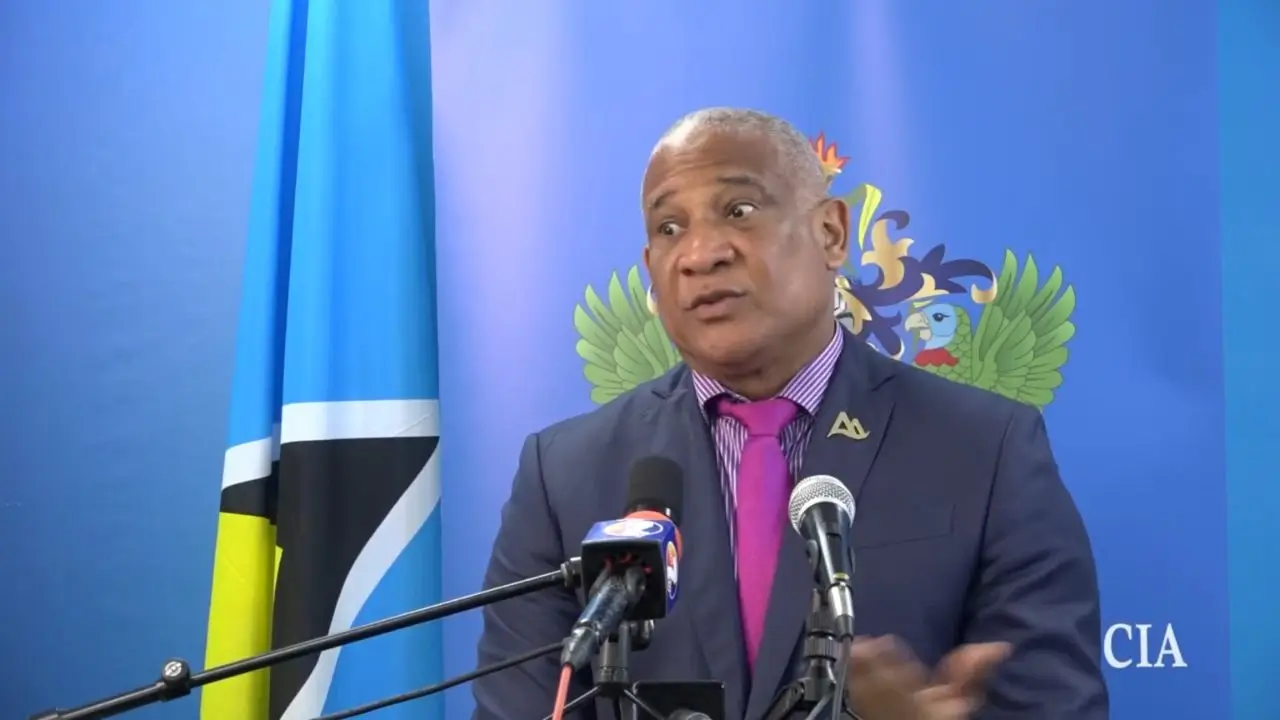
CASTRIES, St Lucia — St Lucia will keep CIP despite concerns, with Investment Minister Dr. Ernest Hilaire reaffirming that the Citizenship by Investment Programme remains central to national development even as international scrutiny and political pressure intensify.
Hilaire, who has responsibility for the programme, said the government will continue operating the initiative while engaging global partners to address regulatory concerns and evolving risks tied to investment migration.
He acknowledged that such programmes carry inherent vulnerabilities but maintained that criminal misuse is not a reflection of the system itself. Individuals who attempt to exploit the programme, he said, are acting independently of its design and safeguards.
Why St Lucia will keep CIP despite global pressure
Hilaire emphasized that the St Lucia CIP relies on internationally recognized due diligence firms based in Europe and the United Kingdom to conduct background checks on applicants.
He noted that no local firms are involved in the vetting process, a measure intended to strengthen transparency and credibility. According to the minister, authorities continue to collaborate with international partners to ensure the programme meets global compliance standards.
The government’s position is also consistent with its broader policy stance. Prime Minister Philip J. Pierre had previously indicated that the administration had no intention of ending the initiative, saying instead that the country would continue refining the programme, as previously reported in Pierre vows the St Lucia CIP Programme will continue.
Hilaire pointed to the government’s past actions in response to international developments as evidence of its willingness to align with global expectations while maintaining operational independence.
Political scrutiny adds pressure to CIP debate
Hilaire’s latest remarks come amid sustained scrutiny over St Lucia’s Citizenship by Investment Programme and his role in defending it, as the initiative continues to draw criticism from political opponents and heightened attention from international partners.
The programme has become a focal point in national debate, with questions raised in recent months about transparency, oversight, and the potential external consequences facing Caribbean countries that operate such schemes. That international dimension sharpened after the UK cited CIP concerns in imposing a new visa rule for St Lucia, adding pressure to the wider conversation about risk, compliance, and external fallout.
While no official findings have determined systemic wrongdoing, the continued scrutiny has elevated the political and economic stakes surrounding the programme, placing Hilaire at the center of a sensitive policy discussion with both domestic and international implications.
CIP revenue seen as essential for development
Despite external pressure, Hilaire made clear that the government views the programme as indispensable to the country’s economic strategy.
He said small island states like St Lucia face limited access to grant funding, making alternative revenue streams necessary to finance infrastructure and public services.
“No one is giving us grants to build our roads, our schools, or our hospitals,” Hilaire said, warning that without sustained investment inflows, national development efforts would be constrained.
The CIP, he added, provides a mechanism to fund key projects and support economic stability, with direct implications for citizens, communities, and public services across the island.
Regional programmes intensify scrutiny and competition
St Lucia operates its programme within a competitive regional landscape that includes Antigua and Barbuda, Dominica, Grenada, and St Kitts and Nevis, all of which have established citizenship by investment initiatives. St Vincent and the Grenadines has also announced plans to introduce its own programme.
This regional expansion has increased both competition for investment and scrutiny from international stakeholders assessing regulatory standards and security safeguards.
Hilaire said that while the government remains open to dialogue with international partners, it will not compromise its responsibility to generate revenue and support national growth.
“We will always be willing to listen and work with our partners to resolve any issues,” he said. “But we have a responsibility to take care of our people and our country, and we will continue to do so.”
He reiterated that the government will continue pursuing legitimate avenues to attract investment, expand trade, and strengthen the economy, with the CIP expected to remain central to those efforts.