






U.S. scrutiny intensifies as Alex Saab resurfaces in the Maduro case
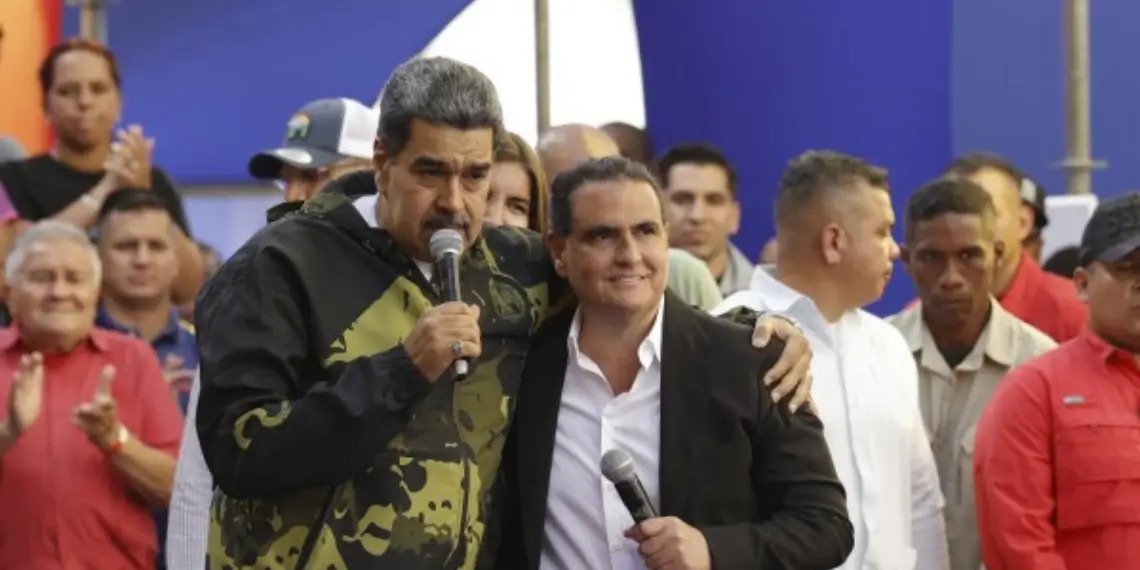
NEW YORK (AP) — Alex Saab resurfaces at the center of renewed global scrutiny as Venezuelan President Nicolás Maduro faces mounting legal pressure in the United States, reviving questions about the shadowy financial operator long described by US authorities as indispensable to the survival of Maduro’s government.
While Saab has been publicly cast by Caracas as a loyal diplomat and political prisoner, investigative reporting and U.S. court records paint a far more complex portrait, one that includes documented meetings with US law enforcement, access to the highest levels of the Venezuelan state, and an alleged role as a financial linchpin in sanctions-era Venezuela.
An investigation by PBS Frontline, produced in collaboration with the Venezuelan investigative outlet Armando Info, details how Saab rose from obscurity to become a central figure in an international corruption scandal and why US authorities ultimately targeted him as a critical pressure point against Maduro.
From unknown contractor to indispensable operator
Saab first drew attention around 2016 and 2017, when Armando Info journalists began uncovering his involvement in lucrative Venezuelan government contracts, including food imports and low-income housing projects. At the time, even seasoned observers in Caracas were asking a simple question: who was Alex Saab, and why did he matter so much?
According to Frontline’s reporting, Saab’s importance became clearer after Maduro’s disputed 2018 reelection, when the United States concluded Venezuela had crossed into authoritarian rule and sharply expanded sanctions. Those sanctions did not halt Venezuela’s oil-dependent economy — but they did force it underground.
US officials concluded Saab filled that gap.
Former US Treasury and Justice Department officials interviewed by Frontline described Saab as a prolific creator of shell companies and cross-border payment schemes, capable of moving vast sums through the international financial system despite restrictions. “The determination was that Nicolás Maduro needed to go,” one former official said in the documentary, “and the way to get to him was through his money people.”
Documented meetings with US investigators
One of the most consequential revelations highlighted by Frontline comes not from speculation, but from sealed and later unsealed U.S. court records.
According to those records, Saab, accompanied by legal counsel, met with special agents from the US Drug Enforcement Administration and the Federal Bureau of Investigation in Bogotá in August 2016 and again in 2017. During those sessions, prosecutors later stated, Saab discussed his companies’ contracts with the Venezuelan government, how payments were made, and how money flowed after funds were received.
In subsequent proceedings, a US judge ordered the unsealing of filings that Saab’s own attorneys argued could put his family at risk if made public. In court, Saab’s defense warned that retaliation could follow if Venezuelan authorities learned the extent of what had been shared.
Frontline reported that those filings fundamentally altered how even seasoned court observers understood Saab, portraying him as a man navigating multiple allegiances while believing he could outmaneuver all sides.
US officials later said Saab was registered as a confidential source, though prosecutors emphasized that cooperation discussions do not automatically shield a defendant from charges. Saab was ultimately charged with money laundering after failing to appear for a scheduled deadline, according to investigators cited in the documentary.
Arrest, extradition and political transformation
Saab’s arrest in Cape Verde in June 2020, while his aircraft refueled en route to Iran, triggered an extraordinary international standoff. U.S. authorities moved swiftly after identifying his flight path, executing a warrant tied to an unsealed indictment.
Only after his arrest did Caracas publicly designate Saab a Venezuelan diplomat, a status US courts later rejected. His extradition to the United States on Oct. 16, 2021, followed prolonged legal battles and intense diplomatic pressure on Cape Verde, which Frontline reported included visible demonstrations of US military interest in the region.
Inside Venezuela, Saab’s profile transformed overnight. Once a behind-the-scenes operator, he became a political symbol, celebrated in murals, poetry, and state media as a revolutionary martyr.
The swap that ended the case
In December 2023, Saab was released from US custody as part of a prisoner exchange that freed multiple Americans held in Venezuela. The deal, quietly negotiated by the Biden administration, ended any prospect of a US trial and stunned many investigators who had spent years building the case.
Frontline reported that while Saab’s return was publicly framed as a victory for Caracas, it also underscored his leverage: Maduro was unwilling to meaningfully engage with Washington without Saab’s release.
Why Saab’s story matters now
With Maduro now confronting US courts, Saab’s story has regained urgency. Investigators and analysts say it illustrates how Venezuela’s leadership navigated sanctions, preserved cash flow and shielded itself through trusted intermediaries operating across jurisdictions.
It also raises enduring questions about accountability. Saab returned home celebrated, while journalists who exposed his dealings remain in exile, and Venezuela’s economic collapse continues to shape regional migration and instability.
As Maduro’s legal fight unfolds, Alex Saab resurfaces not as a footnote, but as a key to understanding how power, money and survival intersected in sanctioned Venezuela.
Continue following Unitedpac St Lucia News for more breaking news and in-depth regional coverage.