
















Prime minister warns Caricom dysfunctional, cites deep divisions and governance failures
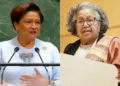
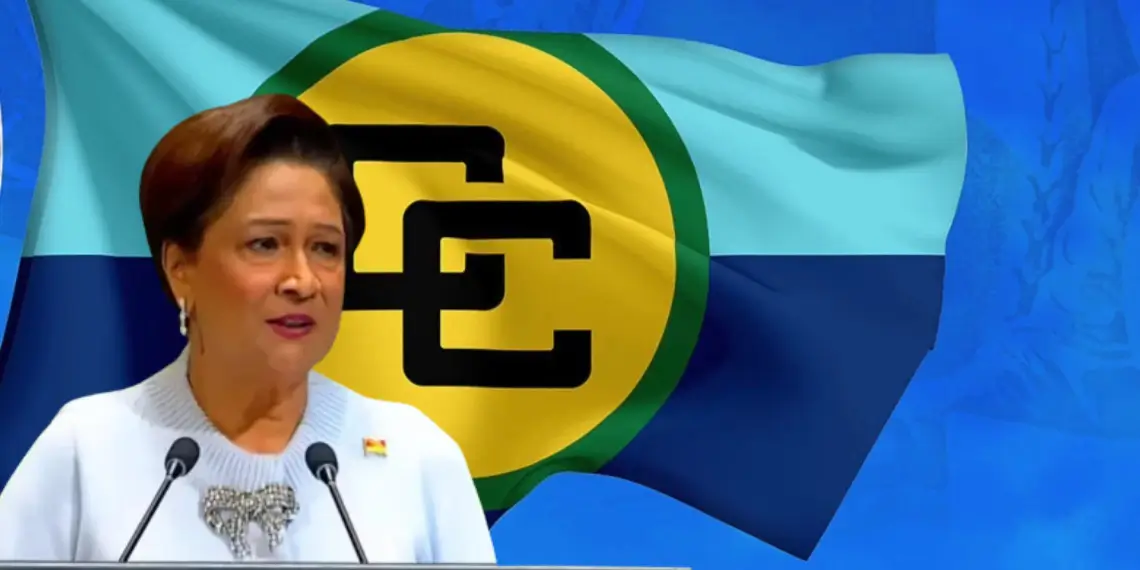
PORT OF SPAIN, Trinidad and Tobago — Trinidad and Tobago Prime Minister Kamla Persad-Bissessar has sharply criticised the Caribbean Community, declaring that the regional organisation is operating in a dysfunctional manner and failing the people it was created to serve.
In a strongly worded media statement issued Tuesday, Persad-Bissessar warned that mounting internal divisions, weak governance, and growing political rifts within Caricom threaten the organisation’s long-term survival. She argued that unless urgent reforms are undertaken, the bloc risks imploding under the weight of its own contradictions.
“Caricom is not a reliable partner at this time,” Persad-Bissessar said, contending that the appearance of regional unity masks deepening fractures. She described an organisation deteriorating rapidly due to what she characterised as poor management, lax accountability, factional disputes, and destabilising policy decisions.
The prime minister also raised concerns about ongoing conflicts between regional leaders and political parties, as well as what she described as inappropriate involvement in the domestic affairs of member states. Those actions, she said, have further eroded trust and cohesion within the regional body.
“That’s the plain truth,” Persad-Bissessar said, adding that the current state of affairs represents a serious disservice to Caribbean citizens who depend on Caricom for regional cooperation, economic coordination, and collective advocacy on the global stage.
Calls for transparency and reform
Persad-Bissessar urged Caribbean leaders to confront what she described as systemic decay within Caricom openly and honestly, rather than relying on diplomatic language to obscure underlying problems.
“The Caribbean community must face the rot within the organisation with transparency and honesty,” she said. “Hiding behind the glibness of diplomacy, fake sophistication, and false narratives is self-defeating.”
Caricom, established in 1973 to promote economic integration and cooperation among Caribbean states, has long faced criticism over slow decision-making and uneven implementation of regional initiatives. However, the prime minister’s remarks represent one of the most direct public rebukes of the organisation by a sitting head of government in recent years.
While she did not outline specific reform measures, her comments are likely to intensify debate over Caricom’s governance structures, leadership effectiveness, and relevance amid shifting geopolitical and economic pressures.
Trinidad and Tobago to pursue national interest
The prime minister made it clear that Trinidad and Tobago would not automatically align itself with the political, foreign, economic or security positions adopted by other Caricom governments.
Instead, she said her administration would chart its own course based on national interest, placing Trinidad and Tobago first in all major policy decisions.
Persad-Bissessar emphasized that decisions taken by her government would reflect the will of the country’s citizens, rather than adherence to regional positions that may conflict with domestic priorities.
Context of U.S. visa restrictions
Her comments followed the release of a fact sheet on Dec. 16 by the United States Government outlining a decision by President Donald Trump to restrict the entry of certain foreign nationals under specific visa categories on national security grounds.
In the aftermath of that announcement, Caricom’s Bureau issued a statement addressing the U.S. decision. Persad-Bissessar clarified that Trinidad and Tobago was not a party to that statement, while acknowledging the Bureau’s right to express its views.
She stressed that the United States, like any sovereign nation, has the authority to act in its own interest and that countries must accept the consequences of the policy choices they make.
“The United States has a sovereign right to make decisions in its own interest,” she said, adding that states must also be prepared to face the international implications of their domestic and foreign policies.
Regional implications
Persad-Bissessar’s remarks are expected to resonate across the Caribbean, where questions about Caricom’s effectiveness and unity have grown louder in recent years. Her warning of potential collapse underscores mounting frustration among some regional leaders over the bloc’s ability to respond decisively to economic uncertainty, security threats, and external diplomatic pressure.
While stopping short of calling for withdrawal from Caricom, the prime minister’s statement signals a more assertive and nationally focused approach to regional engagement under her administration.
She concluded by reaffirming that Trinidad and Tobago’s future would be determined by its people, not by regional positions that undermine national interests.
For continued coverage of Caribbean politics and breaking regional developments, continue following Unitedpac St Lucia News.