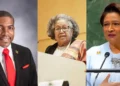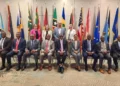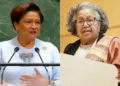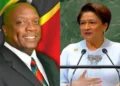
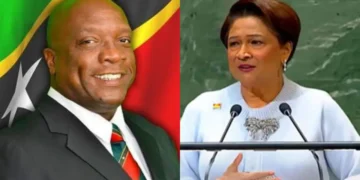
















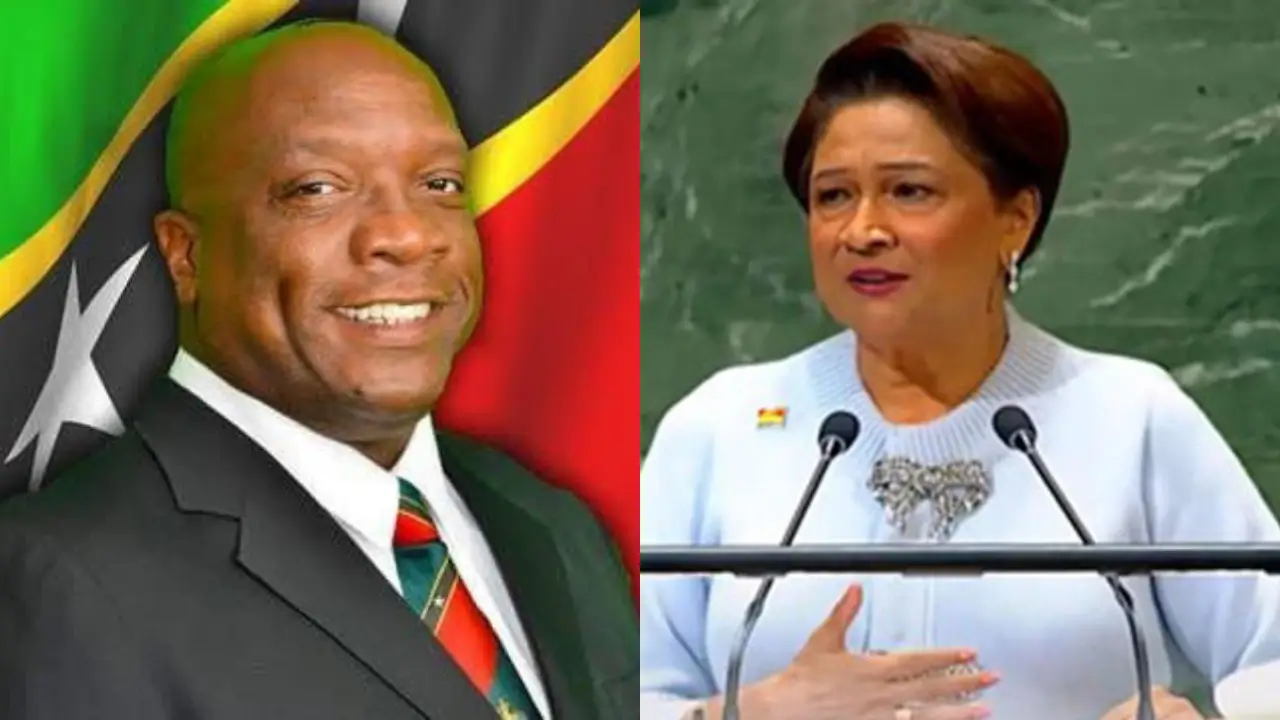
BASSETERRE, St Kitts and Nevis — The CARICOM Secretary-General dispute has deepened, with former regional chairman Timothy Harris backing Trinidad and Tobago Prime Minister Kamla Persad-Bissessar and warning that the reappointment of Carla Barnett risked undermining transparency and trust within the regional bloc.
Timothy Harris, who served as prime minister of St Kitts and Nevis from 2015 to 2022 and chaired CARICOM in 2019, said the decision to grant Carla Barnett a second consecutive term was “clearly impugned” by reported procedural irregularities and a break with best practice.
CARICOM Secretary-General dispute exposes process failures
At the center of the dispute is whether all regional leaders were properly consulted before the decision was finalized. Harris said Persad-Bissessar should have been engaged directly, even if she was absent from the meeting where the reappointment was agreed.
“In this modern era of teleconferencing and virtual technology, that should have been easy to undertake,” Harris said, arguing that a matter of such importance required full participation by heads of government. He said the appointment of a Secretary-General should have been a clearly stated agenda item and that the nominee should have been known in advance so member states could determine their positions.
The latest intervention adds weight to objections already raised by Port of Spain. In earlier reporting on Trinidad and Tobago’s challenge to the process, Unitedpac St Lucia News detailed concerns over whether the appointment complied with proper CARICOM procedures and whether all relevant officials were given the opportunity to participate.
Harris said current CARICOM chair Dr. Terrance Drew should have ensured that Persad-Bissessar was consulted after her absence from the meeting in Nevis. He also argued that Trinidad and Tobago Foreign Affairs Minister Sean Sobers should have been allowed to participate in the session where the decision on Barnett was taken.
Transparency concerns raise wider governance questions
Harris called it “outright wrong” that Sobers was not permitted to attend, noting that heads of government often participate in only part of major international meetings while foreign ministers remain engaged on substantive issues. He said that in many cases, ministers are positioned nearby to advise leaders as needed during deliberations.
He also questioned whether Barnett’s first five-year term had been properly assessed before her reappointment. Harris said there should have been a formal performance appraisal to establish the basis for awarding a second term.
“What is the basis for her reappointment? Performance appraisals are standard. There should have been a review of her scorecard,” he said.
Drew, in correspondence this week, said he had attempted to reach Persad-Bissessar and other leaders to inform them of the decision after it was taken. Unitedpac St Lucia News previously outlined Drew’s defense of the retreat process and the dispute over Barnett’s reappointment, which presented the position of the current CARICOM chair as scrutiny intensified.
Fallout widens as Harris backs Kamla’s challenge
Harris said Persad-Bissessar “is doing CARICOM a favour by exposing the stealth, secrecy and deliberate lack of transparency in the process,” adding that the situation “cannot be normalised.” He said the Trinidad and Tobago government should continue to publicly challenge what he described as an “odious and surreptitious approach to governance.”
His remarks deepen a controversy that has already triggered broader regional debate over accountability, consultation, and institutional legitimacy. In previous coverage of the backlash surrounding Barnett’s reappointment, Unitedpac St Lucia News examined how the dispute threatened to widen divisions within CARICOM and raise fresh questions about confidence in the bloc’s internal decision-making.
Harris declined to comment directly on Barnett’s performance. The Jamaica Gleaner, however, recently editorialised that Barnett “has not interpreted her mandate or fashioned her leadership as a transformative force.”
The growing CARICOM Secretary-General dispute now places renewed scrutiny on how major regional decisions are made, with implications not only for Barnett’s second term but for confidence in the bloc’s governance at a time when coordinated leadership remains critical across the Caribbean.