














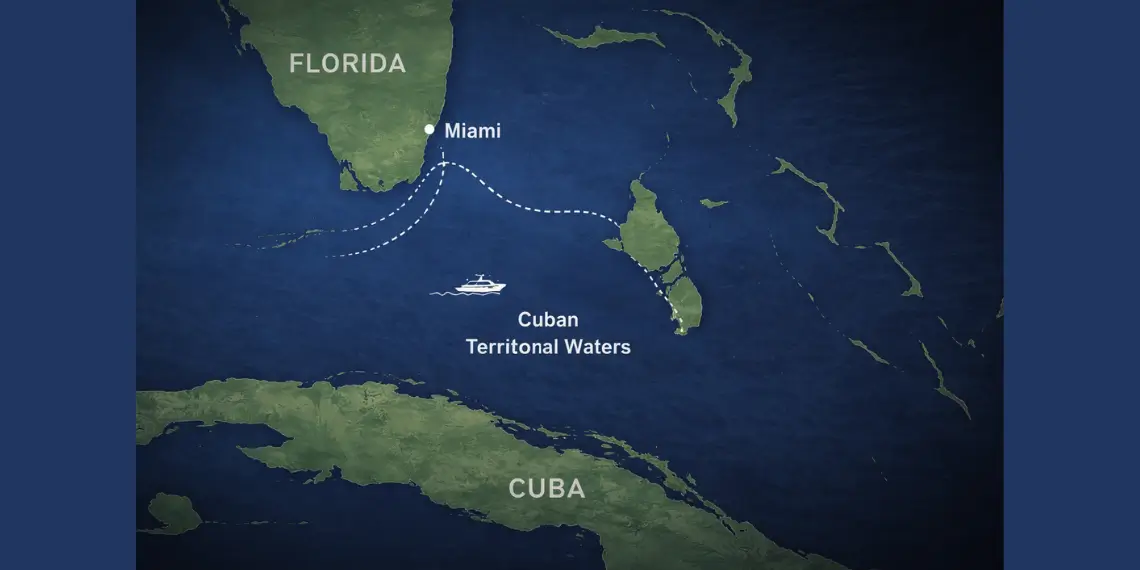
WASHINGTON — A Cuban border guard shooting left four people dead and six others injured after Cuban troops opened fire on a speedboat that Cuban officials said was detected in Cuba’s territorial waters, according to details first reported in an ABC News video segment.
The broadcast said the vessel was registered in Florida and described as being about a mile from Cuba. The report also said it could not confirm whether any of the victims were Americans, noting it was using the term “American speedboat” to describe the vessel, not the nationality of those aboard.
Cuban officials, as quoted in the segment, alleged the speedboat fired first on a Cuban boat, a claim the broadcast treated as unverified, as more information was still coming in.
What is known and what remains unconfirmed
The ABC segment reported the toll as four dead and six injured, and the discussion emphasized that identities and nationalities had not been confirmed at the time of the broadcast.
No details were provided in the transcript about who owned the vessel, who was traveling on it, or why it was operating near Cuba. The segment also did not include independent confirmation of where the shooting occurred relative to Cuba’s maritime boundary.
Where the Cuban border guard shooting occurred remains unclear
Retired U.S. Navy Capt. Steve Ganyard, introduced in the segment as a contributor and retired colonel, said the incident’s significance would depend on whether the boat was inside or outside Cuba’s 12-nautical-mile territorial limit.
Ganyard said if the boat was within 12 miles, it would fall within what he described as Cuba’s sovereign territory at sea, raising questions about why the speedboat was there. He said if the encounter occurred outside that limit, it would be “very different” and could become a major diplomatic incident.
He urged caution with early reporting, saying more details were needed to determine how close the boats were and to assess competing claims about what happened first.
The report surfaced amid long-running tensions between Washington and Havana, with CARICOM leaders often engaged on regional fallout tied to sanctions and migration.