









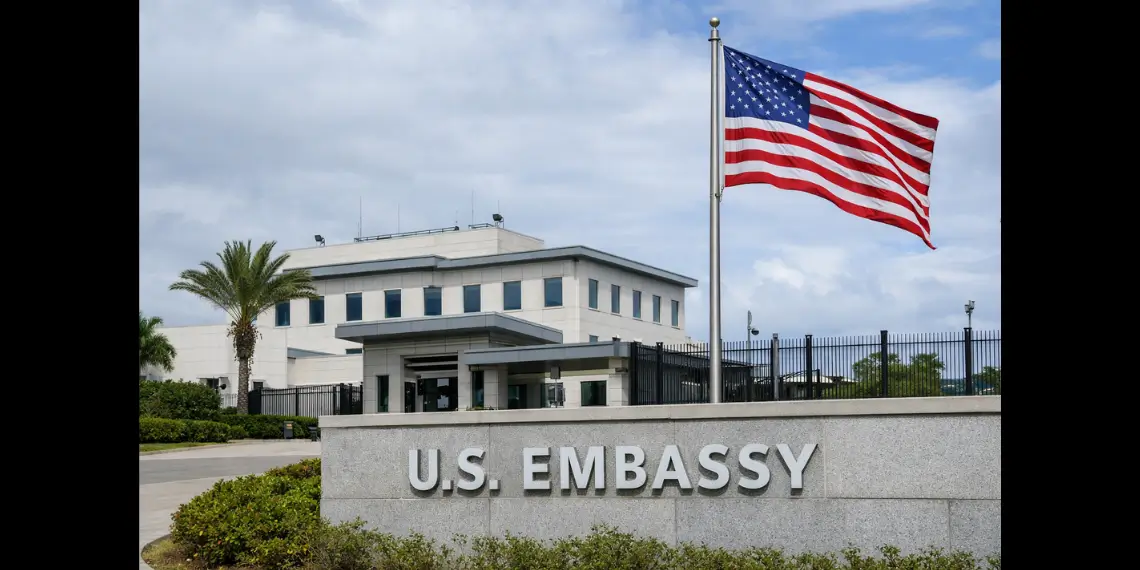
US Embassy Bridgetown cites costs and labor concerns in Cuban medical program
BRIDGETOWN, Barbados — The US Embassy in Bridgetown has issued a blunt public condemnation of Cuba’s overseas medical program in the Caribbean, describing it as an expensive and ethically problematic arrangement that places significant financial strain on participating countries while allegedly denying medical professionals fair compensation for their work.
In a statement published on its official social media platforms, the embassy rejected claims that the Cuban medical program is a humanitarian gift to the region. Instead, US officials said Caribbean governments pay high fees to the Cuban government to secure doctors and nurses, often more than they pay their own locally employed medical professionals, making the program a taxpayer-funded commercial arrangement.
“Across the Caribbean, nations pay the Cuban government high fees to rent medical professionals,” the embassy stated, adding that the program “is not a gift from Cuba to the people of the Caribbean.”
According to the US Embassy Bridgetown, payments for Cuban medical personnel are frequently made directly to the Cuban government rather than to the doctors themselves. The embassy claimed that between 80 and 95 percent of the salaries paid on behalf of these workers are retained by the Cuban state, leaving doctors with only a fraction of what host countries are charged for their services.
US officials said this structure results in substantial costs for Caribbean governments, sometimes exceeding what they spend on domestically trained doctors. The embassy argued that this raises serious concerns about value for money, particularly for small island states already under pressure to manage limited health care budgets.
Beyond the financial implications, the embassy characterized the Cuban medical program as a “modern-day forced labor scheme,” asserting that the payment arrangement undermines basic labor rights and human dignity. The statement said the program comes at a high cost “not only financially, but also in terms of basic human dignity and morality.”
Visual material shared alongside the embassy’s statement included testimony attributed to Cuban medical workers abroad, indicating that doctors received only a small percentage of what host governments paid for their services, with the remainder going to the Cuban government. The embassy cited these accounts as part of its broader critique of the program’s labor practices.
For decades, Cuban doctors, nurses, and specialists have played a prominent role in Caribbean health systems, particularly in countries facing persistent shortages of medical personnel. The program expanded during public health emergencies, including the COVID-19 pandemic, when Cuban medical teams were deployed across the region.
Caribbean governments have historically defended their participation in the program, citing access to trained professionals, cost considerations, and longstanding diplomatic ties with Cuba. Cuban authorities have consistently rejected allegations of exploitation, maintaining that participation in overseas medical missions is voluntary and that the revenues support Cuba’s domestic public health system.
The US Embassy Bridgetown said the United States “stands with those affected” and will continue efforts to bring an end to what it described as exploitative labor practices linked to the Cuban government. The statement did not outline new policy measures but reaffirmed Washington’s position on the structure of Cuba’s overseas medical deployments.
The embassy’s comments align with broader US actions targeting Cuban overseas labor arrangements, including visa restrictions imposed on individuals linked to such programs in parts of the Caribbean and Africa.