



















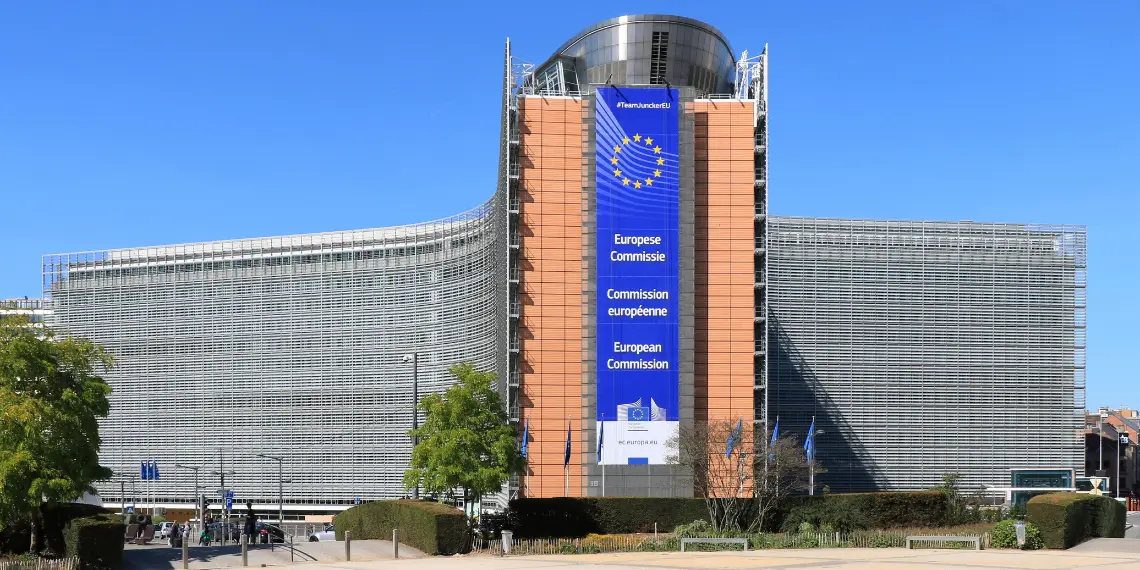
European Commission signals tougher stance on investor citizenship schemes
BRUSSELS — An escalating EU visa suspension threat is casting renewed uncertainty over Caribbean citizenship by investment programs (CBI), after the European Commission signaled that the existence of such schemes alone may now constitute grounds for suspending visa free travel to the Schengen area.
In its eighth annual report under the EU’s Visa Suspension Mechanism, the Commission adopts markedly firmer language, shifting away from earlier emphasis on whether applicants possess “genuine links” to host countries and toward treating citizenship by investment programs themselves as an inherent security risk. The report states that “the operation of such programmes constitutes, in itself, a ground for suspending the visa-free status of third countries.”
The assessment, first reported by IMI Daily, reflects a tightening of Brussels’ posture that could have far-reaching consequences for Eastern Caribbean states that rely on CBI revenue and value visa-free access to Europe as a core diplomatic and economic benefit.
Caribbean CBI programs under intensified scrutiny
The Commission identifies Antigua and Barbuda, Dominica, Grenada, Saint Kitts and Nevis, and Saint Lucia as operating citizenship by investment programs that pose a “significant and ongoing challenge” to EU security interests. The report describes these schemes as being of “much greater scale” than similar initiatives in countries in the EU’s immediate neighborhood.
Collectively, the five states have issued more than 100,000 passports through their citizenship by investment programs. Application volumes remain elevated, with 13,113 applications recorded in 2023 and 10,573 in 2024, reinforcing EU concerns about sustained exposure to migration and security risks.
Low rejection rates fuel EU concerns
While acknowledging reforms undertaken by the Caribbean governments, including harmonizing the minimum investment threshold at US$200,000, strengthening due diligence procedures, and establishing shared standards for transparency and information-sharing, the Commission concludes that these measures have not sufficiently alleviated its concerns.
Processing times remain short and rejection rates “very low,” the report notes. In 2024, Antigua and Barbuda rejected 1.7 percent of applications, Saint Lucia 5.3 percent, and Dominica 6.5 percent. Brussels argues that such figures raise persistent questions about the depth and effectiveness of applicant vetting.
Although the absence of “genuine links” continues to be listed as a risk factor, the Commission’s language suggests that demonstrating this deficiency is no longer required before action is taken. Instead, the operation of a CBI program by a visa-free country is framed as sufficient justification for intervention.
Commission language points toward discontinuation
The strongest signal of policy escalation appears in the Commission’s formal recommendations to the five Eastern Caribbean countries. According to annexes to the report, states are urged to take all necessary measures to ensure adequate security vetting of applicants pending the discontinuation of the schemes.
According to the report’s annexes, the European Commission formally recommends that the five Eastern Caribbean states take all necessary measures to ensure adequate security vetting of applicants pending the discontinuation of those schemes. The phrasing suggests that Brussels now views the elimination of Caribbean citizenship-by-investment programs as the expected outcome, rather than improved due diligence serving as a permanent solution.
Failure to address Commission recommendations can trigger formal procedures under the visa-suspension mechanism, potentially resulting in the suspension of visa-free travel to the Schengen area, a move that would carry significant economic and diplomatic consequences for the region.
Georgia cited as an emerging template
The Commission points to Georgia as a live example of how the strengthened mechanism may be applied. In the same report, Brussels announced plans to suspend visa-free travel for holders of Georgian diplomatic, service, and official passports by the end of December, citing democratic backsliding.
The Commission’s heightened scrutiny mirrors other international actions, including Norway’s travel ban targeting CBI passports, underscoring growing global concern about the security implications of investor citizenship programs.
EU officials warned that broader restrictions on Georgian citizens could follow if authorities fail to implement recommended reforms, signaling a phased approach that could be replicated for other visa-free countries found to be in breach of EU requirements.
While no fixed deadlines were specified, the Commission said affected states must demonstrate measurable progress “without delay” to avoid escalation.
No tolerance for EU aspirants
For countries seeking EU membership, the Commission reiterated that compliance with EU law requires the abolition of investor citizenship schemes and the repeal of their legal foundations. That position follows an April 2025 ruling by the European Court of Justice, which found that Malta breached EU law by operating a transactional citizenship-by-investment program.
For Caribbean governments, the evolving stance from Brussels signals mounting pressure that extends beyond technical reform. As IMI Daily has reported, enhanced due diligence alone may no longer be sufficient to preserve visa-free access to Europe, leaving states facing difficult policy and economic choices in the months ahead.
Follow Unitedpac St Lucia News for continued coverage and breaking developments on this evolving issue.