









New details emerge after Richard Frederick denied U.S. visa again
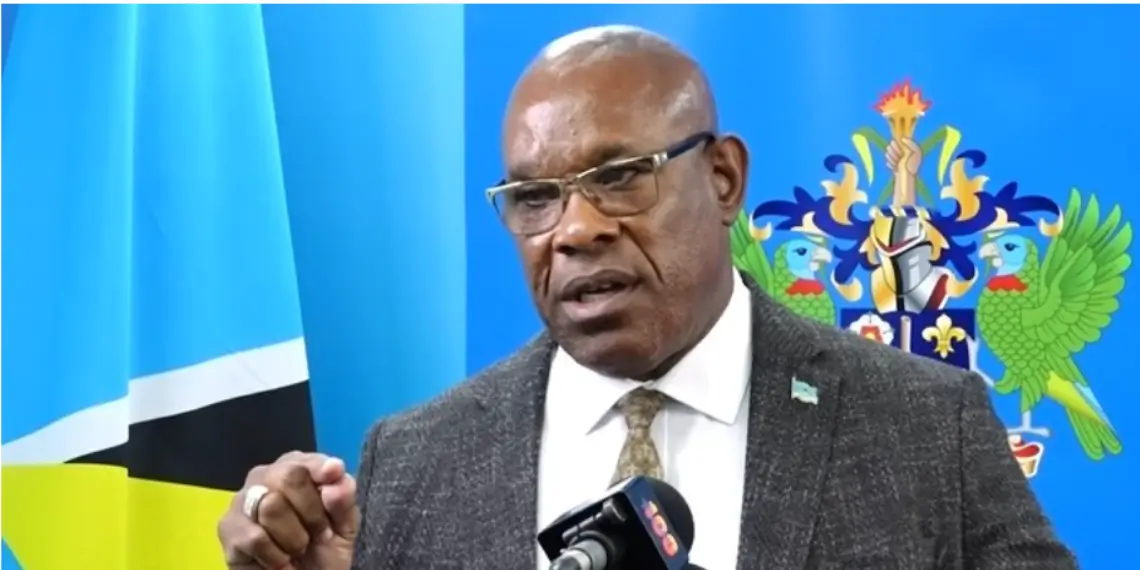
CASTRIES, St Lucia — Castries Central MP Richard Frederick was denied a United States visa during a personal appointment at the U.S. Embassy in Barbados on Thursday morning, according to multiple sources with direct knowledge of the interaction, marking a development that has triggered significant public attention and renewed scrutiny of Saint Lucia’s international standing.
Sources said the denial occurred during a routine visa interview and was communicated directly at the service window. During the exchange, Richard Frederick reportedly identified himself as a minister of government and was informed by the consular officer that a visa could not be issued to him “at this time.” No official reason was provided at the window, according to those familiar with the matter.
U.S. consular officials traditionally do not disclose reasons for individual visa decisions, citing confidentiality requirements under U.S. immigration law. The U.S. Embassy has not issued any public statement on the reported refusal.
Multiple reported refusals raise wider questions in St Lucia
The incident involving Richard Frederick unfolded against a broader backdrop of reported visa refusals affecting other Saint Lucian applicants during the same morning session at the embassy.
Sources indicated that several individuals were also denied visas during the same processing period. While it remains unclear whether those refusals were connected or stemmed from individual eligibility assessments, the timing has fueled public discussion and heightened interest in the circumstances surrounding the embassy’s actions.
The clustering of reported refusals has drawn attention amid ongoing regional discourse about U.S. immigration enforcement and evolving travel policies affecting the Caribbean. In recent months, Washington has expanded scrutiny of visa eligibility across several Eastern Caribbean states, including Antigua and Barbuda and Dominica, as part of broader security and compliance reviews. Those developments were previously outlined in Unitedpac St Lucia News’ coverage of U.S. travel restrictions affecting Antigua and Dominica, which detailed how tightened screening measures have begun to ripple across the region.
While no formal link has been established between those policy actions and Wednesday’s reported denials, analysts say the context cannot be ignored.
Consular decisions remain discretionary under U.S. law
Under U.S. immigration law, visa issuance is discretionary and may be influenced by a wide range of factors, including prior travel history, eligibility criteria, security assessments, documentation, and statutory requirements. Consular officers are not required to disclose specific grounds for refusal, and applicants may be informed only that a visa cannot be issued at the time of the interview.
A refusal does not necessarily imply criminal wrongdoing or misconduct. However, when it involves a sitting elected official, particularly one holding ministerial office, the decision can carry reputational and diplomatic weight.
Observers familiar with diplomatic practice noted that identifying oneself as a government minister during a visa interview does not confer preferential treatment under U.S. immigration procedures. Consular officers operate independently and are mandated to apply the law uniformly, regardless of an applicant’s political status or public office.
Former diplomats speaking generally about consular practice have consistently emphasized that U.S. visas are not issued as a courtesy of rank or title, but strictly on eligibility under U.S. law.
Political and public reaction intensifies
News of the reported refusal spread quickly across Saint Lucia on Thursday, prompting widespread reaction on social media and within political circles. Commentary ranged from concern over potential diplomatic implications to calls for restraint in the absence of official explanations.
Some commentators urged caution, noting that visa refusals can occur for administrative or technical reasons and that applicants may, in some circumstances, reapply. Others pointed to the broader implications for Saint Lucia’s international image, particularly at a time when regional governments are under increased scrutiny related to governance standards, security cooperation, and citizenship by investment oversight.
As of publication, no official statement has been issued by the Government of Saint Lucia addressing the matter, and there has been no indication that the incident will be raised through diplomatic channels.
Developing story
The circumstances surrounding the reported denial of Frederick’s visa, along with the additional reported refusals involving other Saint Lucian applicants, remain under review as information continues to emerge.
Unitedpac St Lucia News will continue to monitor developments and update this story as verified details become available.
Readers are encouraged to continue following Unitedpac St Lucia News for further reporting on this developing issue.







There is this ignorant mind set among some St. Lucians that a Government Minister must have US Visa in other to be an effective leader in his country.
To the contrary, any government official can still serve the people without ever having to set foot in the United States.
The denial of Minister Frederick visa is the sign of the times dictated by a racist regime in Washington DC, in concert with the same bogus information provided to the US Embassy by Kenny Anthony ‘s SLP tarnishing the man’s reputation with false accusations.
Sadly, Richard has not lean who his real enemies are, while continuing to lay in bed with the same gang of criminals who dry-snitched him to the Gringos many years ago.