




















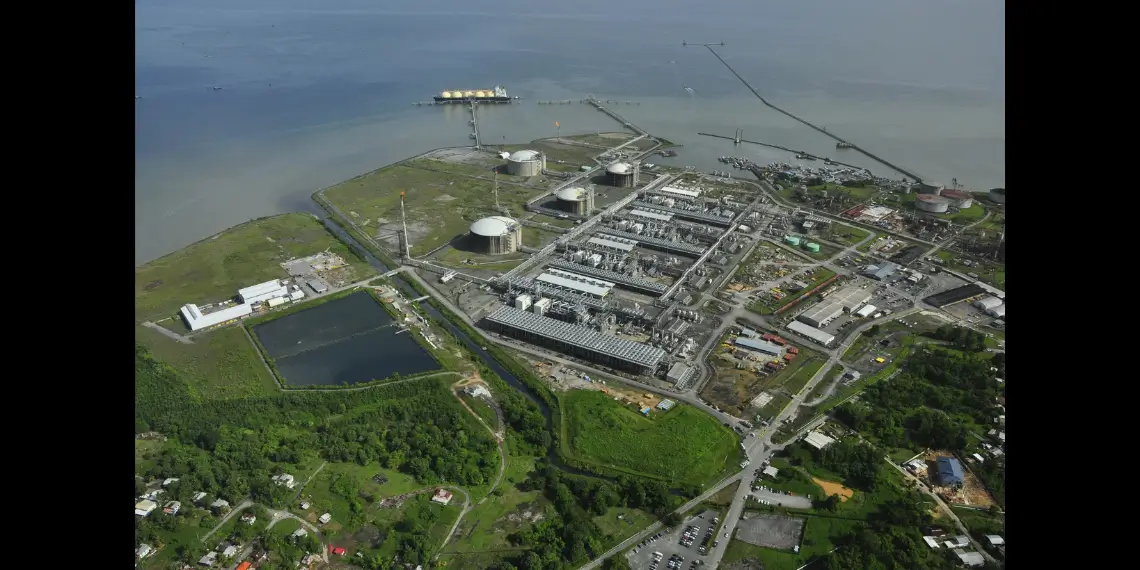
PORT OF SPAIN, Trinidad and Tobago — Shell says new U.S. general licenses tied to Venezuela’s energy sector have delivered the Shell Dragon gas green light, allowing the company to advance the Dragon natural gas project with direct links to Trinidad and Tobago’s Atlantic LNG export facility. Shell’s plan is to move gas from Venezuela to Trinidad for liquefaction and export, a route seen as one of the most practical options to add supply to an LNG plant constrained by feedgas shortages.
Shell’s update follows recent actions by the U.S. Treasury Department’s Office of Foreign Assets Control, which issued general licenses authorizing certain oil and gas-related goods, technology, software, and services in Venezuela under defined conditions. Shell has signaled that the licensing framework reduces regulatory uncertainty that previously slowed project planning and execution.
Dragon is an offshore field in Venezuelan waters that Shell has described as holding about 4.5 trillion cubic feet of natural gas. The project has been tracked closely across the region because it is designed to feed existing infrastructure in Trinidad rather than rely on a new LNG export build.
How the Shell Dragon gas green light changes next steps
The new licenses set out what categories of activity may proceed, and the compliance boundaries companies must follow while operating in or supporting Venezuela’s energy sector. For Shell, that clarity supports the technical, commercial, and logistical work needed to move a field from concept into an execution phase, including contracting and procurement decisions that require regulatory certainty.
Shell has indicated the goal is to unlock gas volumes that can be delivered into Trinidad’s pipeline and processing network. Even with licenses in place, timelines still depend on project approvals, engineering work, and agreements that govern transportation, processing, and export arrangements.
The licensing framework also shapes how companies handle operational payments and services, which can affect how quickly work advances. Companies typically build compliance controls into contracts, vendor relationships, and payment workflows to ensure activity stays within the permitted scope as defined by U.S. authorities.
Why Atlantic LNG is central to the business case
Atlantic LNG at Point Fortin remains one of the Caribbean’s most important export assets, and its performance has a direct impact on Trinidad and Tobago’s foreign exchange earnings and government revenue. The facility has an annual nameplate capacity of about 12 million metric tons of liquefied natural gas, but output has been held back when upstream gas supply tightened.
Recent export volumes have been below capacity because there has not been enough natural gas to fully supply all liquefaction trains. That has kept pressure on operators to find new upstream sources, and it has also raised concerns about wider knock-on effects for Trinidad’s gas-based industrial sector, where power generation and petrochemical activity compete for the same fuel.
Shell holds a 45 percent stake in Atlantic LNG, with BP holding another 45 percent, and Trinidad’s National Gas Company holding 10 percent. For Shell and BP, Atlantic LNG is a material part of their LNG portfolios, which adds commercial urgency to efforts that stabilize the plant’s feedgas outlook.
Dragon gas is positioned as an incremental supply stream that could help narrow the gap between Atlantic LNG’s installed capacity and available feedgas. If delivered at scale, it could lift utilization, support export receipts, and reduce the risk of extended underperformance tied to supply constraints.
Regional implications for the Eastern Caribbean
For St Lucia and neighboring islands, the Dragon push matters less as a direct supply story and more as a signal about the stability of the Eastern Caribbean energy hub. Trinidad and Tobago’s gas system influences regional investment confidence, shipping activity, and the broader cost environment tied to energy and industrial goods.
Venezuela’s wider energy footprint in the region has also drawn attention, including crude shipments moving through Caribbean storage terminals.
When LNG exports dip in Trinidad, it can tighten national revenue and foreign exchange flows, which can ripple into regional business conditions through trade, services, and investment decisions. A stronger feedgas outlook can also support steadier industrial operations in Trinidad, which remains a major regional employer and a key market for Caribbean contractors and service providers.
The development follows initial reports by Oilprice.com.
Shell’s statement signals renewed momentum, but delivery will ultimately be measured by project milestones such as finalized commercial agreements, confirmed development schedules, and the practical steps required to move gas into Trinidad’s export system. For Atlantic LNG and the region’s energy outlook, those milestones will determine whether Dragon becomes a meaningful supply source or remains a delayed opportunity.