



















Cyber claims intensify St Lucia election scandal and raise audit demands
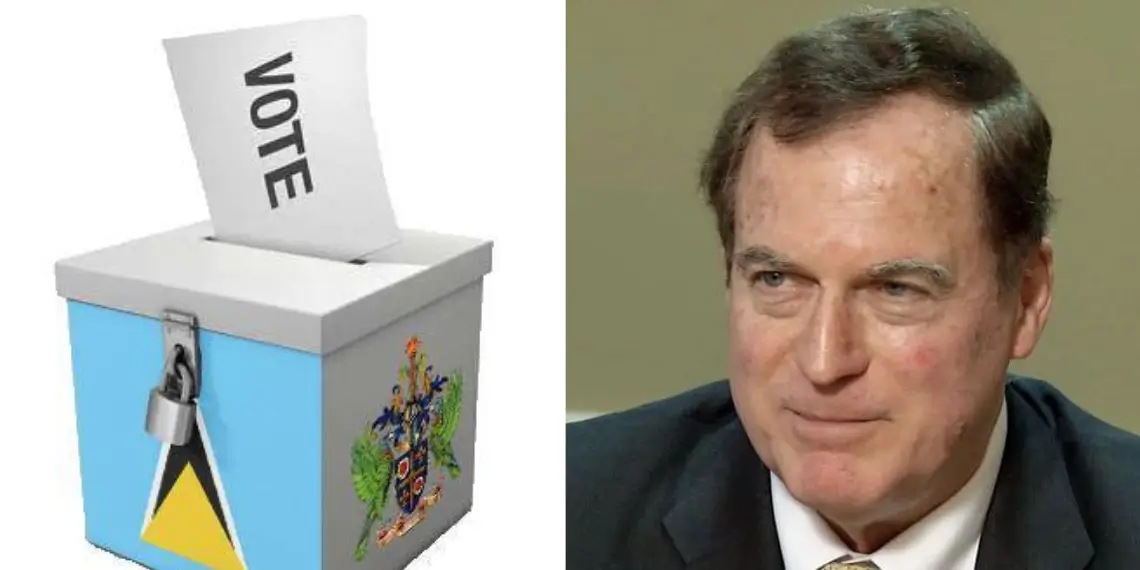
CASTRIES, St Lucia — The St Lucia election scandal burst into full public crisis after financial crime analyst Kenneth Rijock declared the December 1 vote “bogus,” asserting that inducement cash, foreign leverage, and backend registry access rendered the declared victory neither credible nor democratic. While Carrycom observers issued an 8.5 rating and confirmed no procedural breach sufficient to overturn results, intensifying technical and intelligence-linked claims now place the 2025 poll under unprecedented scrutiny.
Rijock, live on Newsspin, stated that the outcome should not stand, describing up to $5 million in inducement payments as not incidental but operational. Host Timothy Poleon, aware of legal consequences, attempted to temper the broadcast and avoid name-based accusations. Yet Rijock refused to retreat, citing information “originating from within U.S. intelligence channels,” and insisted that foreign briefings now warrant a full electoral reset.
Cybersecurity expert: “This was not a glitch; it was a system perfected”
A foreign cybersecurity analyst has expanded the St Lucia election scandal from ballot corridors to digital command, asserting that the cracks first observed in 2021 were not malfunction, but infrastructure rehearsal.

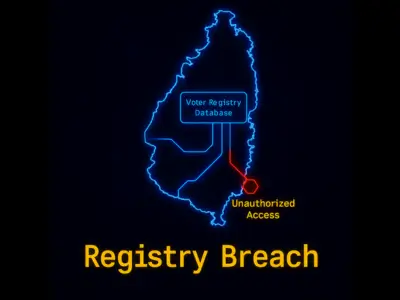
“They have backend-level access to the voter-registry database, and the pattern is hard to ignore,” the expert stated. “Those 2021 breaks no longer look like anomalies, they look like a beta version of a system perfected by 2025. The numbers simply do not reconcile.”
A senior technical figure inside the electoral framework has also been referenced in emerging analyses. Kenya James, the systems administrator at the Saint Lucia Electoral Department, has been cited by cybersecurity commentators as one of the individuals with privileged access to the voter-registry infrastructure during the election period. While no formal charges have been issued and no state agency has publicly identified wrongdoing, information-security voices argue that the authority held by administrative IT custodians must form part of any independent digital forensic review. Their focus, they noted, is not accusation but access control: who had permissions, who executed registry commands, and how backend authentication logs were maintained.
He framed the government’s much-repeated “17-0” chant not as political confidence but forecasted inevitability from within the digital registry environment.
“Allen winning his seat was never part of their internal projection models. When you control the system architecture, you control the output.”
Washington now central to the St Lucia election scandal
Rijock called on opposition leader Allen Chastanet to travel to Washington to request an external forensic audit, arguing that regional observer missions lack capacity to detect high-grade registry interference.
He maintained that the Caribbean has never hosted an election with sufficient technical observers to detect system-level manipulation, emphasizing that this moment now requires U.S. intelligence, forensic digital teams, and election-security specialists.
The cybersecurity expert agreed, stressing that only an out-of-jurisdiction forensic entity could credibly access registry metadata, administrator logs, and authorization trails.
“With registry command, justice oversight, and digital authentication positioned under executive influence, the feasibility of a transparent domestic audit is near zero,” he said.
Two-track breach: inducement plus digital command
The widening St Lucia election scandal presents a dual legitimacy crisis:
| Allegation Vector | Core Concern | Mechanism |
|---|---|---|
| Rijock (financial crime) | Voter inducements, foreign leverage | Direct cash corridors, CIP vulnerabilities |
| Cybersecurity expert | Registry manipulation, tally engineering | Backend access, data override, internal predictive models |
This is no longer a matter of paying voters — it is whether outcomes were pre-coded, pre-modeled, and pre-resolved.
“Algorithm by algorithm”
“St Lucia is drifting into a dangerous phase of data-driven dictatorship, unfolding quietly, algorithm by algorithm,” the cyber expert warned, noting the parallel between prediction, access and outcome.
Poleon, despite caution on air, conceded that the public mood has shifted sharply: “People are very suspicious.”
Global attention intensifies
As Washington, regional partners, and election-monitoring bodies begin reviewing the emerging intelligence and cyber claims, the St Lucia election scandal has moved beyond discomfort and into structural legitimacy crisis.
Continue following Unitedpac St Lucia News for escalating coverage of the St Lucia election scandal and growing demands for a foreign-led forensic audit.














Certainly a lot of valid concerns and questions was raised on this matter. Too many convenient, inconveniences to ignore how those actions or lack there-of could not have influenced the outcome of the election for a particular side. Certainly makes one wonder how would their vote even have an impact, if the outcome of the election was already a forgone conclusion. Free and fair elections are the bedrock of Democracy. Anything outside of that, you end up with a banana Republic.