

















Commissioner’s St Lucia electoral audit warning went unanswered
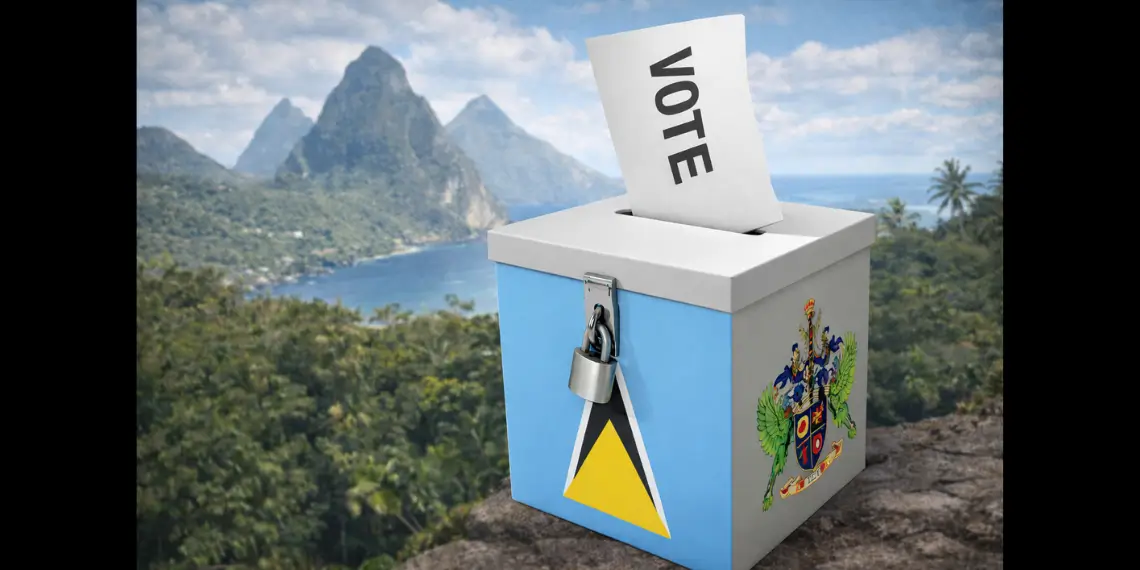
CASTRIES, St Lucia — The St Lucia Electoral Audit Warning issued by Commissioner Michael Flood of the Saint Lucia Electoral Department went unanswered before the country proceeded with its December 1 general election, deepening public concern over transparency, accountability, and institutional credibility. The election was held without any response from the Electoral Commission to Flood’s formal request for an independent forensic audit of Saint Lucia’s 2021 election systems, voters’ list, and electronic tabulation process.
In a letter dated September 10, Michael Flood urged the Electoral Commission to authorize an immediate, nonpartisan forensic review of the 2021 electoral infrastructure, including voter registration records, digital access logs, and tabulation controls. He warned that unresolved public allegations ranging from unauthorized system access to voter list irregularities posed a serious risk to public confidence if left unexamined ahead of another national vote.
Michael Flood stressed that the request was not political but procedural, rooted in the Saint Lucia Electoral Department’s statutory responsibility to safeguard electoral integrity. He argued that independent verification was essential to either confirm or disprove the allegations and to prevent lingering doubt from undermining democratic legitimacy.
Those concerns align with broader scrutiny already documented in Unitedpac St Lucia News’ reporting on the St Lucia election scandal 2025, which detailed growing questions surrounding election administration, system oversight, and the absence of independent verification mechanisms within the electoral framework.
Despite the gravity of the warning, the Electoral Commission did not acknowledge Flood’s correspondence, did not order an audit, and did not issue any public explanation. Instead, Parliament was dissolved weeks later, and Dec. 1 was formally set as election day, with no forensic review or voter list verification conducted beforehand.
Election governance analysts note that Flood’s appeal came from one of the three commissioners constitutionally charged with safeguarding electoral neutrality, elevating the significance of the Commission’s silence. His concerns mirrored issues raised in subsequent Unitedpac St Lucia News coverage examining how the St Lucia ballot integrity crisis deepens amid unresolved questions about system controls, voter eligibility, and institutional transparency.
Polling proceeded as scheduled, and the Saint Lucia Labour Party secured a majority of seats. However, civil society advocates argue that electoral legitimacy cannot be measured solely by outcome. They maintain that the failure to address an internal audit warning before the vote has left a credibility gap that continues to shadow the process, regardless of turnout or margins.
Legal analysts and election reform groups emphasize that Flood’s request sought verification rather than validation. By proceeding to an election without examination, they argue, the Electoral Commission allowed uncertainty to persist unchecked, weakening public trust in the safeguards that underpin the democratic process.
Post-election discourse has increasingly focused on the Commission’s inaction, with critics warning that ignoring internal accountability signals risks normalizing procedural opacity. Flood’s letter underscored that public confidence depends not only on orderly polling day operations but on the integrity of the systems that precede and support the vote.
With the election now concluded and a new government in place, calls have intensified for a post-election forensic audit to address the unresolved concerns raised before Dec. 1. Reform advocates argue that transparency delayed remains transparency denied, and that democratic confidence cannot be rebuilt without independent, record-based verification.
Flood’s closing assertion continues to resonate in national debate: St Lucians are entitled to absolute confidence that their elections are administered through secure, impartial, and independently verifiable systems. That confidence, critics contend, remains unsettled.
For continued coverage of electoral oversight, democratic accountability, and governance transparency, follow Unitedpac St Lucia News.