















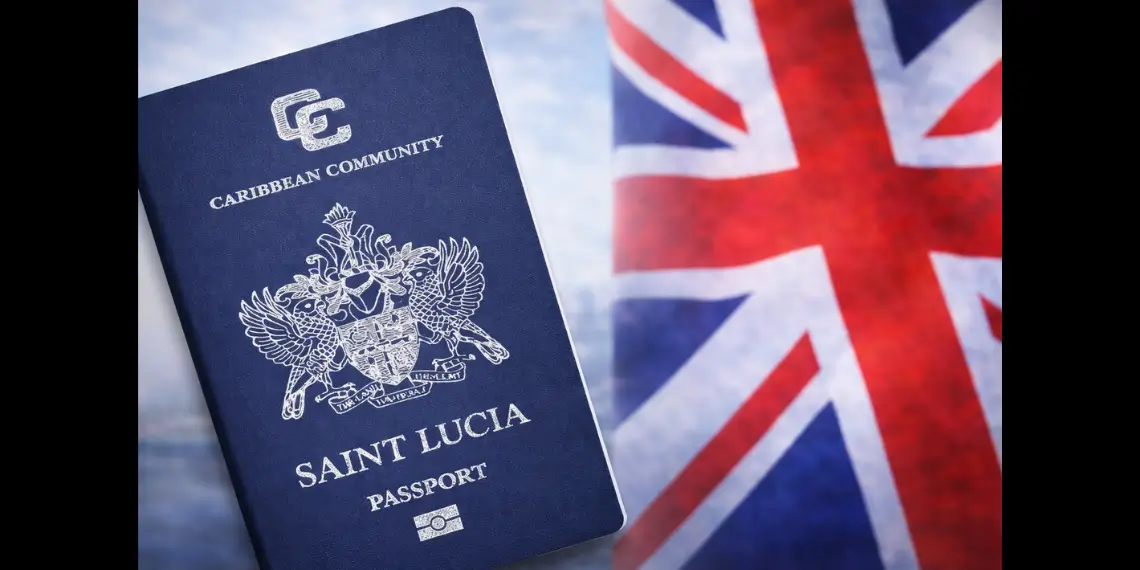
CASTRIES, St Lucia — UK imposes visit visas on St Lucia after a British minister, in an official announcement, said St Lucia’s visa-free access created “a back door into this country,” a move that ends long-standing travel arrangements and raises immediate questions about what drove the decision.

The decision comes amid wider UK immigration tightening, following policy shifts London says are intended to strengthen border controls. A previous report on the UK’s tougher visa enforcement framework provides additional context.
St Lucia’s government, in its own public statement, attributed the UK action to pressure within Britain’s immigration and asylum system, including claims involving St Lucian nationals. But the UK’s official announcement naming St Lucia did not cite asylum when stating why St Lucia would lose visa-free entry.
For St Lucians planning travel to the UK, the practical reality is immediate. A visa is now required, adding cost, paperwork, and processing time for routine trips that previously depended on standard entry screening at arrival.
What the UK minister said about “back door” entry
In the official announcement, the UK minister said the government would “impose visit visas on Nicaragua and St. Lucia, as their visa-free entry has created a back door into this country.”
The full remarks were published by the UK government in the Home Secretary’s March 5 immigration speech.
The minister presented the move as part of a broader package intended to tighten border controls and bring legal migration into line with the government’s stated objectives.
In the same announcement, the minister said certain visa routes were being suspended for Afghanistan, Cameroon, Myanmar, and Sudan due to what was described as unacceptably high abuse. St Lucia was addressed separately, tied specifically to the UK’s view that visa-free entry had become a vulnerability.
The UK statement did not define what “back door” meant in St Lucia’s case. It also did not specify whether the concern relates to overstays, document integrity, criminal facilitation, or another issue.
Why the UK imposes visit visas on St Lucia, and what remains unclear
In its press release, the Government of St Lucia said it received official correspondence from the UK Home Office confirming that St Lucian nationals will now require a visit visa to enter the United Kingdom. The government also said a direct airside transit visa requirement applies to travelers transiting through UK airports.
The government statement said the UK linked the decision to increased pressure on border management and the asylum system. It referenced an increase in St Lucian nationals entering as visitors and later claiming asylum.
That explanation is facing pushback because it does not match the wording used in the UK’s official announcement when St Lucia was identified for visa imposition. The minister’s stated rationale, as quoted, focused on visa-free access creating a “back door,” not asylum.
Government officials said diplomatic engagement with the United Kingdom is ongoing and that additional guidance will be provided to the public on visa application procedures as more information becomes available.
Timeline and what the change means for travelers
The new visa requirement took effect March 5, 2026, at 15:00 GMT, 11:00 a.m. AST, according to the government statement.
Officials also described a transition window until April 16, 2026. Under that arrangement, travelers who already hold an Electronic Travel Authorization and booked travel before the policy change may still be able to enter visa-free if they arrive before the transition deadline.
After that date, St Lucian nationals traveling to the UK will be required to obtain a visa in advance. The process typically involves fees, documentation requirements, and processing time that can disrupt short-notice travel.
The impact is expected to be immediate for families with relatives in the United Kingdom, students, business travelers, and citizens who rely on the UK as a transit hub.
The UK’s “back door” wording has also intensified domestic debate in St Lucia, where opposition figures have previously warned that international partners were watching governance standards tied to citizenship and passport administration. The government press release did not reference the Citizenship by Investment Programme or passport governance concerns, focusing instead on the UK’s stated system pressures, including asylum.
What remains unresolved is the core question raised by the UK minister’s wording. If the UK’s concern is primarily about misuse of visa-free entry as a “back door,” St Lucians will expect clarity on what specific risk the UK believes is driving the change and whether St Lucia’s authorities accept or dispute that framing.
For now, the outcome is fixed. The UK has tightened entry for St Lucian nationals, and travelers will need to adjust quickly as public debate intensifies over why St Lucia was singled out.













I would recommend:
1. Check which group of people that violated the UK immigration rules, whether it is “new citizens” by investment or not. Specified issue, specified solution;
2. Consider the possibility of residency by investment with clear route to the citizenship instead. The key is to attract foreign capitals to invest and STAY to boost local economy and job opportunities;
3. Strategy to regain UK ETA status and Japan visa free to stand out in the region.