











Operations expand as US military strikes five suspected drug boats across maritime routes
WASHINGTON — The US military said it struck five boats suspected of drug trafficking over two days, killing eight people during maritime operations carried out Tuesday and Wednesday along known trafficking routes.
US Southern Command said the strikes took place in international waters but declined to disclose the specific locations. Previous operations of this nature have occurred in the Caribbean Sea and the eastern Pacific Ocean. Southern Command oversees US military activity across Central and South America and surrounding maritime regions.
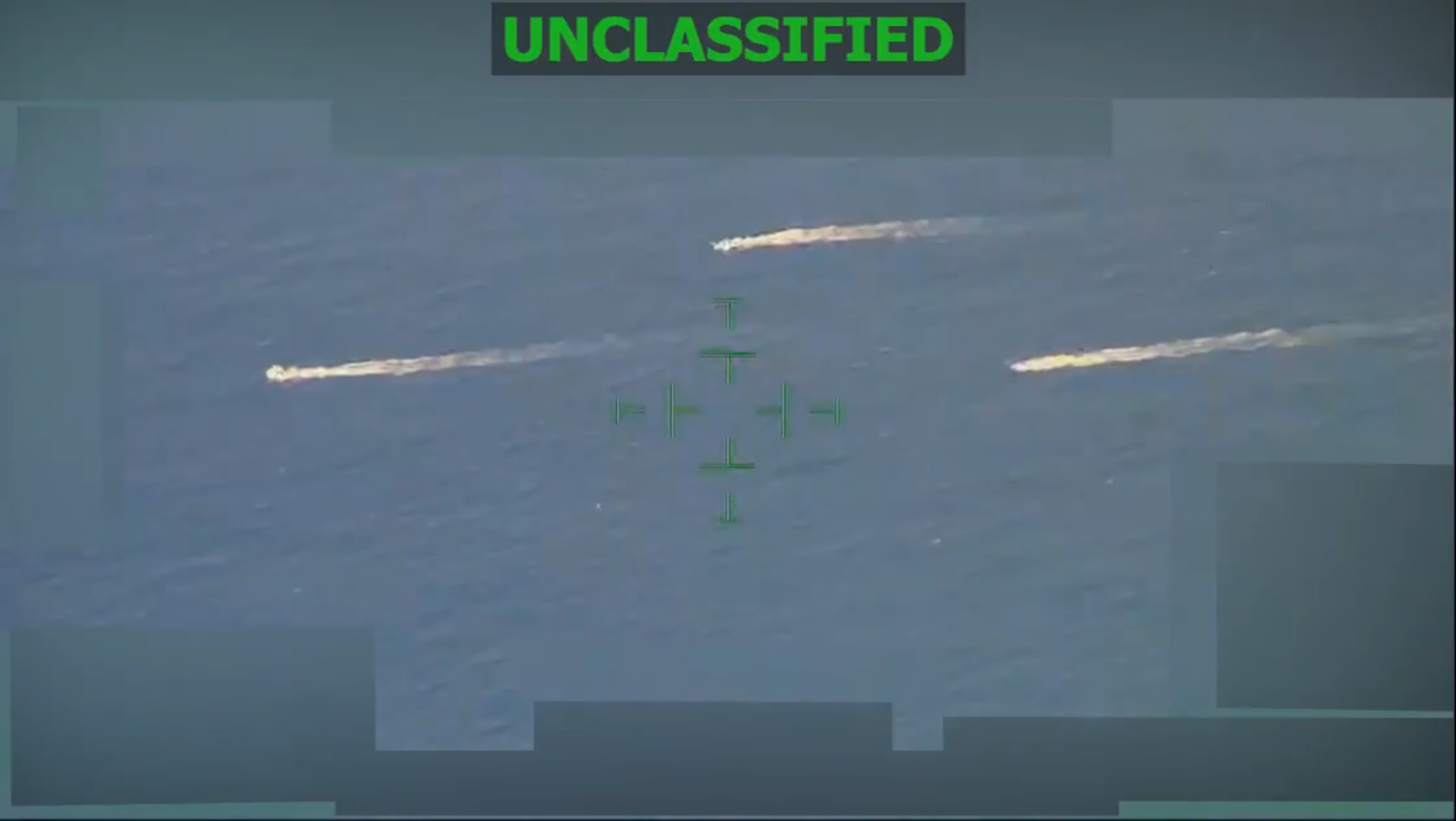
According to The Associated Press, three of the boats targeted on Tuesday were traveling together in close formation, a pattern US officials described as unusual. Southern Command alleged the vessels were operating as a convoy along known narcotics trafficking routes and said drugs had been transferred between the boats prior to the strikes. The military did not release evidence publicly to support that claim.
Video footage released by Southern Command on social media showed the three boats moving in close proximity before explosions were visible on the water. The military said three people were killed when the first boat was struck. People aboard the other two vessels were seen jumping into the water and distancing themselves from the boats before those vessels were later hit.
Southern Command said the US Coast Guard was immediately notified to initiate search and rescue operations. Officials did not say whether those who entered the water were rescued.
On Wednesday, US forces struck two additional boats suspected of drug trafficking, killing five people, Southern Command said in a separate statement. As reported by the Associated Press, the military again declined to identify the body of water where the strikes occurred and did not provide evidence to substantiate the allegations. Video released alongside the announcement showed a vessel at sea followed by explosions.
The US Coast Guard’s involvement has drawn attention because of controversy surrounding earlier maritime operations. In September, US forces carried out a follow-up strike on a disabled boat after an initial attack, killing people who had survived the first strike. The incident prompted criticism from Democratic lawmakers and legal experts, who questioned whether the action complied with international law. The administration of Donald Trump and several Republican lawmakers defended the operation as legal.
With the latest actions, publicly acknowledged US maritime strikes since early September have reached 35, with at least 115 people killed, based on figures released by the Trump administration. Unitedpac St Lucia News previously reported that the U.S. military drug boat strike campaign had already surpassed 30 confirmed maritime attacks, highlighting the rapid escalation of the operations.
President Trump has defended the campaign as a necessary escalation to stem the flow of illegal drugs into the United States, asserting that the country is engaged in an armed conflict with drug cartels.
The maritime strikes are part of a broader pressure campaign directed at the government of Nicolás Maduro, who has been charged in the United States with narco-terrorism and related offenses. Venezuela’s government has rejected the accusations and accused Washington of political interference.
The campaign has also expanded beyond open waters. Last week, the Central Intelligence Agency carried out a drone strike on a docking area believed to have been used by Venezuelan drug trafficking networks, according to people familiar with the classified operation cited by the Associated Press. Unitedpac St Lucia News detailed that escalation in its earlier report on how the U.S. struck a suspected drug dock inside Venezuela, marking the first known direct U.S. action on Venezuelan soil since the maritime campaign began.
As U.S. military operations against suspected drug trafficking networks continue, lawmakers and international observers have raised concerns about transparency, accountability, and the long-term consequences of using military force in counter-narcotics efforts.
For continued coverage of international security developments and breaking world news, continue following Unitedpac St Lucia News.