





Remarks that led Dominica president faces backlash focus on US policy and dialogue
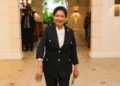
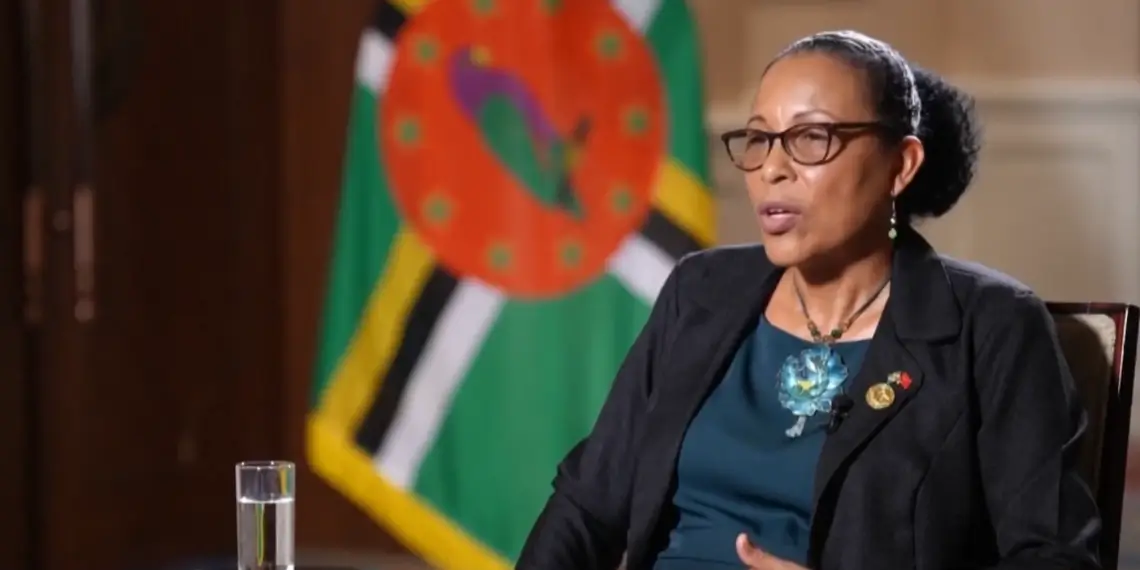
ROSEAU, Dominica — President Sylvanie Burton is facing public backlash following remarks in which she criticized the United States for its approach to regional security and foreign policy, particularly actions affecting Venezuela and the wider Caribbean.
Burton made the comments during a recent interview in which she accused the United States of exerting pressure on smaller Caribbean nations through counter narcotics operations and restrictions tied to sanctioned oil distribution involving Venezuela. Her statements, which circulated widely across traditional and social media platforms, prompted debate within Dominica and across the region.
In the interview, Burton called for dialogue rather than confrontation in international relations. She said governments, regardless of size, should be treated with respect and should engage through discussion instead of conflict. Burton also criticized efforts aimed at removing governments from power and highlighted the imbalance in resources and capacity between major powers and small island states.
“We are smaller than you, and you are more equipped than us,” Burton said, arguing that such disparities should not be used to pressure countries into submission. She urged the United States to cease what she described as aggressive actions toward Venezuela and called for respect for that country’s sovereignty. Burton added that Latin America and the Caribbean were expressing shared concerns and appealed for Washington to listen to regional perspectives.
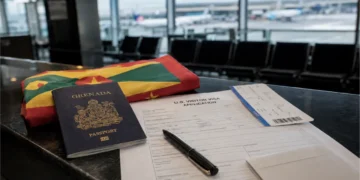
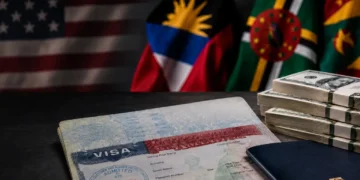
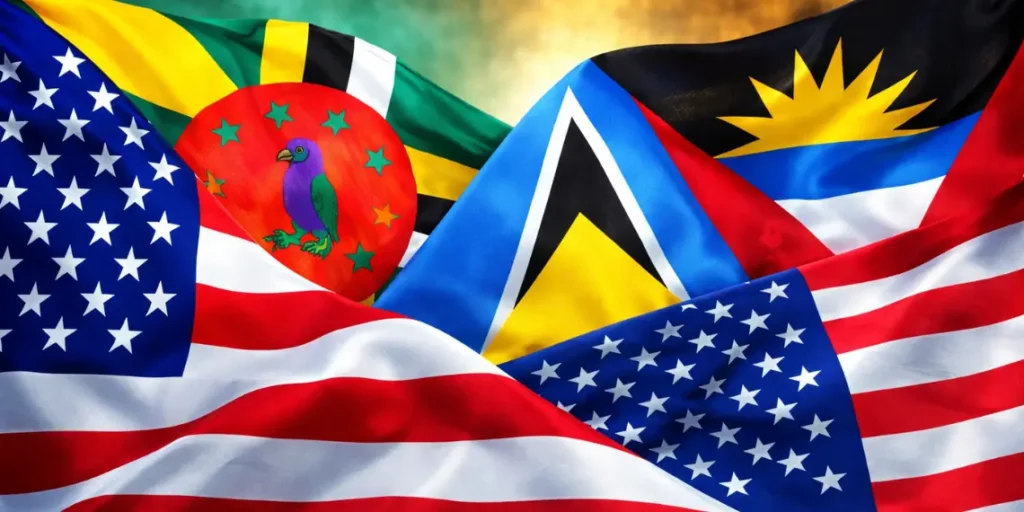
The remarks were made as the United States continues enforcement measures in the Caribbean related to sanctions, border security, and counter narcotics operations. These measures have included increased scrutiny of travel access and visa policies affecting several Eastern Caribbean nations. Unitedpac St Lucia News previously reported on U.S. travel restrictions affecting Antigua and Dominica, outlining official actions by U.S. authorities and their implications for the region.
Burton did not announce any change in Dominica’s foreign policy during the interview, nor did she reference new agreements or shifts in diplomatic alignment. No official statement has been issued clarifying whether her comments represent a broader policy position of the Dominican government.
The interview has nonetheless drawn public reaction within Dominica, where commentators and political figures have debated the tone and implications of the president’s remarks. The discussion has focused on the language used to describe U.S. policy and the emphasis placed on Venezuela’s sovereignty within the broader context of Caribbean diplomacy.
There has been no immediate response from U.S. officials to Burton’s statements. U.S. authorities have consistently said their regional policies are aimed at combating drug trafficking, enforcing sanctions, and addressing transnational crime, while maintaining cooperation with Caribbean governments.
Burton’s comments also come amid ongoing regional engagement with multiple global partners, including China, as Caribbean governments continue to navigate diplomatic, economic, and security relationships through bilateral and multilateral channels.
The interview has renewed attention on discussions within the Caribbean about relations with global powers and the balance between sovereignty, security cooperation, and economic engagement. Burton’s remarks remain part of the public record and continue to be referenced in regional discourse on foreign policy and international relations.
For continued coverage of regional diplomacy and Caribbean affairs, follow Unitedpac St Lucia News for more breaking news and in depth reporting.