




PORT OF SPAIN, Trinidad — Florida Summit diplomacy is set to take center stage on March 7 after United States President Donald Trump invited Prime Minister Kamla Persad-Bissessar to attend a leaders meeting in Florida amid growing U.S. focus on Caribbean security and energy cooperation.
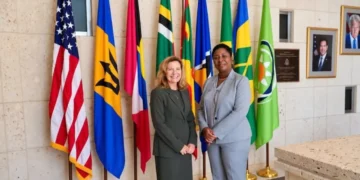
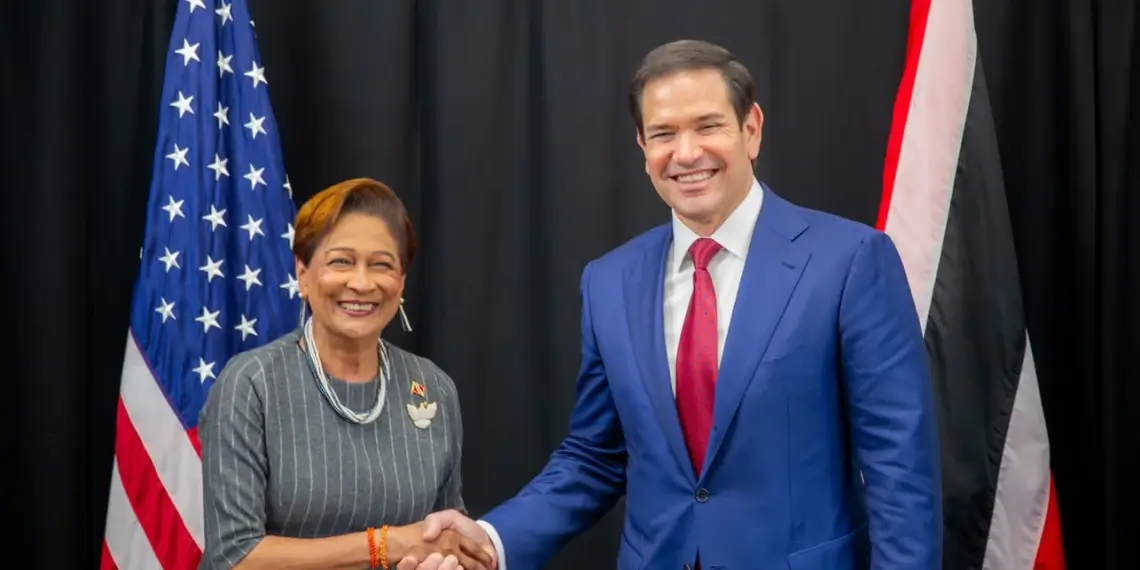
Persad-Bissessar disclosed the invitation following a bilateral meeting with U.S. Secretary of State Marco Rubio in St Kitts and Nevis. The talks were held on the margins of the 50th Regular Meeting of the Conference of Heads of Government of the Caribbean Community.
International media reports indicate the Florida Summit comes as Washington sharpens its posture in the hemisphere, particularly regarding geopolitical influence and regional security. The Express reported that invitations were extended to Persad-Bissessar and Guyana President Irfaan Ali.
Energy and Refinery Restart Central to Florida Summit Talks
Persad-Bissessar told reporters that her discussions with Rubio covered Haiti, Cuba, Venezuela, and the broader security environment. She said additional details would be shared following her meeting with Trump next week.
Energy cooperation featured prominently in the bilateral engagement. The Prime Minister said Rubio committed to facilitating contact with the U.S. Department of Energy to assist Trinidad and Tobago in identifying the most suitable partner to reopen the Guaracara refinery, which was shuttered in 2018.
Shortly after assuming office, the Persad-Bissessar administration established a restart committee tasked with evaluating what would be required to reactivate refinery operations. An interim report reviewed by government officials indicated that restarting the facility is technically, commercially, and financially viable despite years of deterioration.
The Energy Ministry has been directed to assess the findings and present restart options to Cabinet. Energy Minister Dr. Roodal Moonilal has met with interested investors, including energy firm Oando, and additional discussions are scheduled.
The refinery’s future carries implications for employment, downstream energy activity, fuel supply security and foreign exchange earnings. For citizens, the outcome could influence domestic fuel availability, industrial activity and economic stability.
Venezuela Gas Licence and Sanctions Context
Following Persad-Bissessar’s September 2025 meeting with Rubio in Washington, Trinidad and Tobago secured an Office of Foreign Assets Control licence from the U.S. Treasury Department. The regulatory approval permits engagement in negotiations related to Venezuela’s offshore Dragon gas field despite U.S. sanctions, a project previously outlined in Shell Dragon gas green light in Trinidad.
That licence represented a significant diplomatic development, allowing Port of Spain to pursue cross-border energy cooperation within a structured legal framework. However, shifting political conditions in Venezuela have raised questions about the longer-term trajectory of regional energy arrangements.
Persad-Bissessar has emphasized maintaining close engagement with Washington as global geopolitical dynamics evolve. The Florida Summit is expected to provide further clarity on how the United States intends to navigate sanctions policy, hemispheric energy security, and strategic competition.
Security Cooperation and Regional Crime Fight
Security coordination also featured prominently in the discussions. Since September 2025, the Persad-Bissessar administration has aligned closely with U.S. efforts targeting transnational crime in the Caribbean basin.
In her address at the CARICOM opening ceremony earlier this week, the Prime Minister reiterated that Trinidad and Tobago stands with the United States and has already recorded a reduction in its murder toll. She linked improved security outcomes to strengthened regional and international cooperation.
Rubio later posted on X that his meeting with Persad-Bissessar focused on strengthening partnership to make both nations safer and more prosperous. He highlighted Trinidad and Tobago’s support for U.S. military operations in the South Caribbean Sea aimed at disrupting drug trafficking networks.
Persad-Bissessar publicly thanked Rubio for what she described as a productive engagement and reaffirmed her government’s commitment to border protection, shared security, and regional stability.
Responding to questions about U.S. kinetic strikes on suspected drug trafficking vessels, the Prime Minister said her government does not consider the operations extrajudicial killings. She stated that her position was based on legal advice and added that there was no verified evidence confirming reports that Trinidadians or St Lucians were among those killed.
Broader Implications for CARICOM
The Florida Summit invitation places Trinidad and Tobago among select regional leaders expected to engage directly with Trump at a time of heightened geopolitical realignment.
For CARICOM member states, the meeting may signal how Washington intends to deepen engagement on energy resilience, anti-narcotics operations, and regional stability. The discussions are also unfolding against a backdrop of global economic uncertainty and shifting diplomatic alignments.
The March 7 meeting is expected to clarify next steps in U.S.–Caribbean relations and determine how strategic cooperation will evolve in the months ahead.