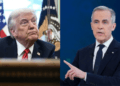











WASHINGTON — US Strikes Iran after President Donald Trump announced Saturday that American forces have begun what he described as “major combat operations,” as explosions were reported in Tehran and other Iranian cities.
Israel also confirmed it is carrying out strikes and moved immediately to emergency footing, signaling a coordinated escalation that regional officials fear could widen quickly.
What Is Confirmed So Far
- Trump says the U.S. has begun “major combat operations” in Iran.
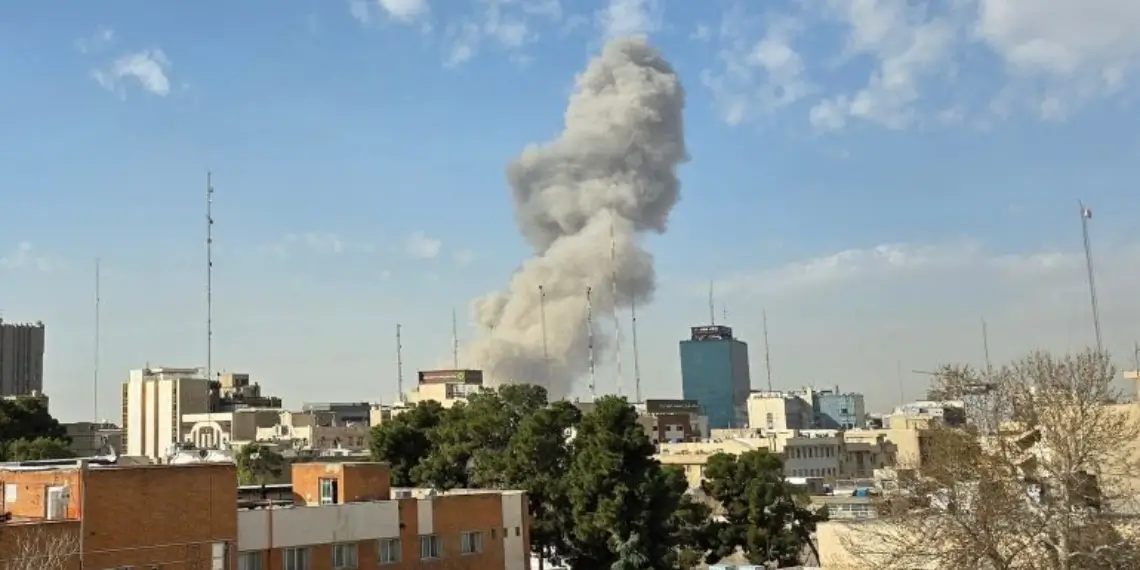
- Explosions were reported in Tehran, with smoke seen near key government districts.
- Iran’s semiofficial Fars news agency reported blasts in Isfahan and Karaj.
- U.S. officials say dozens of strikes are underway and the campaign could last several days.
- Israel confirmed it is striking Iran and declared a nationwide state of emergency.
- Swiss-mediated nuclear talks ended without agreement earlier this week.
Explosions Hit Tehran as US Strikes Iran and Schools Shelter Students
Residents in Tehran reported loud explosions early Saturday and smoke rising from the Pasteur district, where key state institutions are located, including areas associated with Iran’s presidential offices and national security apparatus.
The strikes began on the first day of Iran’s workweek, when offices and schools were open. Accounts from residents described a sudden rush to reach family members as blasts echoed across parts of the capital.
Ali Zeinalipoor, a Tehran resident, said he saw a large plume of smoke near Pasteur Street and rushed to collect his daughter from school. He said students were sheltering indoors as adults tried to navigate the uncertainty outside.
Iran’s authorities had not released confirmed casualty figures or a detailed assessment of damage by Saturday. It was also not immediately clear which targets were struck in the opening phase of the U.S. and Israeli operations.
Fars reported explosions in Isfahan and Karaj, suggesting the strikes extended beyond the capital. Iranian state outlets provided limited immediate detail as the situation unfolded.
Military Operation Follows Failed Nuclear Talks
The escalation followed a round of mediated talks between American and Iranian officials in Switzerland on Thursday over Tehran’s nuclear program. The discussions ended without a breakthrough, and U.S. officials indicated that the absence of an agreement increased the likelihood of a strike campaign.
The State Department has also framed Iran as a persistent risk in wrongful detention cases, including a recent Office of the Spokesperson release designating Iran as a state sponsor of wrongful detention.
Trump said the United States had begun “major combat operations,” but did not publicly specify targets. U.S. officials, speaking on the condition of anonymity due to the sensitivity of national security matters, said the latest action is expected to be more extensive than last year’s U.S. strikes that hit three Iranian nuclear facilities during a short war between Israel and Iran.
Those officials said dozens of strikes are being carried out by attack aircraft operating from bases and aircraft carriers around the Middle East. One official said the operation could continue for several days, depending on how events develop.
In the weeks leading up to Saturday’s strikes, the U.S. military expanded its regional posture, which officials described as the largest American buildup in the Middle East in decades. The heightened posture had fueled expectations that diplomacy was nearing a make-or-break moment.
Israel Declares Emergency and Closes Airspace
Israel confirmed it is conducting parallel strikes and announced immediate emergency measures at home.
Defense Minister Israel Katz said Israel is under a nationwide state of emergency, and authorities ordered schools and workplaces closed. The government also announced the closure of Israel’s international airspace, steps aimed at reducing risk as officials anticipated retaliation.
Air-raid sirens sounded across Israel as the country braced for possible missile or drone attacks. U.S. and Israeli officials have not publicly detailed how they expect Iran to respond or what deterrence measures are in place.
Beyond the Middle East, a prolonged confrontation could create ripple effects through energy markets and shipping, with potential knock-on costs for fuel-dependent economies. For St Lucia and other Caribbean states, spikes in oil prices can translate into higher transportation and electricity costs and added pressure on household budgets and import bills.
As of Saturday, Iranian leaders had not issued a full public response outlining next steps, and independent confirmation of specific targets and casualties remained limited.
For St Lucia and other Caribbean states, a sustained conflict could carry economic spillover through global oil prices, shipping disruptions, and higher costs for fuel-dependent services. Regional leaders have not yet issued formal statements, and it remains unclear how quickly the crisis could expand.
As the situation develops, see the latest updates in our World coverage.