






By Minerva Ward
Editor’s Note: The views expressed in this commentary are those of the author and do not necessarily reflect the editorial position of Unitedpac St Lucia News.
Have the UN and CARICOM Become Irrelevant? What happened today in Iran did not just shake the Middle East. It exposed, in real time, the limits of global governance and the strain on regional solidarity. The United States and Israel launched coordinated military strikes across Iran, targeting strategic and military sites in what they described as pre-emptive action against threats from Tehran. Iran retaliated with missile and drone attacks across the region. President Donald Trump claimed that Iran’s Supreme Leader Ayatollah Ali Khamenei was killed in the operation, a claim Tehran has not confirmed. Iranian authorities reported civilian casualties and condemned the attacks as a violation of sovereignty.
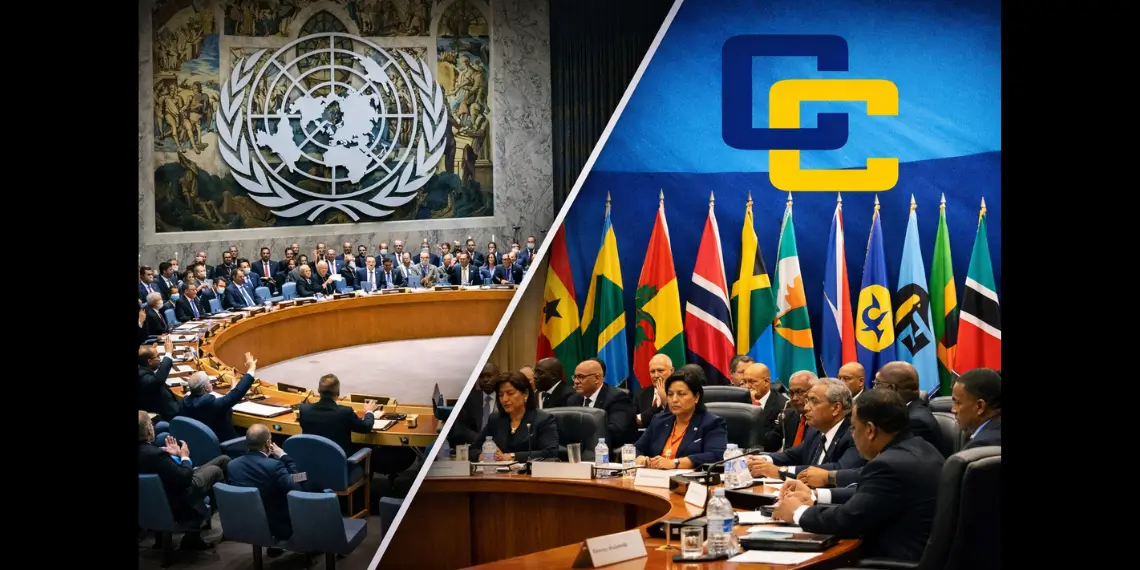
Within hours, the United Nations convened an emergency Security Council meeting. Secretary-General António Guterres condemned the escalation, warned that the strikes and retaliation threaten international peace and security, and called for immediate de-escalation and a return to diplomacy. He urged all parties to respect international law and the UN Charter.
And yet, the missiles had already been launched.
This is the defining tension of the emerging world order. Institutions speak. States act.
The UN can convene. It can condemn. It can urge restraint. But it cannot restrain a permanent Security Council member determined to move militarily. It cannot override a superpower. Its authority depends on the willingness of states to be restrained. When that willingness weakens, the institution appears powerless. Not because it is irrelevant, but because it was never designed to overpower the strongest actors in the system.
After the Strikes and the Summit, Have the UN and CARICOM Become Irrelevant?
At the regional level, the same dynamic is unfolding.
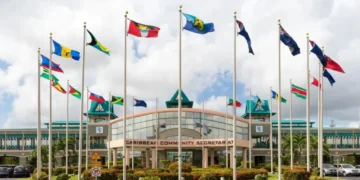
At this week’s CARICOM summit in St. Kitts and Nevis, Trinidad and Tobago’s Prime Minister Kamla Persad-Bissessar publicly challenged the bloc’s credibility on security matters. She argued that CARICOM failed to act decisively when member states faced external threats, particularly in relation to tensions with Venezuela. She signaled that Trinidad and Tobago would not automatically bind itself to regional foreign policy positions and would instead pursue its own national security strategy based on sovereign interests.
Her remarks were not a withdrawal from CARICOM; they were a challenge to it.
The challenge was straightforward: when security becomes tangible and threats are real, can regional solidarity move beyond carefully worded statements?
CARICOM champions the Caribbean as a Zone of Peace. The UN champions collective security under international law. Both are built on cooperation. Both depend on consensus. Both assume that members value collective legitimacy enough to limit unilateral action.
But we are no longer in a world defined by neat alignments and patient diplomacy. We are in a multipolar era marked by rivalry, rapid military action, economic coercion, and executive decision-making that often bypasses legislative or multilateral authorization. Consensus is harder. Restraint is thinner. National interest is louder.
This does not mean these institutions are irrelevant. It means they are exposed.
Exposed to the reality that power still ultimately resides in sovereign states. Exposed to the limits of charters and declarations when confronted with hard force. Exposed to the tension between sovereignty and solidarity.
The UN today looked constrained because powerful states chose to act first and consult later (if at all). CARICOM looked strained because a member state publicly questioned its reliability on security. In both cases, the institutions did not fail in isolation. They reflected the will, or the division, of their members.
We are living through a transitional moment. The post-1945 global architecture was built after a catastrophic war and shaped by a handful of dominant powers. Today’s world is more fragmented, more competitive, and more transactional. Power is exercised quickly and often unapologetically. Legitimacy is sometimes treated as secondary to leverage.
When that happens, global forums risk becoming platforms for commentary rather than centers of decision.
The deeper question is not whether the UN or CARICOM matters. The question is whether their members are still prepared to sacrifice some autonomy for collective strength. If they are not, institutions narrow to their lowest common denominator. They coordinate aid. They manage standards. They host dialogue. Important functions, yes. Decisive authority, no.
Iran today was not only a military escalation. It was a demonstration of how the emerging order operates. Action precedes authorization. Force precedes debate. Institutions respond after the fact.
CARICOM’s internal debate mirrors that same global shift on a smaller scale. Small states want unity, but they also want security guarantees that feel credible. If those guarantees feel weak or slow, national calculations change.
Institutions do not collapse overnight. They erode when commitment erodes. They strengthen when members recommit or reform them to reflect new realities of power.
What we are witnessing is not the sudden death of multilateralism. It is a stress test.
Stress tests reveal structural limits.
If global and regional bodies are to remain influential in this emerging order, they will need either deeper unity, structural reform, or a renewed political commitment from their members. Otherwise, they will continue to issue urgent statements while the decisive moves are made elsewhere.
That is the uncomfortable reality laid bare by today’s strikes in Iran, the UN’s call for restraint, and this week’s sharp debate within CARICOM.