










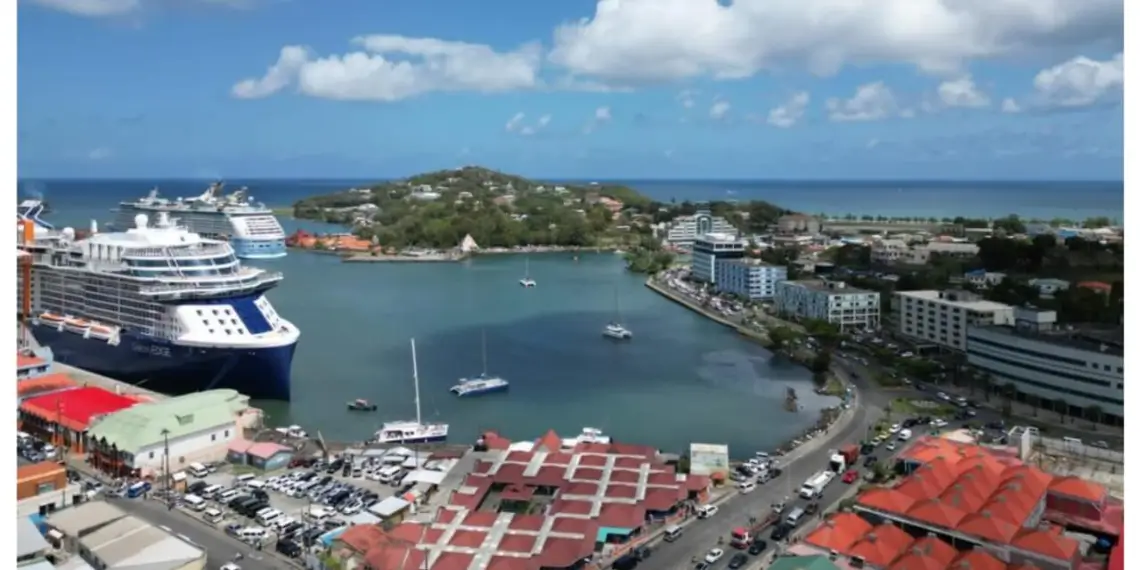
CASTRIES, St Lucia — Saint Lucia’s Parliament has been asked to authorize a government guarantee for a SLASPA $125.5M Loan to finance the reconstruction of Berth No. 4 at Port Castries, a move that is drawing renewed scrutiny over the island’s controversial cruise port concession with Global Ports Holding.
The resolution before Parliament would allow the Saint Lucia Air and Sea Ports Authority (SLASPA) to secure financing from a syndicate of banks led by the Bank of Saint Lucia to fund the project. The proposal states that the loan will support reconstruction works at the cruise port facility, with repayment structured through combined principal and interest payments over a period of 156 months.
The development comes less than two years after the government signed a long-term concession agreement granting Global Ports Holding operational control of Saint Lucia’s cruise port facilities.
Parliament Weighs SLASPA $125.5M Loan for Berth 4
According to the resolution presented to Parliament, the Minister of Finance would guarantee EC$121,500,000 in financing to SLASPA for the reconstruction of Berth 4 at Port Castries.
The document indicates that the loan would be repaid through payments totaling EC$2,962,884.32 quarterly, or EC$985,246.50 monthly, over the life of the financing arrangement.
Officials say the reconstruction is necessary to maintain and upgrade infrastructure that supports cruise tourism, one of Saint Lucia’s largest economic sectors. Port Castries regularly receives some of the world’s largest cruise vessels, and the condition of its berthing facilities is considered critical to maintaining competitiveness within the Caribbean cruise market.
However, the proposal has reignited debate about the financial structure of the cruise port concession signed with Global Ports Holding (GPH) in 2023.
Cruise port concession continues to face scrutiny
The government previously defended the 30-year concession agreement, with an option for a 10-year extension, as a strategic partnership intended to modernize Saint Lucia’s cruise infrastructure through private investment.
Supporters of the deal argued that allowing a global port operator to manage the island’s cruise operations would attract new capital, improve port facilities, and strengthen Saint Lucia’s position within the regional cruise industry.
But critics of the agreement have questioned whether the financial benefits for the state-owned port authority were significantly reduced under the arrangement.
Under the concession, Global Ports Holding assumed operational responsibility for cruise port activities, including passenger services and commercial operations tied to cruise arrivals.
Opponents have argued that SLASPA, which remains the statutory owner of the port infrastructure, lost a substantial portion of the cruise passenger revenue stream that historically supported the authority’s operations and maintenance responsibilities.
Revenue shifts at the center of the debate
Before the concession agreement, SLASPA collected the full cruise passenger head tax, which formed a major component of its income.
Under the new arrangement, a portion of that revenue now flows to the concessionaire responsible for operating the cruise facilities.
Industry observers say the change has altered the financial balance for the port authority, which continues to maintain ownership of major infrastructure assets while operating with reduced direct revenue from cruise passenger arrivals.
That dynamic has become a focal point of the current debate surrounding the proposed SLASPA $125.5M Loan.
Critics argue that the situation raises questions about the financial burden placed on the public sector to upgrade infrastructure that supports a privately operated cruise port system.
Supporters of the project counter that port infrastructure upgrades remain a national responsibility, regardless of the management model, and that maintaining world-class facilities is essential to sustaining Saint Lucia’s tourism industry.
Cruise tourism remains a key economic driver
Cruise tourism continues to play a significant role in Saint Lucia’s economy, bringing hundreds of thousands of visitors to the island annually and supporting a wide network of vendors, tour operators, taxi drivers, and retail businesses.
Government officials have repeatedly emphasized that maintaining competitive port infrastructure is essential to ensuring the island remains an attractive destination for major cruise lines.
The reconstruction of Berth 4 is expected to improve the port’s ability to accommodate larger vessels and maintain operational efficiency during peak cruise seasons.
At the same time, the financing arrangement now before Parliament highlights the complex financial relationship between public infrastructure ownership and private port operations under the Global Ports Holding concession.
Questions likely to continue as project moves forward
As Parliament considers the proposed government guarantee, the issue is expected to remain a major topic of public and political discussion.
The decision ultimately centers on whether the proposed loan represents a necessary investment in national infrastructure or whether it exposes deeper structural questions about the long-term financial impact of the cruise port concession.
With cruise tourism remaining central to Saint Lucia’s economy, the reconstruction of Berth 4 is likely to proceed as a key infrastructure priority.
But the broader debate over who pays for port development, and who ultimately benefits from the revenues generated by the cruise industry, is unlikely to fade anytime soon.