















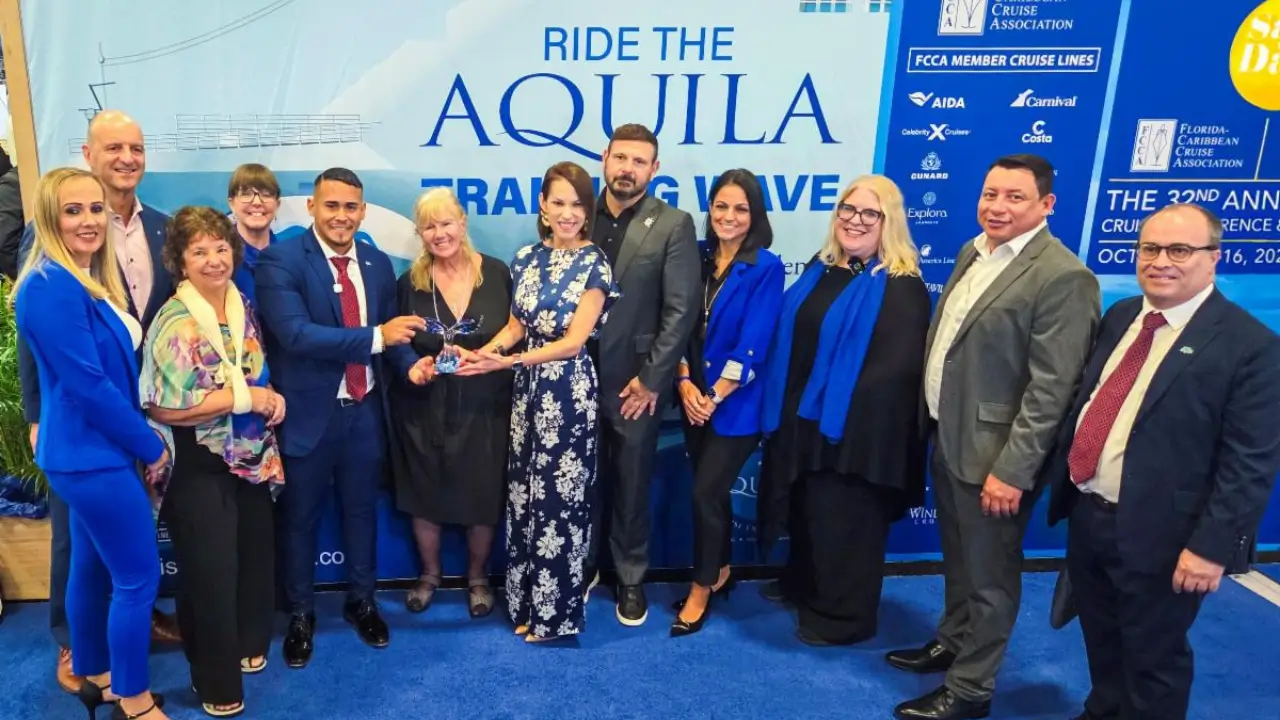
ORANJESTAD, Aruba — The Aruba Tourism Authority has been named the recipient of the 2026 Aquila Whalesong Destination Award for Excellence in People Investment, a recognition presented this week during Seatrade Cruise Global at Miami Beach. The honor is issued annually by the Aquila Center for Cruise Excellence and highlights destinations that prioritize human capital development within their tourism sectors.
The award singles out the ATA for its sustained work in building capacity across Aruba’s tourism workforce, with judges citing the authority’s long-term commitment to sustainable, responsible, and regenerative tourism practices. The recognition places the Dutch Caribbean island among the leading voices in cruise destination management across the region.
A decade of structured collaboration
The relationship between Aquila and Aruba stretches back more than ten years, though the partnership took on a more defined shape beginning in 2016. Since then, the two organizations have pursued a coordinated, multi-year strategy aimed at aligning Aruba’s port authorities, tour operators, retailers and public sector agencies behind a unified service standard.
That approach has centered on service excellence workshops, responsible tourism training and targeted coaching sessions for tour operators. Companies including De Palm, Fofoti, Pelican and Kukoo Kunuku have drawn on the training to refine their guest experiences, strengthen local storytelling and embed more sustainable practices into their operations.
Beth Hatt, founder of Aquila, said the award reflects the center’s respect for destinations that look beyond physical assets. She noted that the ATA’s investment in its people, rather than in infrastructure or marketing alone, was the distinguishing factor in the selection. Hatt described Aruba’s training programs as evidence of the island’s broader leadership in sustainable tourism.
Operators report gains from Aruba Tourism Authority training
Feedback gathered from participating operators pointed to tangible outcomes following the training cycles. Organizers reported stronger coordination between tour companies, expanded collaboration with local artisans and community partners, and the emergence of new business opportunities tied to culturally grounded experiences.
The collaborative model has also been credited with reducing long-standing silos within Aruba’s tourism ecosystem, an issue common to many Caribbean destinations where private operators, public agencies and port authorities often work in parallel rather than in concert. The shift mirrors a wider regional push toward sustainable shore excursions as Caribbean destinations rework how cruise visitors engage with local communities. Participants endorsed the practical nature of the sessions, saying the skills transferred directly into their daily operations.
Ronella Croes, chief executive officer of the Aruba Tourism Authority, accepted the award on behalf of the organization. She described the recognition as confirmation of the island’s position that sustainable tourism depends on the people who deliver it, calling the model one rooted in community, partnership and shared values.
Regional significance for Caribbean cruise markets
The Whalesong Award, symbolized by a whale tail representing strength, wisdom and harmony, has been used by Aquila to spotlight destinations it considers benchmarks for the wider cruise industry. Aruba’s selection carries weight for Caribbean tourism bodies watching how smaller island economies manage the pressures of cruise arrivals while protecting local identity.
For regional neighbors, including St Lucia, the recognition offers a reference point as Caribbean destinations weigh how to balance visitor volume with workforce readiness and community benefit. Aruba’s framework, built on cross-sector training rather than expanded infrastructure alone, presents one model for sustaining competitiveness in a crowded cruise market.