







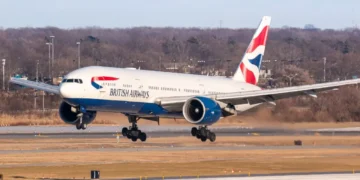
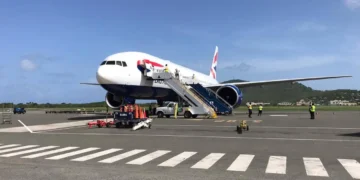



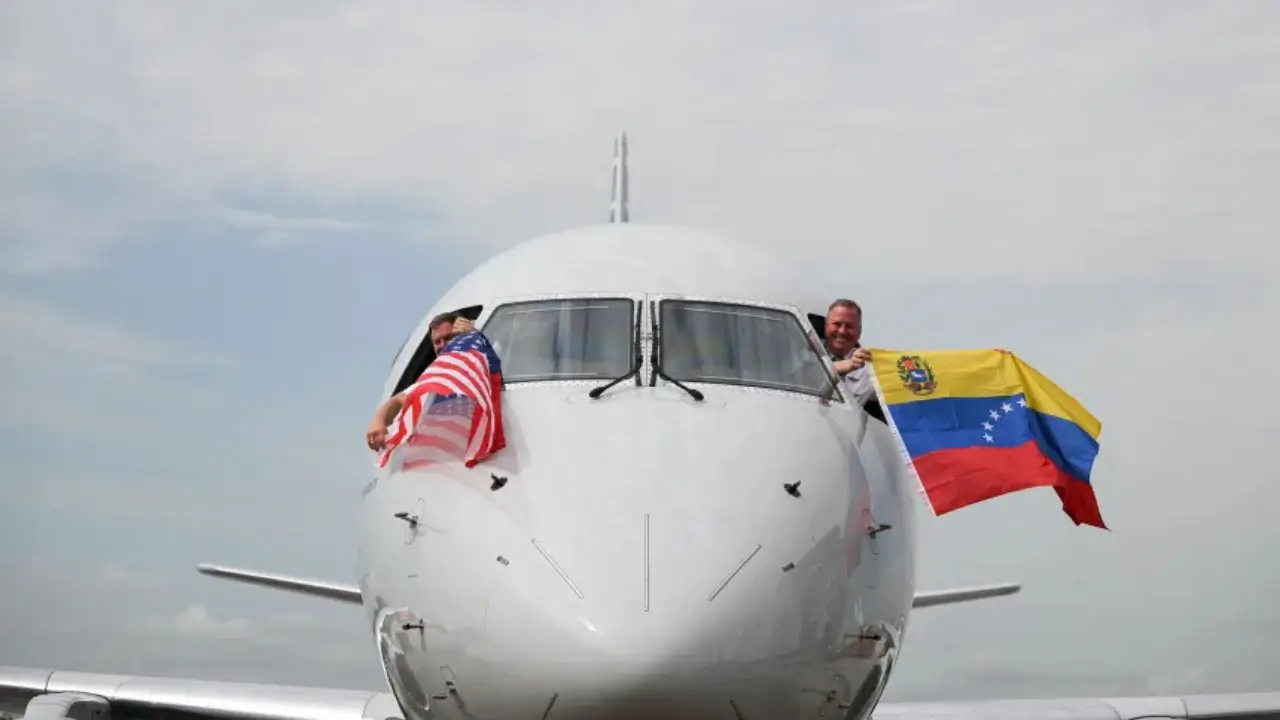
The resumption of US-Venezuela flights became reality on Thursday as American Airlines touched down in Caracas for the first time in nearly seven years, restoring a direct air link between the two countries that collapsed amid political crisis and bilateral hostility in 2019. The flight, operated by Envoy Air, the carrier’s wholly owned regional subsidiary, departed Miami International Airport and landed at Simón Bolívar International Airport outside the Venezuelan capital, marking the first nonstop US commercial service to the South American nation since the Trump administration’s Department of Homeland Security suspended all such flights on safety and security grounds.
The DHS has since determined that conditions in Venezuela no longer warrant the continued suspension of direct commercial flights, according to a Federal Register notice published in April 2026. US Transportation Secretary Sean Duffy lifted the 2019 order in January 2026 after President Donald Trump directed the department to act, and the Department of Transportation formally approved American’s application in March.
A Seven-Year Suspension Ends
American Airlines began operating in Venezuela in 1987 and had been the largest US carrier serving the country before suspending flights following the federal ban. Delta and United had already withdrawn in 2017 amid a deepening political crisis that drove millions of Venezuelans to leave the country. The suspension forced the Venezuelan diaspora to rely on indirect connections through third countries, significantly adding to both travel time and cost.
The Transportation Security Administration reviewed airport security procedures in Caracas in March, a required step before US carrier service could resume. The State Department also eased its Venezuela travel advisory that same month, downgrading the country from “Do Not Travel” to “Reconsider Travel,” though the advisory still cites crime, kidnapping, terrorism, and poor health infrastructure as risks for US travelers.
The restored route operates on an Embraer E175 regional jet with a capacity of approximately 75 passengers. American Airlines confirmed it plans to add a second daily Miami-Caracas flight beginning May 21. The carrier is also preparing flights to Maracaibo in western Venezuela, though no start date for that route has been announced.
Diplomatic Reset and Economic Stakes
The resumption of flights is embedded in a broader and rapid realignment of US-Venezuela relations. Following a US military operation in January that resulted in the removal of President Nicolás Maduro, who is now in custody in New York facing drug trafficking charges, Washington began gradually normalising diplomatic and economic relations with Venezuela’s acting government, led by interim President Delcy Rodríguez, Nicolás Maduro’s former vice president.
Under US pressure, Delcy Rodríguez’s administration enacted an amnesty law that released hundreds of political prisoners and a hydrocarbons law designed to make it easier for foreign companies to participate in Venezuela’s oil industry. The US has in turn been easing sanctions previously imposed on Venezuelan entities, a shift that has opened the door to greater foreign currency earnings and market integration.
US Transportation Secretary Sean Duffy described the restored air route as a critical milestone in strengthening ties between the two countries, and said his department is working to add further flights in the coming months. Venezuelan Transportation Minister Jacqueline Faría said her government expects the renewed service to carry more than 100,000 passengers annually.
US-Venezuela Flights Face High Fares and Visa Barriers
Despite the significance of the reopening, practical hurdles persist for many who had hoped to travel. Round-trip fares in early May were listed at more than $1,200 on American Airlines’ website, compared to connecting flights through Bogotá that typically range from $390 to $900. Prices are expected to ease as capacity expands, though no firm timeline has been given.
Some Venezuelans hoping to travel to the United States face additional obstacles, including securing passports and visas, given that Venezuela does not currently have a consulate operating in the US. The US has been gradually reestablishing its own diplomatic presence in Caracas, formally resuming operations at its embassy there in late March.
As of mid-2024, an estimated 764,000 Venezuelan migrants were living in the United States, according to the Migration Policy Institute. For many in that community, particularly in South Florida, home to the largest Venezuelan population in the country, the restoration of direct service represents a reconnection that connecting routes through Latin America could never fully replicate. Miami-Dade County Mayor Daniella Levine Cava said families separated by years of political turmoil and economic collapse now have a direct path back to one another.
The broader question of whether normalised air service can sustain itself will depend heavily on whether diplomatic and economic conditions between Washington and Caracas hold, a calculation that, in this hemisphere, has rarely followed a straight line.