












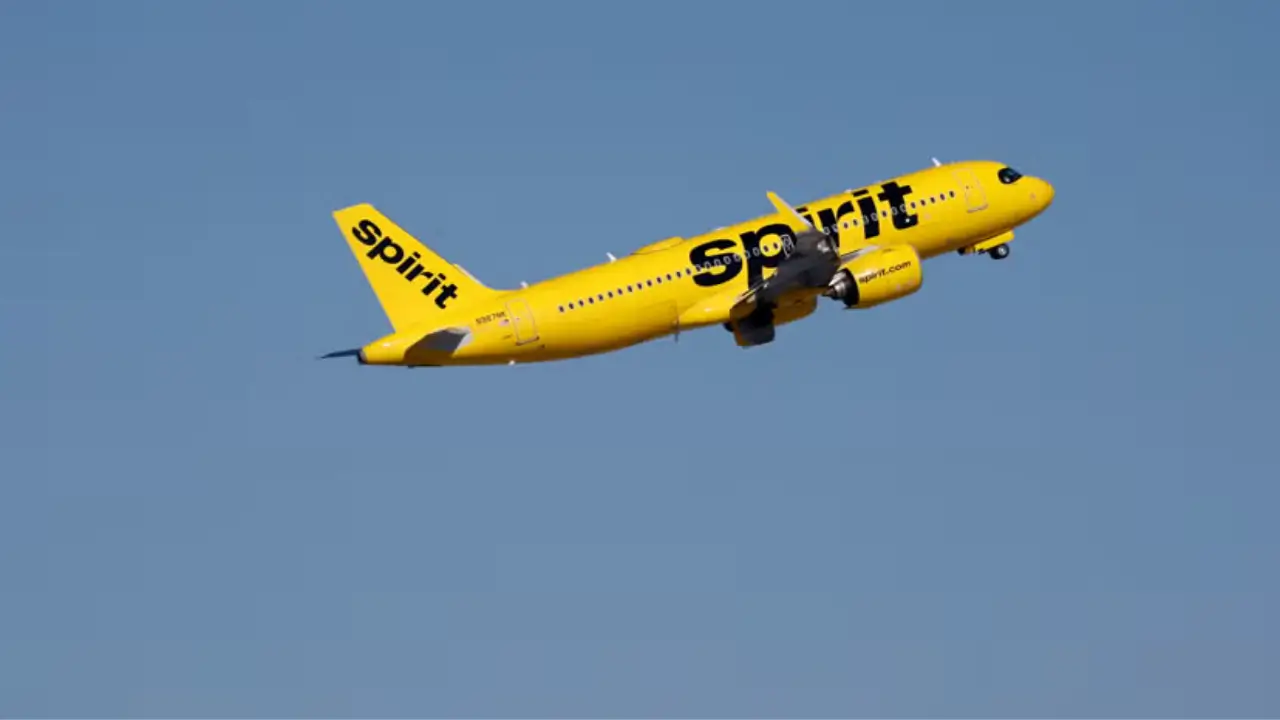
FORT LAUDERDALE, Florida — Spirit Airlines, the Florida-based budget carrier that reshaped affordable air travel in the United States for more than three decades, permanently ceased all operations in the early hours of Saturday, May 2, 2026, after a last-ditch federal bailout worth $500 million failed to win the backing needed to keep the airline aloft. The collapse marks the first major airline liquidation directly linked to the fuel price shock triggered by the ongoing Iran war.
The airline’s parent company, Spirit Aviation Holdings, confirmed the shutdown in a pre-dawn statement, saying it had “started an orderly wind-down of operations, effective immediately.” Passengers were instructed not to travel to airports, as all flights were cancelled without notice.
Bailout Talks Collapse Under Bondholder Pressure
The Trump administration had proposed a $500 million financing package in exchange for warrants equivalent to up to 90 percent of Spirit’s equity, effectively offering the federal government a controlling stake in the airline. President Donald Trump confirmed Friday that a final rescue proposal had been submitted, telling reporters, “If we can help them, we will, but we have to come first. If we could do it, we’d do it, but only if it’s a good deal.”
Despite that public gesture, negotiations between bondholders and government stakeholders broke down, leaving Spirit without the creditor consensus required to secure the funding. Transportation Secretary Sean Duffy, who had separately approached other carriers about acquiring Spirit, acknowledged the limits of federal intervention. “What would someone buy?” Duffy said, indicating that potential acquirers saw little of value in the struggling carrier. Duffy had earlier expressed reservations about the deal, cautioning against putting “good money after bad” into a carrier with a long record of losses.
A creditor close to the final negotiations said the Trump administration had made an extraordinary effort but that it was not possible to sustain an airline that had already exhausted its financial runway.
Fuel Costs and Two Bankruptcies Seal Spirit Airlines’ Fate
Spirit’s financial deterioration accelerated sharply against the backdrop of war-driven fuel price spikes. The airline had built its bankruptcy restructuring plan on jet fuel costs of approximately $2.24 per gallon for 2026, but prices had surged to around $4.51 per gallon by the end of April following the U.S.-Israel military offensive against Iran on February 28. That near-doubling of fuel costs made the airline’s exit from bankruptcy impossible without hundreds of millions in fresh liquidity.
Spirit had filed for Chapter 11 bankruptcy protection twice, first in November 2024 and again in August 2025, accumulating losses exceeding $2.5 billion since 2020. The airline had been on track to emerge from its second bankruptcy by late spring or early summer of this year before the fuel crisis intervened. Chief Executive Ted Christie said the sudden and sustained rise in fuel prices left the company with no alternative but to pursue an orderly wind-down. “Sustaining the business required hundreds of millions of additional dollars of liquidity that Spirit simply does not have and could not procure. This is tremendously disappointing and not the outcome any of us wanted,” Christie said.
Passengers and Rivals Respond to Spirit Airlines Shutdown
The Department of Transportation confirmed that Spirit Airlines holds a reserve fund to refund passengers who booked directly with the airline using a credit or debit card, with refunds processed to the original form of payment. Passengers who purchased through third-party travel agents were directed to contact their point of sale. Those who paid with loyalty points or debit cards face greater uncertainty over recovering funds.
Several competing carriers moved quickly to absorb displaced Spirit passengers. Southwest Airlines announced capped fares based on route distance. United Airlines capped one-way fares at $299, with most priced at $199, and issued separate guidance for stranded Spirit crew members. JetBlue, Frontier Airlines, and American Airlines also launched rescue-fare programs for affected travellers this weekend.
Spirit had carried approximately 1.7 million domestic passengers in February 2026, holding a 3.9 percent share of the U.S. market, down from 5.1 percent the prior year. Its liquidation removes a significant block of ultra-low-cost domestic capacity, and analysts warn that fares on affected routes are likely to rise as competition narrows. Budget-dependent travellers who relied on Spirit as their primary low-cost option face the most immediate impact.