










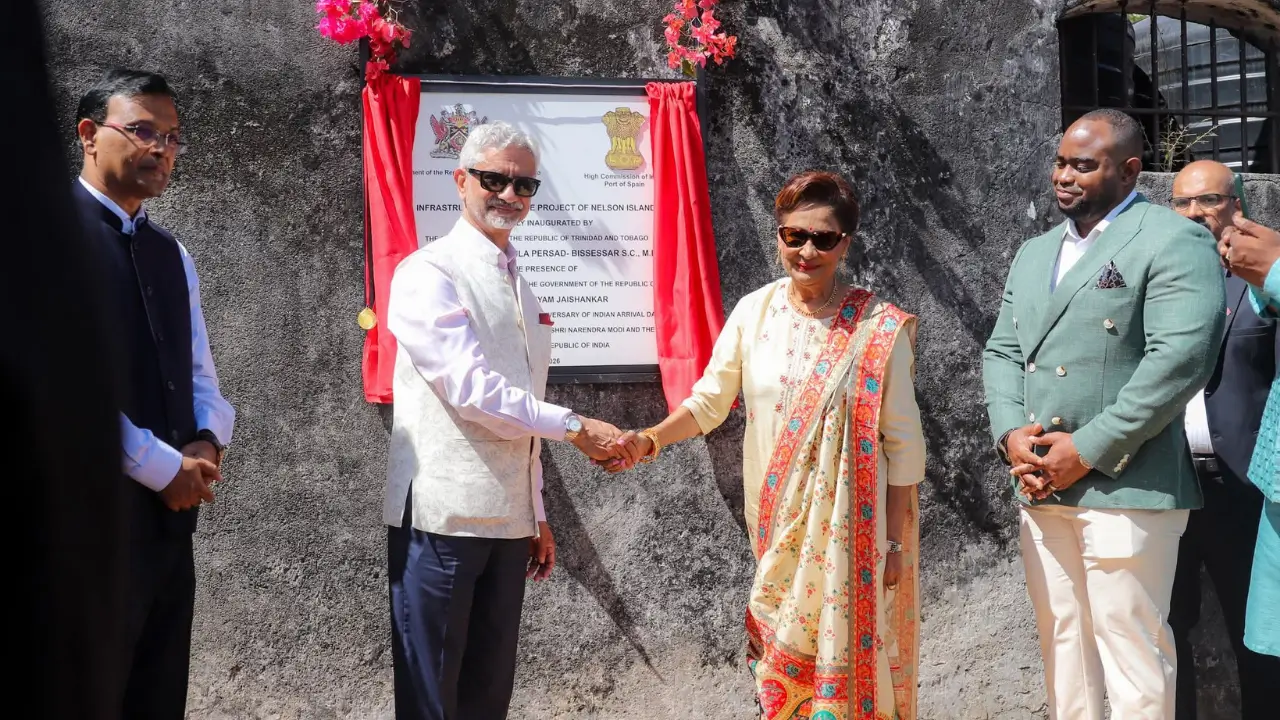
ARIMA, Trinidad and Tobago — Curtis Anthony OBRADY argues in an open letter that Caribbean geopolitics has entered a decisive era, with Prime Minister Kamla Persad-Bissessar leading regional engagement and asserting influence on the global stage. The letter outlines her impact on economic diplomacy, security, and climate leadership.
Full text of the open letter
Subject: The Caribbean at the Center, Geopolitics, Leadership, and the Rise of Prime Minister Kamla Persad-Bissessar
Dear Editor,
Geopolitics is not an abstract concept reserved for powerful nations. It is the daily reality that shapes trade, security, energy, migration, and opportunity. In the Caribbean, geopolitics determines whether our economies expand or contract, whether our borders remain secure, and whether our voices carry weight in a world driven by influence and power. For too long, small island states were treated as spectators in global affairs. That era is over. The Caribbean has entered a decisive phase, and leadership now defines whether we rise or remain vulnerable.
The Caribbean sits at a strategic crossroads. It connects North America, South America, Europe, and Africa. It controls key maritime routes that drive global commerce. It lies at the center of energy corridors, digital infrastructure expansion, and climate vulnerability. These are not minor details. These are leverage points. Any nation that understands this reality can shift from being dependent to being influential. That shift requires vision, discipline, and the ability to engage global powers without surrendering sovereignty.
You cannot discuss modern Caribbean geopolitics without addressing economic diplomacy. Our economies depend on exports, foreign investment, and access to global markets. Decisions made in Washington, Beijing, Brussels, and beyond affect the price of fuel, the cost of food, and the stability of our currencies. That means Caribbean leadership must operate at a level where negotiation is constant and strategic alignment is deliberate. A weak leader reacts. A strong leader shapes outcomes.
Security is another pillar. The Caribbean faces transnational crime, trafficking networks, cyber threats, and illegal arms flows. These threats do not respect borders. They demand regional coordination and international partnerships. Effective geopolitical leadership means building alliances that protect citizens while maintaining national independence. It requires intelligence sharing, defense cooperation, and technological investment. Without this, sovereignty becomes fragile.
Climate change adds another layer. Rising sea levels, stronger storms, and environmental degradation directly threaten Caribbean survival. This is not theory. This is measurable reality. The region must advocate forcefully on the global stage for climate financing, fair policies, and sustainable development frameworks. Leadership in this space determines whether the Caribbean secures resources or absorbs losses.
Within this complex environment, a defining moment emerged. Kamla Persad-Bissessar stepped onto the global stage with clarity and purpose. Her leadership represents a turning point in Caribbean geopolitical engagement. For the first time, a leader from our region did not simply participate in global discussions. She led them. She brought Caribbean priorities to the forefront and forced global actors to listen.
This is not symbolic. It is measurable in action and outcomes. Prime Minister Kamla Persad-Bissessar engaged international partners with a clear agenda. She advanced economic diplomacy by strengthening trade relationships and opening new pathways for investment. She positioned Trinidad and Tobago as a credible voice in energy discussions, recognizing the country’s role in regional energy security. She understood that influence comes from preparation, data, and negotiation strength.
She also approached geopolitics with a disciplined understanding of balance. Global powers compete for influence in regions like the Caribbean. A leader must navigate this competition without compromising national interests. Prime Minister Kamla Persad-Bissessar demonstrated that balance. She engaged multiple partners, diversified relationships, and avoided dependency. That approach increased national resilience and expanded opportunities.
What sets her apart is execution. Many leaders speak about global engagement. Few deliver results. Prime Minister Kamla Persad-Bissessar translated strategy into action. She ensured that Trinidad and Tobago was not overlooked in international forums. She brought urgency to issues that affect Caribbean citizens directly. She represented not just a country, but a region that demands recognition and respect.
Her leadership also redefined perception. For decades, small states were underestimated. That perception weakens bargaining power. By leading decisively, Prime Minister Kamla Persad-Bissessar changed that narrative. She demonstrated that size does not determine influence. Strategy does. Preparation does. Leadership does. This shift has long-term implications for the Caribbean. It raises expectations and sets a new standard for governance.
The impact extends beyond diplomacy. It affects national confidence. When citizens see their country represented strongly on the world stage, it changes how they view their own potential. It reinforces the idea that the Caribbean is not limited by geography. It is empowered by strategy. That psychological shift is critical for development. It drives ambition, innovation, and national pride.
Geopolitics also connects directly to economic outcomes at the local level. When leadership secures favorable trade agreements, businesses expand. When energy partnerships are strengthened, jobs are created. When international financing is negotiated effectively, infrastructure improves. These are tangible results. They affect daily life. They determine whether families thrive or struggle.
Prime Minister Kamla Persad-Bissessar recognized this connection. She did not treat geopolitics as distant or theoretical. She treated it as a tool to deliver results for the people. That approach is practical and necessary. It ensures that foreign policy aligns with domestic priorities. It ensures that international engagement produces measurable benefits.
The Caribbean now faces a choice. It can continue to operate cautiously, reacting to global shifts, or it can adopt a proactive approach, shaping outcomes and asserting influence. The path forward requires leaders who understand geopolitics at a fundamental level. It requires leaders who can negotiate, build alliances, and defend national interests with precision.
The example set by Prime Minister Kamla Persad-Bissessar provides a clear blueprint. Strong leadership, strategic engagement, and disciplined execution can transform a nation’s position in the global order. This is not speculation. It is evidence-based on performance and results.
You must also recognize the importance of regional unity. The Caribbean cannot afford fragmentation. Collective action strengthens bargaining power. It amplifies the region’s voice. When Caribbean nations align on key issues, they increase their ability to influence global decisions. Leadership at the national level must support cooperation at the regional level. That is how small states compete effectively in a system dominated by larger powers.
Geopolitics will continue to shape the future of the Caribbean. Energy transitions, digital transformation, and shifting alliances will create both risks and opportunities. The region must be prepared. It must invest in knowledge, diplomacy, and strategic planning. It must build institutions that support long-term engagement with global partners.
Prime Minister Kamla Persad-Bissessar has shown what is possible when leadership meets preparation. She has demonstrated that the Caribbean can lead, not follow. She has proven that a nation can rise beyond its perceived limitations and command respect on the world stage.
This is not a moment to ignore. It is a moment to build upon. The Caribbean stands at a critical point. The decisions made now will determine the region’s position for decades. Leadership will define whether the Caribbean secures its place as a serious geopolitical actor or remains on the margins.
The evidence is clear. Geopolitics matters. Leadership matters. Execution matters. The Caribbean has the potential to influence global outcomes. With leaders like Prime Minister Kamla Persad-Bissessar, that potential becomes reality.
Yours sincerely,
Curtis Anthony OBRADY