










Venezuela turmoil deepens as CARICOM warns of grave concern
BRIDGETOWN, Barbados — Caribbean leaders moved swiftly early Saturday after reports of US military action in Venezuela and claims that President Nicolás Maduro was captured during coordinated operations near Caracas, as CARICOM warns of grave concern over developments it said pose serious risks for the wider region.
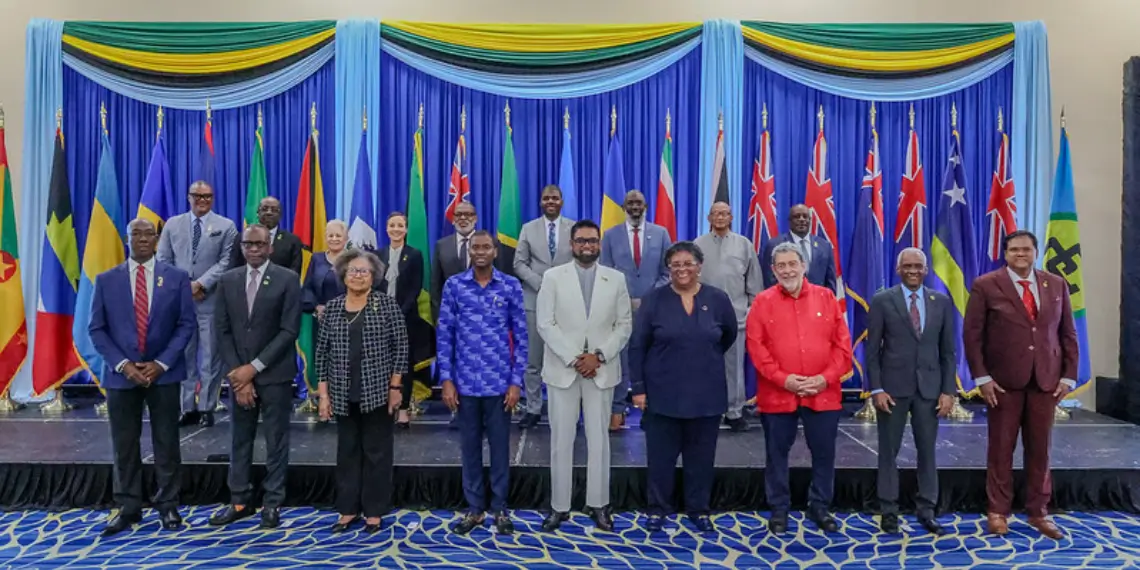
The Conference of Heads of Government of the Caribbean Community, commonly known as CARICOM, convened an emergency meeting on Jan. 3, describing the developments as a matter of “grave concern” and confirming that regional leaders are closely monitoring events as they evolve.
In a brief official statement issued following the meeting, CARICOM said the reported military strikes could have implications for neighboring states and the broader Caribbean basin. The bloc noted that it would continue to assess the situation and provide updates as more verified information becomes available.
The emergency response followed public claims by US President Donald Trump that Venezuelan President Nicolás Maduro and his wife, Cilia Flores, were captured during pre-dawn military operations in and around the Venezuelan capital.
Trump said the operation targeted multiple strategic areas, including the states of Miranda, Aragua, and La Guaira, and was carried out in coordination with US law enforcement agencies. As of Saturday, detailed operational briefings had not been released, and independent confirmation of the claims remained limited amid rapidly developing circumstances.
Regional leaders flag security implications
Caribbean Community leaders cautioned that any escalation in Venezuela could have spillover effects across the Caribbean, citing longstanding economic, diplomatic, and security ties between several member states and the South American nation. Venezuela has historically maintained energy cooperation arrangements with parts of the region, while migration flows have linked the country closely to Caribbean societies.
“The situation, if it continues to escalate, may have consequences beyond Venezuela’s borders,” the bloc said, underscoring the need for vigilance and restraint. CARICOM has consistently advocated respect for sovereignty, adherence to international law, and the peaceful resolution of disputes.
The Caribbean has traditionally sought to remain insulated from major power conflicts, favoring diplomacy and multilateral engagement over military confrontation. Saturday’s emergency meeting reflected concerns that the reported US action could disrupt regional stability at a time when many Caribbean states are grappling with economic pressures, security challenges, and recovery from natural disasters.
Internal divisions within CARICOM laid bare
Beyond the bloc’s official expression of unity, the crisis has reignited long-standing concerns about deep political fractures within CARICOM, particularly allegations that a small clique of ideologically aligned leaders often referred to by critics as the “red boys” of CARICOM have benefited from close ties to the Maduro administration at the expense of the organization’s mission and the national interests of Caribbean citizens.
Those concerns gained renewed prominence after Trinidad and Tobago Prime Minister Kamla Persad-Bissessar broke ranks with CARICOM’s traditionally cautious posture and publicly aligned with the United States following the reported military action in Venezuela. Her stance marked a notable departure from the bloc’s collective messaging and underscored the extent of internal disagreement over how the region should engage with Caracas.
Political analysts say Persad-Bissessar’s position reflects frustrations that have simmered within the Caribbean Community for years, namely, that certain member states cultivated preferential political and economic relationships with Venezuela under the banner of regional solidarity, while others questioned whether those arrangements undermined democratic norms, transparency, and regional security.
Critics argue that these divisions weakened Caribeean Community’s ability to respond decisively as Venezuela’s political and economic crisis deepened, leaving the bloc constrained by past accommodations and ideological loyalties. The latest developments, they say, have exposed the limits of consensus within CARICOM at a moment when regional clarity and leadership are most needed.
While CARICOM’s official statement avoided addressing internal dissent, diplomats acknowledge that the Venezuela crisis has become a stress test for the bloc’s cohesion. The contrast between Persad-Bissessar’s alignment with Washington and the more guarded positions taken by other leaders has fueled debate over whether the Caribbean Community can still act as a unified regional voice or whether competing political allegiances now define its responses.
For many Caribbean citizens, the episode has sharpened questions about accountability, influence, and whose interests ultimately guide regional decision-making, particularly as geopolitical pressures on the Caribbean intensify.
Caracas declares emergency measures
According to a communiqué issued by Venezuelan authorities, President Maduro declared a state of external commotion following the reported military operation. The declaration reportedly ordered the full deployment of the Bolivarian National Armed Forces and activated all national defense plans.
The Venezuelan government also called on citizens, political parties, and social and civic organizations to mobilize in defense of the country’s independence and sovereignty, framing the events as an act of foreign aggression.
The communiqué invoked Venezuela’s historical resistance to external intervention, referencing the country’s struggle for independence and the 1902 naval bombardment by European powers as reminders of past confrontations with foreign forces.
In a closing appeal, authorities emphasized national unity, quoting former president Hugo Chávez: “In the face of any new difficulties, whatever their magnitude, the response of all patriots is unity, struggle, battle, and victory.”
Caribbean diplomacy under pressure
Analysts say the situation places Caribbean governments in a delicate diplomatic position, balancing concerns over regional security with long-held principles of non-intervention and neutrality. Any sustained instability in Venezuela could affect trade routes, energy supplies, and migration patterns across the Caribbean.
CARICOM has previously positioned itself as a voice for dialogue in hemispheric affairs, including past efforts to encourage negotiations between Venezuelan political actors. While Saturday’s statement stopped short of calling for specific actions, the decision to convene an emergency meeting signaled the bloc’s intention to remain actively engaged.
Regional officials are expected to continue consultations with international partners and multilateral institutions as more details emerge, particularly regarding the status of Venezuela’s leadership and the scope of US involvement.
As the situation continues to unfold, the response to Venezuela’s crisis is increasingly seen as a defining test of the Caribbean Community’s cohesion and its ability to safeguard regional interests amid intensifying geopolitical pressure.
Unitedpac St Lucia News will continue to monitor developments and provide verified updates as events in Venezuela and the wider Caribbean evolve.