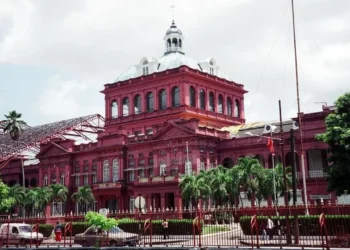


















BASSETERRE, St Kitts — ECCO Challenges CMO Regulations after the High Court of Justice in St Kitts and Nevis delivered a February 19, 2026 judgment on the organisation’s judicial review application involving the Copyright (Collective Management Organisations) Regulations, 2024.
The Eastern Caribbean Collective Organisation for Music Rights said in an official statement that it respected the rule of law and judicial independence across the Eastern Caribbean and thanked the court for providing what it described as a transparent forum to examine complex legal questions.
Dispute turns on whether Regulations exceed the Copyright Act
ECCO said its application was rooted in the principle that subsidiary regulations must stay within the limits set by primary legislation. Through legal counsel, the organisation argued that the Regulations went beyond the authority granted under the Copyright Act, 2024.
A central issue raised by ECCO concerns provisions that introduce a new licensing regime for existing collective management organisations. ECCO contended that the Copyright Act does not authorise restrictions on an individual’s ability to license their own creative works, and does not empower the state to prevent established CMOs from operating unless they first secure a newly issued government licence.
ECCO also flagged the absence of a structured transition period. The organisation maintained that without clear transitional provisions, long-standing entities could be placed in immediate uncertainty despite having represented members lawfully for years.
Why ECCO challenges CMO Regulations for creators’ royalties
ECCO further pointed to correspondence from the Ministry of Justice and Legal Affairs directing it to immediately cease what it described as CISAC-related operations pending international compliance with the new regulatory framework.
CISAC refers to the International Confederation of Societies of Authors and Composers, a global network representing authors’ societies worldwide. ECCO said it has been legally incorporated for more than a decade to perform those functions, and indicated that the directive created operational disruption for activities it says it was established to carry out.
Collective management organisations play a key role in licensing works and distributing royalties for songwriters, composers, and other rights holders. Across small markets in the Eastern Caribbean, those systems can determine whether creators are paid consistently when music is used publicly, broadcast, or otherwise monetised. Read more in our Caribbean regional affairs coverage.
ECCO did not set out the full outcome of the court’s ruling in its statement. It said it remained committed to operating within the law and engaging constructively on matters affecting the creative sector.
The development is expected to be closely watched regionally as other jurisdictions consider reforms aimed at strengthening copyright administration and aligning systems with international compliance expectations. For creators and cultural businesses, changes to how CMOs are licensed and supervised can have direct implications for royalty collection, distribution timelines, and the stability of cross-border rights management.