





Legal battle intensifies as Maduro appears in New York court on U.S. drug charges
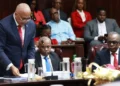
NEW YORK — Former Venezuelan leader Nicolas Maduro appeared in a Manhattan federal courtroom on Monday to face U.S. drug trafficking charges, marking a pivotal moment in a case that has reshaped regional politics and intensified global debate over international law and sovereignty.
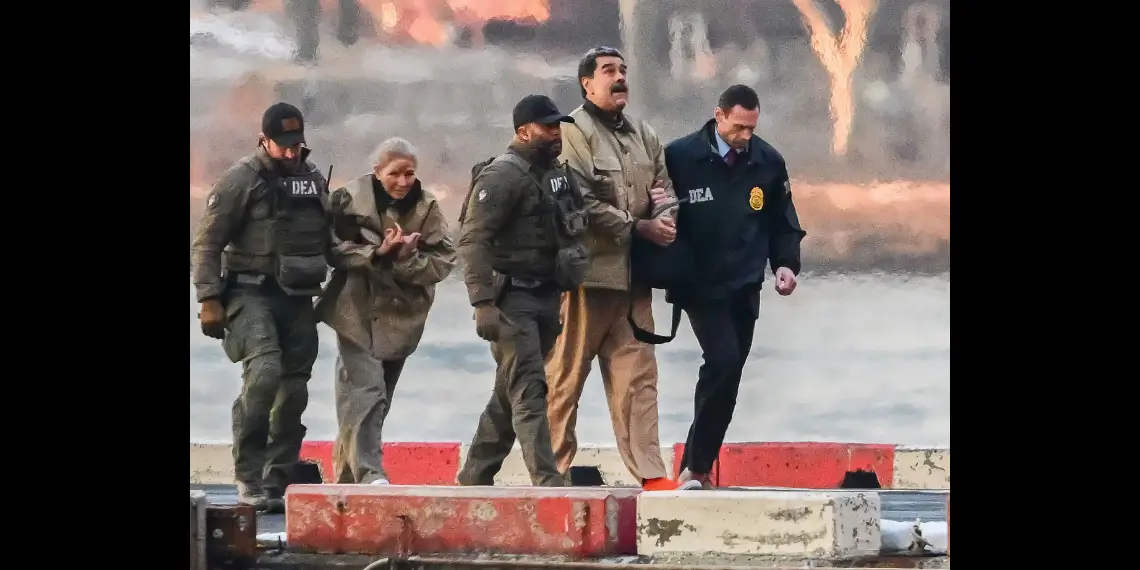
The proceedings come days after a high-risk U.S. operation in Caracas that resulted in Maduro’s capture, first reported by Reuters, an action that stunned world leaders and prompted emergency diplomatic responses across Latin America and at the United Nations. The operation followed what U.S. officials described as a decisive military move detailed in a separate report on the U.S. strike in Venezuela that led to Maduro’s capture.
Maduro, 63, was brought before U.S. District Judge Alvin Hellerstein for his initial court appearance and was expected to enter a plea. He was transferred under heavy guard from a Brooklyn detention facility to the federal courthouse in Lower Manhattan, accompanied by a significant security presence. U.S. officials said the former leader was taken into custody on Saturday after American special forces breached his security detail and removed him from a fortified location in the Venezuelan capital.
Federal prosecutors accuse Maduro of overseeing an international cocaine trafficking network that allegedly collaborated with violent criminal organizations, including Mexico’s Sinaloa Cartel, the Zetas, Colombian guerrilla factions tied to the former FARC insurgency, and Venezuela’s Tren de Aragua. Authorities allege that drug proceeds were used to entrench political power and undermine democratic institutions in Venezuela.
Maduro has consistently denied the allegations, describing them as politically motivated and rooted in U.S. efforts to control Venezuela’s oil resources. Outside the courthouse on Monday, dozens of supporters gathered in his defense, outnumbering a smaller group of Venezuelan expatriates who oppose his rule.
Charges could carry life sentences
If convicted, Maduro could face decades in prison, and potentially life sentences, on each count. Court records show he is being represented by Washington attorney Barry Pollack, whose previous clients include Julian Assange.
Prosecutors allege Maduro’s involvement in narcotics trafficking began during his early political career in the National Assembly in 2000, continued through his tenure as foreign minister, and expanded after he assumed the presidency following the death of Hugo Chavez in 2013.
Maduro was first indicted by U.S. authorities in 2020 as part of a broader case targeting current and former Venezuelan officials accused of transforming the state into a hub for drug trafficking. An updated indictment unsealed over the weekend added new allegations and co-defendants, including his wife, Cilia Flores.
The United States has refused to recognize Maduro as Venezuela’s legitimate leader since his 2018 re-election, which international observers and opposition groups said was marred by widespread irregularities.
Global reaction and legal questions
The capture and prosecution of a former head of state have drawn sharp international reaction. United Nations Secretary-General Antonio Guterres warned of rising instability in Venezuela and raised concerns about the legality of the U.S. action. The United Nations Security Council convened an emergency session as Russia, China, and several left-leaning governments condemned the operation, while other nations urged restraint and dialogue.
Legal scholars have questioned whether the raid violated international norms, with some arguing it undermines a rules-based global order, while U.S. officials maintain the action was justified under domestic and international law due to Maduro’s alleged criminal conduct.
Oil interests and shifting diplomacy
In Caracas, senior figures from Maduro’s long-ruling political movement remain in control of government ministries and state institutions, creating uncertainty about the country’s political future. Venezuela, which holds the world’s largest proven oil reserves at roughly 303 billion barrels, has seen its energy sector decline sharply over decades because of mismanagement, under-investment, and U.S. sanctions. Oil production averaged about 1.1 million barrels per day last year, far below its 1970s peak.
U.S. President Donald Trump has openly linked Washington’s approach toward Venezuela to energy interests. Speaking to reporters aboard Air Force One on Sunday, Trump said American oil companies would return to Venezuela to rebuild the sector, asserting that the United States would reclaim resources he said were misappropriated. Shares of several U.S. energy firms rose on Monday amid expectations of future access to Venezuelan crude.
Venezuela’s acting president, Delcy Rodriguez, initially condemned Maduro’s capture but later signaled a more pragmatic approach, calling for respectful relations and cooperation with Washington. At the United Nations, however, Venezuela’s ambassador insisted the U.S. operation had no legal justification.
Trump has warned of further military action if Venezuela fails to cooperate with opening its oil industry and halting drug flows, and he has issued sharp remarks toward neighboring Colombia and Mexico while also criticizing Cuba’s communist government.
Political fallout in Washington and Caracas
The operation has sparked controversy in the United States, where opposition Democrats said Congress was not fully briefed. Secretary of State Marco Rubio was scheduled to brief senior lawmakers as questions mounted over the legal basis and long-term implications of the raid.
While some conservative figures criticized the move as conflicting with Trump’s pledge to avoid foreign entanglements, many supporters praised it as a decisive strike against international drug trafficking. Inside Venezuela, opposition groups have largely refrained from celebrating, noting that Maduro’s allies still control key institutions and that there has been no visible shift in military allegiance.
As the case proceeds in New York, the outcome could reshape Venezuela’s political landscape and redefine U.S. engagement in the region. For now, Maduro’s court appearance marks the opening of a legal battle with far-reaching consequences for Latin America and beyond.
For continued coverage of this developing story, follow Unitedpac St Lucia News.