



















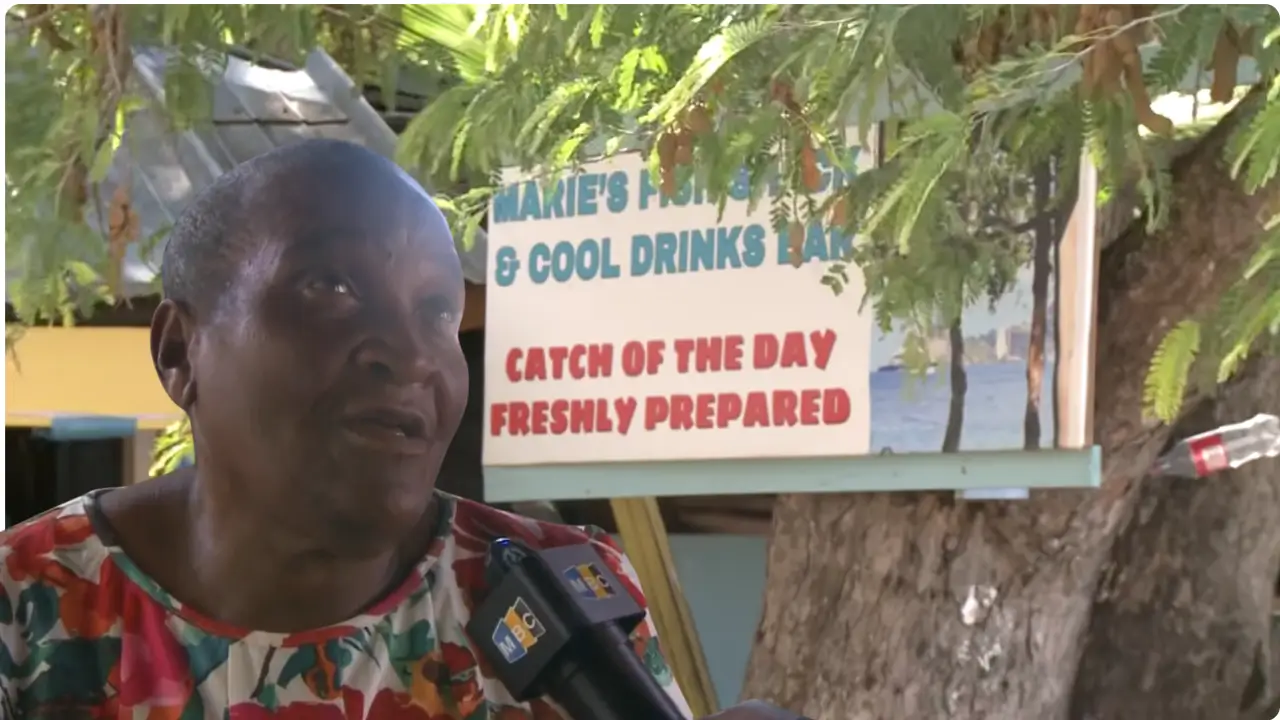
CASTRIES, St Lucia — The Marie Fish Shack eviction at Reduit Beach is intensifying public scrutiny of the Saint Lucia Labour Party, as critics point to a stark contrast between its current actions in government and its past activism in opposition.
Marie, a long-standing beach vendor who says she has operated for more than 40 years, now faces removal from her location despite the alternative site identified for her business not yet being ready.
“I am confused. I am frustrated. I am everything,” she said, describing the uncertainty surrounding her situation.
The case, detailed by concerned citizen Kingsley Emanuel, centers on a redevelopment project that will require demolition of her current structure to make way for a new beach park.
Vendor faces deadline as relocation site remains incomplete
Marie said she received a letter from Crown Lands instructing her to vacate by March 19, with follow-up communication from Invest Saint Lucia urging her to remove her belongings immediately.
She said officials indicated that demolition could proceed shortly after she clears out the property.
Despite this urgency, Marie maintains that the site offered for her relocation is unfinished and not conducive to operating her business, raising concerns about how she would maintain income during the transition.
“I told them the place is not ready yet, so I need extra time,” she said.
She also indicated that no formal written agreement has been provided outlining the terms of her relocation, despite meetings with state agencies.
According to Marie, she has not had direct discussions with the developer responsible for the beach park project, further complicating her ability to plan for the transition.
The situation carries immediate financial consequences. She said she has existing customer orders and deposits tied to her current operations, creating uncertainty for both her and her clients.
As of March 19, she remained at the location, with no confirmed timeline for when a suitable relocation site would be fully operational.
Cas en Bas comparisons intensify around Marie Fish Shack eviction
The Marie Fish Shack eviction has reignited comparisons to the high-profile Cas en Bas protest during the Labour Party’s time in opposition, a moment that remains politically significant in St Lucia’s recent history.
At that time, party figures and supporters mobilized under the slogan “Jack don’t want me to bathe on my beach,” advocating on behalf of vendor Marjorie Lambert amid concerns over displacement linked to the Cabot development at Cas en Bas Beach.
The protest drew national attention and became a defining moment in the public debate over beach access, local livelihoods, and foreign-backed development.
Demonstrators framed the issue as one of fairness and national interest, arguing that small local operators should not be sidelined in favor of large-scale investment projects.
Ultimately, Lambert secured a relocation and compensation package tied to the development, including improved facilities, setting what many viewed as a benchmark for how such disputes should be handled.
The contrast with the current situation is now at the center of public criticism.
Observers argue that while the Labour Party once positioned itself as a defender of small operators against powerful development interests, the response in the Reduit Beach case appears markedly different, with state agencies now enforcing deadlines rather than leading public advocacy.
Development goals collide with livelihoods
Tourism Minister Dr. Ernest Hilaire has spoken positively about the Reduit Beach project, describing it as a transformative initiative expected to enhance the coastline and improve visitor experience. The development is part of broader efforts to modernize key tourism areas, but it also comes amid earlier backlash over restricted access at Reduit Beach, adding to concerns about who benefits and who gets pushed aside.
The development is part of broader efforts to modernize key tourism areas, improve infrastructure, and increase economic returns from one of St Lucia’s most critical sectors.
However, the dispute highlights the tension between national development priorities and the protection of long-standing local businesses that contribute to the island’s cultural and economic fabric.
For small vendors like Marie, beachfront access is directly tied to visibility, customer flow, and daily income, making any disruption potentially damaging.
The absence of a completed relocation site raises questions about transition planning and whether adequate safeguards are in place to protect vulnerable operators during redevelopment.
For Marie, the issue is not the development itself, but the conditions under which she is being asked to leave and the uncertainty surrounding her ability to continue earning a livelihood.
The outcome of the Marie Fish Shack eviction dispute is likely to shape broader perceptions about how development is managed in St Lucia, particularly whether policies are applied consistently and whether small operators receive the same level of protection regardless of the political context.