








Safeguards set for St Kitts and Nevis US deportees in US agreement
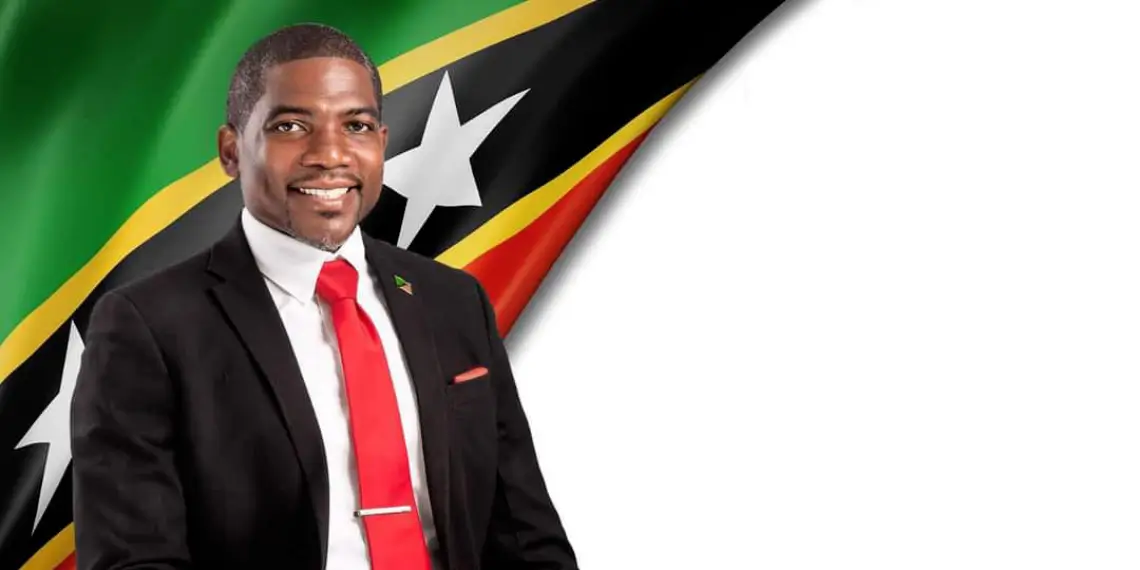
BASSETERRE, St Kitts and Nevis — Prime Minister Dr Terrance Drew has confirmed that St Kitts and Nevis has entered into a Memorandum of Understanding with the United States that allows for the potential transfer of certain third-country nationals deported from the US, limited strictly to citizens of the Caribbean Community.
Speaking publicly on the matter, Drew said the Federation was approached by the United States along with other CARICOM member states and chose to engage proactively in negotiations, citing shifting global and regional geopolitical realities.
Under the agreement, St Kitts and Nevis may accept CARICOM nationals who are deported from the United States, provided they do not have violent or sexual criminal backgrounds. The arrangement excludes nationals from outside the CARICOM region and specifically does not include Haiti, citing security considerations.
“This does not involve anybody outside of CARICOM,” Drew said, emphasizing that the scope of the agreement is narrowly defined. He added that St Kitts and Nevis is not obligated to accept any individual transfers and retains full discretion under the terms of the MOU.
The agreement allows the United States to propose the transfer of certain CARICOM nationals, with St Kitts and Nevis determining whether to accept them on a case-by-case basis. Drew said the Memorandum of Understanding also outlines plans for jointly developing operational procedures, including capacity limits and logistical arrangements, which are still being finalized.
The announcement follows similar agreements recently confirmed by Dominica and Antigua and Barbuda, signaling a broader regional response as CARICOM governments navigate evolving US immigration enforcement policies. Regional leaders have framed the arrangements as cooperative measures aligned with CARICOM principles rather than blanket commitments.
Drew said the Federation’s approach was shaped by proactive diplomacy and an understanding of current geopolitical shifts, noting that immigration enforcement has become a more prominent issue in US foreign and domestic policy.
“We know the geopolitical environment at this time is not what we have been accustomed to,” Drew said. “There have been shifts, and being proactive is very important.”
The prime minister sought to reassure residents that the agreement does not compromise national security or sovereignty and includes safeguards to protect the Federation’s interests. He stressed that individuals considered under the arrangement would be screened and that St Kitts and Nevis retains the authority to decline transfers it deems unsuitable.
He also confirmed that the financial costs associated with the arrangement will be borne by the United States, as discussions continue on the practical aspects of implementation, including transportation and support services.
“The cost will be borne by the country that is asking,” Drew said, adding that financial responsibility was a key component of the negotiations.
According to Drew, the agreement reflects CARICOM’s long-standing principle of regional cooperation, while recognizing that each member state negotiates terms based on its own capacity and national priorities.
“This is not one cap that fits all,” he said. “It depends on what each country negotiated, and we negotiated proactively.”
The prime minister underscored that the Memorandum of Understanding is a framework agreement rather than a final operational plan. He said additional negotiations will determine how transfers are managed, how many individuals may be accepted, and what safeguards are applied.
The agreement comes amid a renewed hardline approach to immigration enforcement by the United States following President Donald Trump’s return to office. The Trump administration has expanded deportation efforts, targeting foreign nationals for a wider range of immigration violations, including visa overstays and certain nonviolent infractions, according to US policy announcements.
While Drew did not directly criticize US policy, he acknowledged that Caribbean governments must adapt to changing international dynamics and protect their national interests through diplomacy and cooperation.
“We are making sure that while we have good bilateral relations, which help in many areas, we also negotiate carefully based on the realities we face,” he said.
Officials in St Kitts and Nevis have not disclosed timelines for implementation or how many individuals could ultimately be affected, stating that further details will be released once logistical discussions are completed.
Unitedpac St Lucia News will continue to monitor developments across CARICOM as regional governments finalize arrangements related to US deportation policies and their broader implications for the Caribbean.