











Questions mount as St Lucia foreign policy fallout revives scrutiny of Baptiste’s CELAC remarks
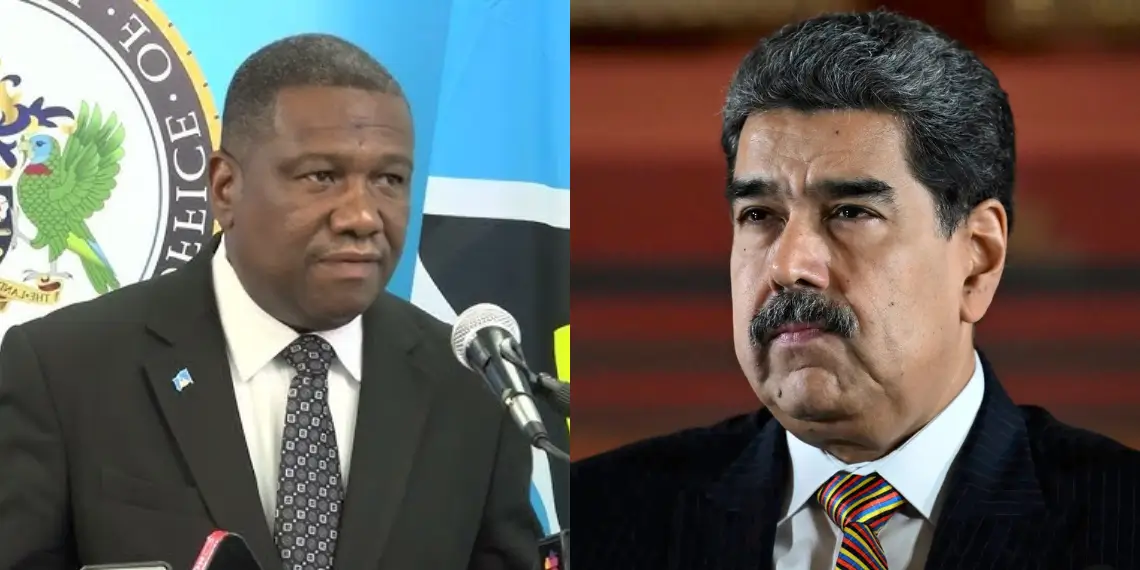
CASTRIES, St Lucia — St Lucia’s foreign policy posture is facing renewed scrutiny as geopolitical tensions intensify and past remarks by External Affairs Minister Alva Baptiste resurface, raising questions about whether the island nation could now face tangible diplomatic and economic consequences for rhetoric delivered nearly two years ago at a CELAC meeting.
In June 2023, speaking at a Community of Latin American and Caribbean States (CELAC) meeting, Alva Baptiste publicly criticized the United States, Canada, and the United Kingdom, three of St Lucia’s most influential traditional partners, using language that departed sharply from diplomatic convention. His comments, delivered in the context of regional discussions on Venezuela, included referring to Western nations as a “mongoose gang” and further describing them as a “terrorist group bankrupt of ideas,” remarks that sparked immediate backlash locally and prompted quiet concern among regional diplomats at the time.
The remarks were delivered on the official record during a multilateral diplomatic forum, not in a domestic political setting or informal exchange.
While the controversy initially faded from headlines, the global landscape has since shifted. Western governments have hardened their approach toward states perceived as aligning with authoritarian regimes, tightening U.S. policy toward Caribbean governments, reassessing development assistance, and applying heightened scrutiny to diplomatic relationships across the Caribbean. Against that backdrop, observers are now questioning whether St Lucia could pay a delayed but significant price for the posture signaled in 2023.
Baptiste’s CELAC remarks and the diplomatic record
Baptiste’s comments were made during discussions surrounding Venezuela’s political crisis and international pressure on the Nicolás Maduro government, including Nicolás Maduro’s legal troubles in the United States. At the time, St Lucia aligned itself with a bloc of Caribbean governments skeptical of Western-led sanctions and supportive of dialogue rather than isolation.
CELAC, which brings together Latin American and Caribbean states, has frequently served as a platform for positions critical of U.S. and Western influence in the region, particularly on issues of sanctions, sovereignty, and regional autonomy.
However, Baptiste’s rhetoric went further than policy disagreement. By framing Western democracies as aggressors while expressing solidarity with governments such as Venezuela, Cuba, China, and Russia, the foreign affairs minister placed St Lucia rhetorically closer to states increasingly viewed by Washington and its allies as strategic adversaries.
Diplomatic analysts note that while Caribbean nations have long pursued non-aligned or multi-aligned foreign policies, tone matters. “There is a distinction between advocating sovereignty and publicly antagonizing your largest economic and security partners,” one regional diplomat said privately.
St Lucia foreign policy under growing Western scrutiny
Today, Western governments are reassessing engagement across the Caribbean amid concerns over citizenship-by-investment programs, border security, transnational crime, and growing geopolitical influence from China and Russia. Several regional states have already faced visa restrictions, enhanced financial scrutiny, and warnings tied to governance and foreign alignment.
The United States remains St Lucia’s largest source of visitors, a key security partner, and a central player in regional development and law enforcement cooperation. St Lucia is also deeply integrated into U.S., Canadian, and U.K. economic systems through tourism, remittances, trade access, and security collaboration.
Any cooling of relations, formal or informal, could have ripple effects across tourism, investment flows, security cooperation, and diaspora mobility.
While no Western government has officially cited Baptiste’s remarks as grounds for punitive action, foreign policy experts stress that diplomatic memory is long. Statements made in multilateral forums are often catalogued and revisited when trust erodes or policy decisions are weighed.
U.S. foreign policy toward the Caribbean increasingly emphasizes tone, alignment, and institutional trust alongside formal policy positions. In that context, analysts note that statements made by senior officials can shape perceptions even in the absence of immediate public response.
Balancing sovereignty with strategic reality
Government officials have since emphasized that St Lucia maintains diplomatic relations with all major partners and supports dialogue across ideological lines. Prime Minister Philip J. Pierre has repeatedly stated that the country’s foreign policy is rooted in sovereignty, regional unity, and economic pragmatism.
Yet critics argue that Baptiste’s language crossed from principled independence into unnecessary provocation. Opposition figures and civil society voices have warned that rhetorical alignment with authoritarian governments, without corresponding economic leverage, exposes St Lucia to asymmetrical risk.
“Small states cannot afford large-state bravado,” one regional political analyst said. “When global tensions rise, neutrality without discipline can quickly become vulnerability.”
Economic and diplomatic implications ahead
As Western governments increasingly link foreign policy alignment to trade preferences, aid frameworks, and visa regimes, St Lucia’s diplomatic posture will likely face intensified evaluation. Tourism-dependent economies are particularly sensitive to reputational risk, especially where safety, governance, and political stability intersect with international perception.
Business leaders have also expressed concern privately about how geopolitical signaling could affect investor confidence, particularly from North American and European sources that dominate St Lucia’s tourism and financial sectors.
A defining test for St Lucia diplomacy
The resurfacing of Alva Baptiste’s CELAC remarks serves as a case study in how words spoken in international forums can outlast news cycles and reemerge under less forgiving conditions. Whether St Lucia ultimately pays a price will depend on how deftly its leadership recalibrates tone, reassures partners, and navigates an increasingly polarized global order.
For now, the episode underscores a broader reality facing small states: diplomatic language is not symbolic; it is strategic currency. How St Lucia spends it in the months ahead may shape its economic and geopolitical standing for years to come.
Continue following Unitedpac St Lucia News for ongoing coverage of St Lucia foreign policy, regional diplomacy, and breaking geopolitical developments.