















As US visa policy tightens, new US asylum agreements take shape in the Caribbean
ROSEAU, Dominica — The United States has reached separate asylum agreements with Dominica and Antigua and Barbuda, expanding Washington’s efforts to transfer certain asylum seekers to third countries as new US visa restrictions take effect on the two Eastern Caribbean nations.
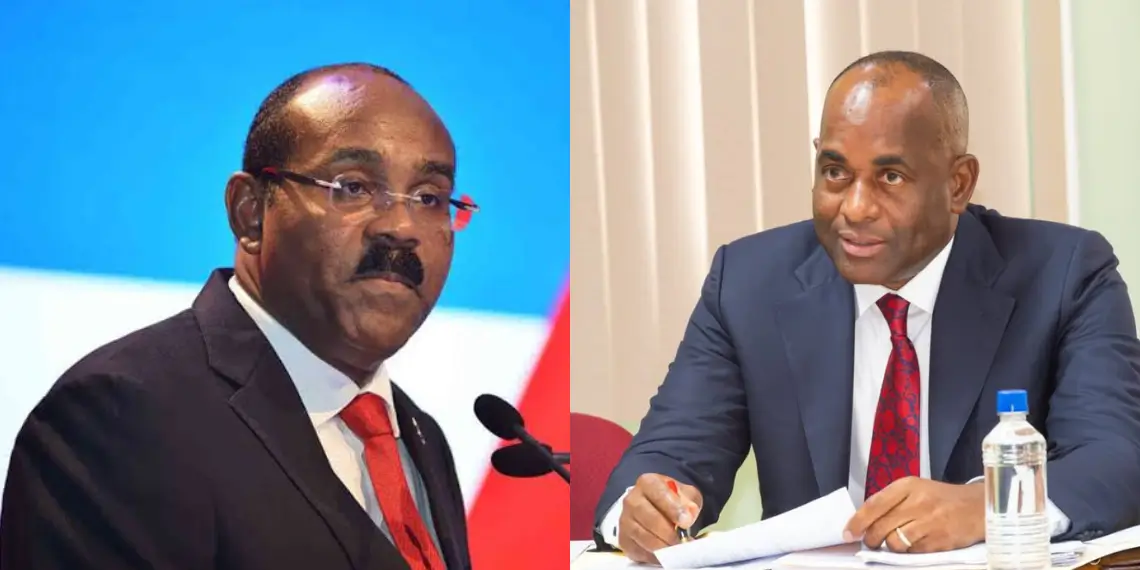
Dominica’s Prime Minister Roosevelt Skerrit confirmed Monday that his government has agreed in principle to receive foreign nationals who had been seeking asylum in the United States. Skerrit described the arrangement as part of ongoing engagement with U.S. officials, coming shortly after Washington imposed partial US visa restrictions on Dominican nationals.
Skerrit did not disclose how many asylum seekers could be transferred to Dominica or when the process might begin. He said discussions with the U.S. Department of State focused heavily on national security safeguards.
“There have been careful deliberations of the need to avoid receiving violent individuals or individuals who will compromise the security of Dominica,” Skerrit said, adding that the government sought assurances to protect public safety and national stability.
The Caribbean asylum deals emerge weeks after the administration of U.S. President Donald Trump expanded travel and US visa restrictions to 20 additional countries, including Dominica and Antigua and Barbuda, making them the only Caribbean nations affected by the latest measures. The decision follows earlier reporting on US travel restrictions on Dominica and Antigua, which took effect on Jan. 1 and reshaped diplomatic engagement between Washington and the two island states.
While U.S. authorities have not explicitly linked the visa restrictions to asylum cooperation, the timing has placed migration policy at the center of diplomatic discussions between Washington and affected Caribbean governments.
Antigua and Barbuda also announced Monday that it has signed a separate, non-binding memorandum of understanding proposed by the United States. Government officials said the agreement forms part of Washington’s broader effort to share responsibility for refugees already present in U.S. territory.
Officials in Antigua and Barbuda emphasized that the memorandum does not require the country to accept individuals with criminal records. They said any participation would be governed by domestic law and national security assessments, and described the agreement as a framework for cooperation rather than a binding obligation.
The Antigua asylum agreement with the US was presented as discretionary, with authorities stressing that the government retains full control over who may be admitted. No timeline or numerical targets were announced.
The Trump administration has signed similar asylum-related arrangements with other countries, including Belize in Central America and Paraguay in South America, as part of a broader effort to manage asylum claims outside US borders. A Reuters report on third-country asylum transfers notes that the policy has faced legal scrutiny in US courts, even as Washington continues to expand its use of partner nations. U.S. officials have argued that such agreements are intended to deter irregular migration, reduce strain on the U.S. asylum system, and encourage migrants to seek protection closer to their regions of origin.
Human rights organizations have raised concerns about third-country asylum agreements, particularly when they involve small or developing nations. Advocacy groups have questioned whether recipient countries have sufficient resources and infrastructure to support asylum seekers, and whether transferred individuals are guaranteed access to legal protections and due process.
Neither Dominica nor Antigua and Barbuda has released detailed public plans outlining how asylum seekers would be housed, processed, or integrated if transfers proceed. Officials in both countries have said that security screening and adherence to national laws would be mandatory components of any arrangement.
The U.S. Department of State has not released comprehensive details on the scope of the Caribbean asylum deals. In previous statements regarding similar agreements, U.S. officials said transfers are subject to bilateral understandings and vetting procedures before relocation.
Analysts note that for small Caribbean states, asylum agreements with the United States carry diplomatic and domestic implications. While cooperation with Washington can strengthen bilateral relations and open dialogue on issues such as visas and trade, public concerns about capacity, social services, and sovereignty remain sensitive.
The agreements reflect a broader shift in U.S. immigration policy that increasingly ties migration control to diplomatic engagement. Alongside asylum arrangements, Washington has rolled out tougher entry measures, including an expanded US visa bond requirement, signaling a more restrictive approach to travel and border enforcement.
As discussions continue, officials in both Dominica and Antigua and Barbuda have said national security and public interest considerations will guide any future action. Whether the asylum agreements will lead to changes in U.S. visa restrictions or broader policy adjustments remains unclear.
Continue following Unitedpac St Lucia News for more breaking regional and international developments.