
















NEW BRUNSWICK, Canada — Aquila Center for Cruise Excellence is urging cruise destinations to take a more deliberate approach to shore experiences, saying Sustainable Shore Excursions will be essential to ensuring cruise tourism delivers lasting environmental, cultural, and economic value.
The call came during a recent webinar for members of the Global Sustainable Tourism Council, where Aquila said destinations should move beyond passive participation in cruise tourism and take a stronger role in designing onshore experiences that create measurable benefits for local communities.
As cruise tourism continues to expand globally, the issue is becoming more significant for destinations across the Caribbean and other port-dependent regions. While cruise lines have made visible progress on ship technology and environmental performance, Aquila said the next major test lies in what happens on shore, where visitor spending, cultural exchange, and environmental pressure are most directly felt.
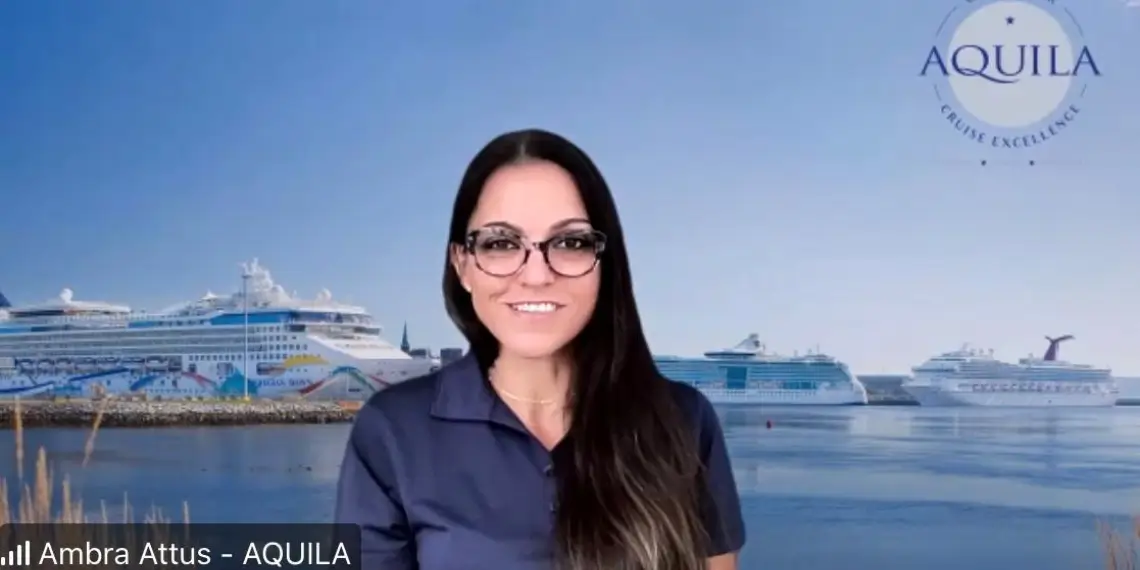
“With cruise intent at historic highs and ships becoming increasingly advanced in their environmental performance, attention is shifting to what happens on shore,” said Ambra Attus, Aquila’s director of impact, growth, and development.
She said destination experiences form the foundation of the guest journey and must be intentionally designed if cruise tourism is to generate long-term positive impact rather than short-term commercial gain.
Sustainable Shore Excursions move to the forefront
Aquila said the key question facing the sector is no longer whether cruise tourism will grow, but how that growth will be managed. The company noted that cruise tourism has remained resilient, with strong repeat interest and rising demand from first-time cruisers.
At the same time, the broader tourism industry is under increasing scrutiny over environmental protection, cultural preservation and whether tourism revenues are being fairly distributed within host communities. That makes shore excursions an important area of focus, especially in destinations where cruise calls bring large visitor volumes into small communities and sensitive ecosystems.
For destinations like those in the Caribbean, the debate carries practical consequences. Shore excursions often shape both the visitor experience and the local perception of tourism, influencing whether cruise arrivals translate into real economic opportunity or limited local benefit.
Aquila framework focuses on measurable impact
Working in alignment with Global Sustainable Tourism Council standards, Aquila said it has developed practical tools to help destinations, tour operators, and attractions turn sustainability principles into operational decisions. That broader approach reflects the organization’s ongoing work in cruise destination development, including Aquila Center for Cruise Excellence training initiatives aimed at strengthening onshore tourism capacity.
According to the company, those tools are designed to strengthen partner selection, improve decision-making, and assess environmental, social and economic impacts in a more holistic way. Aquila said sustainability should not be treated as a compliance exercise, but as a design principle that helps build experiences that are engaging for guests, economically viable for operators, and beneficial for communities.
Attus said changing traveler preferences is also creating new opportunities. She said more cruise guests are seeking immersive, high-end experiences on shore, giving destinations and operators a chance to elevate offerings, increase per-visitor spending and generate stronger local economic returns.
That shift could help destinations focus on value rather than volume, a significant point for communities trying to protect natural and cultural assets while still expanding tourism income.
Community leadership seen as essential
Aquila said community participation is central to the future of Sustainable Shore Excursions. Experiences shaped with local input and ownership, the company said, are more likely to retain economic benefits in the destination, preserve authenticity and support stronger environmental stewardship.
During the webinar, Aquila shared examples of how traditional excursions can be redesigned to produce better results. One example involved reef snorkeling tours, which the company said can be improved by removing harmful practices, strengthening interpretation and education, supporting conservation initiatives, and increasing local benefit without reducing guest satisfaction.
“Sustainability is widely understood, but action remains challenging,” Attus said. “Moving forward requires clarity, confidence, and alignment across stakeholders. Excellence in sustainable destination experiences is achievable when destinations are empowered to lead.”
As cruise lines pursue broader environmental goals, including net-zero emissions targets, Aquila said onshore experiences are becoming a more important part of the industry’s overall sustainability narrative. The company argued that deeper collaboration between cruise lines and destinations will be necessary if shore excursions are to match the environmental ambitions increasingly promoted at sea.
“It all starts with a choice,” Attus said. “To be better. To act better. To design better experiences. And that choice ultimately starts with each of us.”
For cruise destinations seeking to secure long-term value from the sector, Aquila’s message is clear. The future of cruise tourism will depend not only on cleaner ships, but also on whether communities are empowered to shape experiences on shore that protect local resources and deliver meaningful, measurable benefits.