










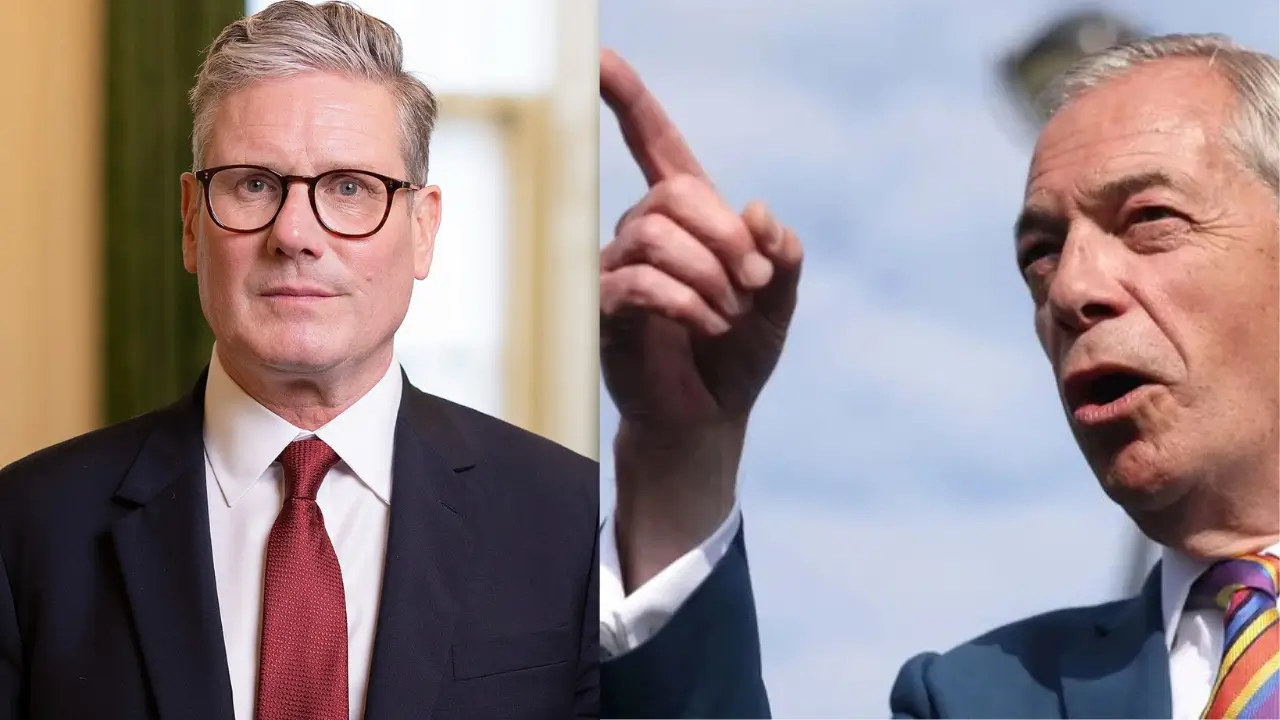
LONDON, United Kingdom — Reform UK reshaped the political map of England in Thursday’s UK local elections, sweeping seats across former Labour heartlands as Prime Minister Keir Starmer’s governing party absorbed heavy losses and the long-dominant Conservatives shed councillors in their traditional base. Counting continued into Friday, with results from contests covering roughly 5,000 seats on 136 local councils, alongside votes in the devolved parliaments in Scotland and Wales.
Nigel Farage’s anti-immigration party, which placed an estimated five million pounds into a four-month direct mail and social media push, emerged as the principal beneficiary of voter anger toward the governing Labour Party. Farage described the early returns as a “historic change in British politics,” telling reporters the outcome was “way exceeding” expectations. Reform launched its campaign on March 10 at a live-streamed rally with 1,500 supporters at GG’s restaurant on the Isle of Wight, the first stop in a planned national tour.
Labour collapses in northern strongholds
The scale of Labour’s reversal was clearest in communities the party has held for generations. In Wigan, a former mining town under Labour control for more than 50 years, every one of the 20 seats the party defended fell to Reform UK candidates. In neighbouring Salford, Labour retained only three of the 16 seats it was defending, an outcome local MP Rebecca Long-Bailey described as “soul-destroying.”
Pollsters had warned that Labour could record its worst local government performance since former Conservative Prime Minister John Major lost more than 2,000 seats in 1995. Partial returns suggested those projections were tracking, with Reform also eyeing breakthroughs in Scotland and Wales, although the Scottish National Party and Plaid Cymru remain favoured to form devolved governments. Sharon Graham, general secretary of the Unite union, had warned in March that Labour would be “decimated” over its handling of the Birmingham bin strike, a forecast that early returns appeared to validate.
Starmer defends record as UK local elections punish Labour
Speaking to Labour members at Kingsdown Methodist Church Hall in Ealing, west London, Starmer accepted responsibility for what he called “very tough” results but ruled out resignation. “The voters have sent a message about the pace of change, how they want their lives improved,” he said. “I was elected to meet those challenges and I’m not going to walk away from those challenges and plunge the country into chaos.”
Deputy Prime Minister David Lammy urged the parliamentary party against any move to depose the prime minister, saying you “don’t change the pilot during the flight.” Energy Minister Ed Miliband publicly denied a report in The Times that he had privately advised Starmer to set a timetable for his departure.
The vote unfolded against a backdrop of declining living standards, stalled public service reforms, and economic strain linked to the Iran war and disruption to oil shipments through the Strait of Hormuz. Starmer has also faced sustained criticism over his appointment of Peter Mandelson, a former cabinet minister with documented ties to the late financier Jeffrey Epstein, as Britain’s ambassador to the United States. The prime minister’s approval ratings have fallen sharply since Labour’s landslide general election victory in July 2024, when the party ended 14 years of Conservative rule.
Multi-party realignment takes shape
The Conservatives, led by Kemi Badenoch, recorded 284 council wins but lost 223 seats, most of them to Reform, although the party did reclaim Westminster Council from Labour. The Green Party, under new leader Zack Polanski, gained 50 seats for a total of 90, while the Liberal Democrats added 28 to reach 313. Roughly 25,000 candidates contested the elections, with Reform UK, Labour, the Conservatives, and the Greens fielding contenders in more than 95 percent of wards.
Analysts said the pattern points to a deeper fragmentation of a system long dominated by Labour and the Conservatives. Potential successors to Starmer, including Health Secretary Wes Streeting, former Deputy Prime Minister Angela Rayner, and Greater Manchester Mayor Andy Burnham, are not currently positioned to mount immediate leadership challenges, leaving the prime minister room to stabilise his position before the next general election, which must be held by 2029.
Details were first reported by Al Jazeera.