















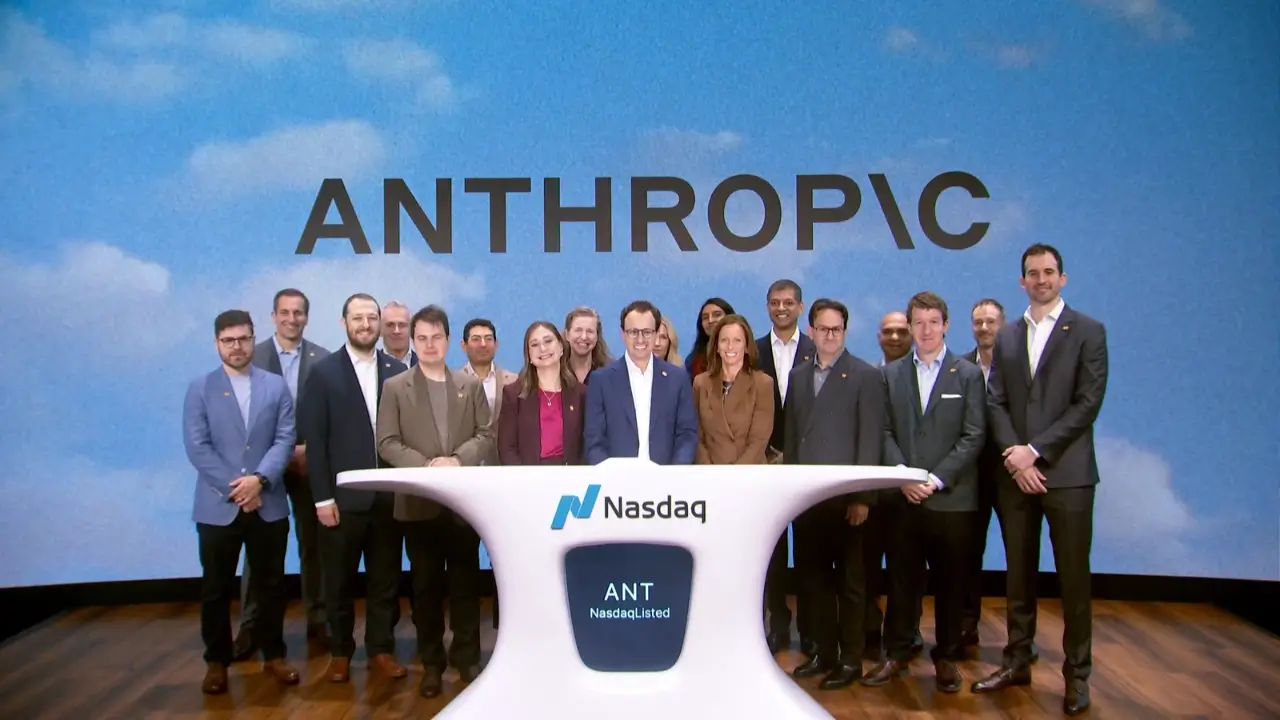
NEW YORK, US — Shares of Anthropic closed below their $83 offering price for the first time Tuesday, Nov. 24, erasing the gains from the record Anthropic IPO less than a week after the Claude developer began trading on Nasdaq. The stock fell 6.5% to $81.91 and slipped further in Wednesday’s premarket trading.
The decline came after a Sunday report detailed the limits Anthropic placed on some of the banks handling its $93.5 billion offering. On Monday, securities filings confirmed that Chief Executive Dario Amodei and President Daniela Amodei each sold about $280.4 million in shares to the underwriters when the offering closed.
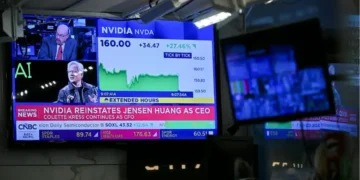
Anthropic had finished its Nov. 19 debut at $97.17, about 17% above the offering price. Shares dropped to $88.91 on Friday and $87.64 on Monday, even as US stocks rallied after Nvidia reinstated Jensen Huang as chief executive.
On Tuesday, Anthropic fell as low as $75.61 before recovering part of its loss by the close. The stock traded at $78.19 at 7:01 a.m. Eastern time Wednesday, about 4.5% below Tuesday’s close.
How banks worked under Anthropic IPO restrictions
On Nov. 22, Reuters reported that Anthropic told some of its 22 underwriters to limit their deal teams to four senior bankers. The company also asked some bank officers to sign agreements that would restrict key team members from working with AI rivals, including OpenAI and DeepSeek, for six months after the listing.
Most underwriting banks received materials through a platform that logged access and watermarked documents with individual bankers’ names. One person familiar with the process said the platform made it harder to review materials because bankers could not save copies.
The timing became particularly tight before Anthropic began marketing the IPO to investors on Nov. 10. A law firm handling the deal sent banks a document about the Canadian share sale, then withdrew it because it contained incorrect pricing and share figures. A corrected registration filing reached the banks around 2 a.m. New York time, giving them several hours to sign off before it was filed.
Anthropic and its lead underwriters, Goldman Sachs and Morgan Stanley, declined to comment for the report.
The final prospectus lists $550 million in underwriting compensation on the initial 980 million shares. The banks exercised their option to buy another 147 million shares at $83 each, adding about $12.2 billion to the offering. They earned no underwriting discount or commission on those additional shares.
Founders sold shares as the offering closed
The securities filings made public Monday show that Dario and Daniela Amodei each sold 3,378,378 shares at $83 apiece on Nov. 20. The prospectus had already listed both executives as selling shareholders and disclosed how many shares each planned to sell. Monday’s filings confirmed the transactions were completed at the offering price, four days before the stock first traded below it.
About $91.6 billion of the gross IPO proceeds went to Anthropic, with roughly $2 billion going to existing shareholders who sold stock. The company also raised $26 billion in a separate private placement with seven technology companies, including Google, Microsoft and Nvidia. Those investors paid $83 per share for a class of stock that generally carries no voting rights.
Public investors received Class A shares, which carry one vote each. A special share held by a founders’ entity carries 50.1% of the voting power on matters put to shareholders generally. A separate share held by Anthropic’s Long-Term Benefit Trust generally gives the trust the power to elect and remove a majority of the board.
MSCI will add Anthropic to its global indexes
MSCI will add Anthropic to the large-cap segment of its global standard indexes after the market closes Nov. 30, with the change effective Dec. 1. The index provider said Anthropic qualified for early inclusion based on its market value at the end of its first trading day.
The change means funds that track those indexes will need to account for Anthropic in their holdings. The prospectus also sets out when additional shares held by existing investors can become eligible for sale, with releases scheduled in stages around future earnings reports.