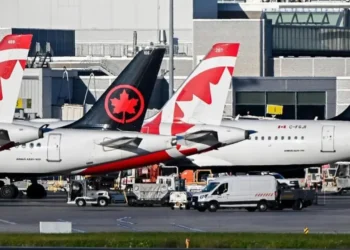

















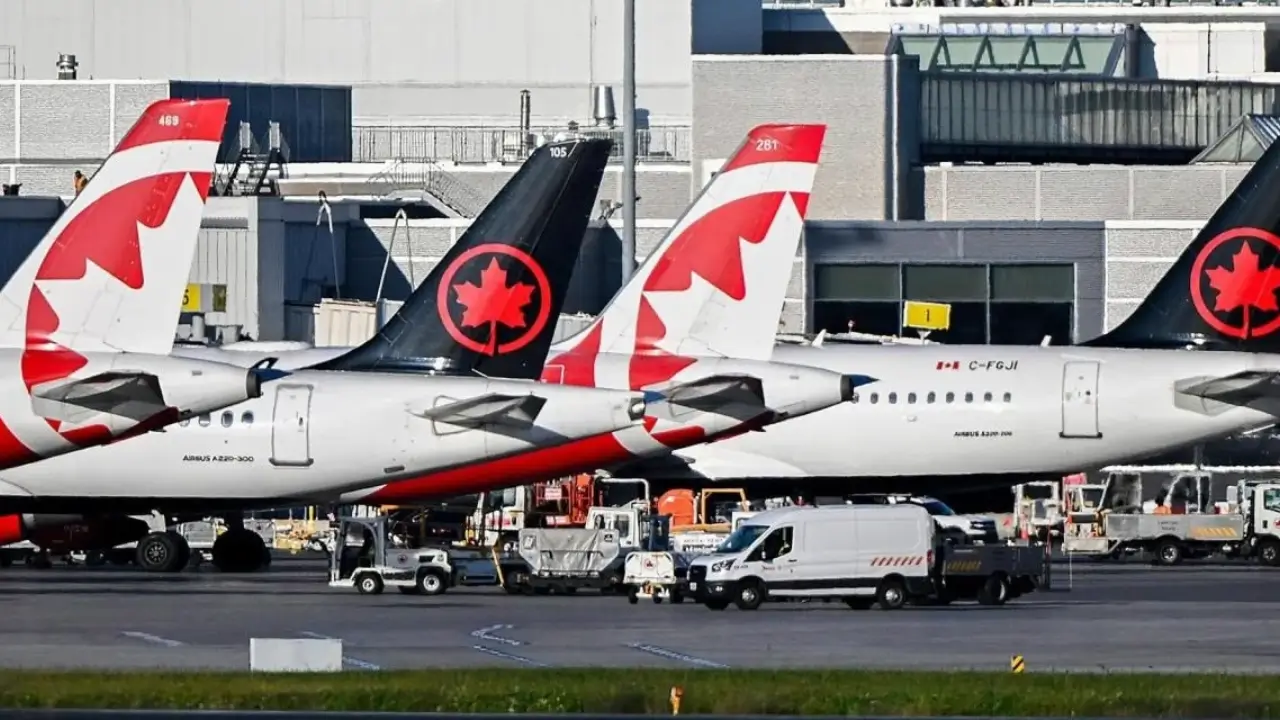
CHARLESTON, South Carolina — Air Canada South Carolina flights will not return for the 2027 summer travel season, ending the Canadian airline’s only service to the state as weaker passenger demand prompts further adjustments to its United States network.
The decision eliminates the seasonal nonstop connection between Toronto Pearson International Airport and Charleston International Airport, removing a direct international travel option for business travelers, tourists and passengers traveling between Canada and the southeastern United States.
Air Canada confirmed the decision in a statement reported by Charleston’s Post and Courier and subsequently cited by TheStreet on Wednesday, October 21, 2026.
The airline attributed the cancellation to commercial considerations, explaining that its network is regularly reviewed to align available seats with customer demand and changing travel patterns.
The withdrawal marks a significant development for Charleston’s international air connectivity, although it does not represent a broader Air Canada withdrawal from the United States.
The carrier continues to operate numerous routes between the two countries and recently announced plans to introduce additional U.S. services in 2027.
Toronto-Charleston route removed from 2027 schedule
Air Canada’s decision affects its seasonal nonstop service between Toronto Pearson International Airport (YYZ) and Charleston International Airport (CHS).
The route has a history extending back to 2001, when the airline first introduced direct service between the cities. It was subsequently suspended during the COVID-19 pandemic before returning for the summer 2024 travel season.
Its restoration provided Charleston with a direct connection to Canada’s largest metropolitan area, supporting tourism and business travel while allowing Canadian passengers to reach South Carolina without changing aircraft at another U.S. airport.
The service operated seasonally rather than year-round.
Aviation schedule information previously showed the airline shortening its 2026 operating season, with the final scheduled Toronto-Charleston flight moved forward to September 6 from an earlier October 23 endpoint.
The subsequent decision not to restore the service in 2027 extends that reduction into a complete withdrawal from the market.
Because Charleston was Air Canada’s only South Carolina destination, the cancellation removes the state’s remaining scheduled Air Canada service.
The distinction is important: The airline is discontinuing a particular route, not grounding all its flights to the United States.
Passenger capacity fell sharply before cancellation
The decision follows a substantial reduction in the number of flights and available seats on the Toronto-Charleston route.
According to aviation data analyzed by Simple Flying and reported by TheStreet, Air Canada operated approximately 200 departures on the route in 2024, providing 15,200 seats.
In 2025, that fell to 92 departures and 6,992 available seats.
The figures represent a decline of approximately 54% in both scheduled departures and available seats between the two years.
However, available seat capacity should not be confused with the number of passengers who actually traveled. The published figures do not establish how many seats were sold or the precise financial performance of the route.
The reduction nevertheless illustrates how substantially Air Canada had already scaled back the connection before deciding against its return in 2027.
Canada-US travel downturn adds pressure on airlines
The cancellation comes amid a broader shift in travel between Canada and the United States, where political tensions, changing consumer preferences and higher operating costs have complicated airline planning.
Relations between the neighboring countries have faced significant strain since President Donald Trump’s return to office in January 2025.
His administration’s trade measures against Canada and repeated comments about the country becoming the 51st U.S. state have contributed to a deterioration in bilateral relations.
Statistics Canada documented a sharp reduction in Canadian travel to the United States during 2025.
In a July 2026 analysis, the agency reported that Canadian residents’ return border crossings from the United States fell 25.4% in 2025 compared with 2024.
The decline was particularly pronounced for automobile travel, although air travel also experienced sustained weakness.
The agency reported that Canadian travel to the United States remained substantially below earlier levels in early 2026, suggesting that the shift extended beyond an initial reaction to political developments.
More recent figures suggest some recovery. Preliminary September 2026 data showed Canadian residents’ return trips from the United States increasing compared with September 2025, although travel remained below 2024 levels.
The distinction matters because the airline’s decision comes amid an uneven recovery rather than a continuous month-by-month decline.
Air Canada has not publicly identified the Trump administration’s policies as the specific cause of its Charleston cancellation.
Instead, the airline has attributed its decision to commercial considerations, including demand and travel patterns.
Air Canada South Carolina flights reflect wider route reductions
The withdrawal from South Carolina forms part of a broader restructuring of Air Canada’s transborder network.
Aviation industry reporting published October 19-21 identified five routes removed from the airline’s 2027 schedule.
They include:
- Toronto Pearson to Charleston, South Carolina
- Montreal to Seattle, Washington
- Vancouver to Nashville, Tennessee
- Vancouver to Raleigh-Durham, North Carolina
- Toronto Billy Bishop to Boston, Massachusetts
The airline confirmed the five route reductions to travel publication The Points Guy, according to PAX News.
The adjustments affect different types of routes, including seasonal leisure services and connections between major Canadian cities and smaller U.S. markets.
They also follow earlier reductions announced during 2026.
In July, Air Canada adjusted eight U.S. routes, including planned suspensions affecting services between Montreal and Minneapolis, Montreal and Detroit, and Toronto and Indianapolis.
Other changes involved delaying seasonal Florida flights and extending suspensions of service to New York’s John F. Kennedy International Airport.
The Canadian Press reported that higher jet fuel costs and weaker U.S. travel demand were among the factors affecting the airline’s network decisions.
Airline simultaneously plans new U.S. flights for 2027
Despite the latest cancellations, Air Canada is not abandoning the American market.
On October 16, Air Canada announced an expansion of its Canada-US network through its transborder partnership with United Airlines, introducing additional travel options for summer 2027.
The summer 2027 expansion includes new nonstop services between Toronto and Louisville, Kentucky; Montreal and Indianapolis, Indiana; and Edmonton and Newark, New Jersey.
Air Canada also plans to increase capacity on its Edmonton-to-San Francisco service by operating larger aircraft.
The announcement demonstrates that the carrier is reallocating capacity rather than implementing a blanket reduction in flights to the United States.
Some destinations are losing direct service while others are gaining new connections or additional seats.
Similar network expansion is taking place elsewhere in the aviation industry. In the Caribbean, Delta Air Lines’ introduction of nonstop Atlanta-to-Grenada flights provides another example of airlines developing new international connections to serve travel demand.
Although the two developments are unrelated, they illustrate how airlines continue to adjust their networks by expanding service in selected markets while reducing operations elsewhere.
For Air Canada, the strategy allows the airline to direct aircraft and resources toward markets where it expects stronger commercial performance.
What the cancellation means for travelers and Charleston
For travelers between Toronto and Charleston, the immediate consequence is the loss of a nonstop option for the 2027 summer season.
Passengers seeking to travel between the two cities may need to consider connecting itineraries through other airports, depending on the schedules and availability offered by competing carriers.
Connections can increase total journey times and introduce additional considerations involving baggage transfers, flight schedules and potential missed connections.
For Charleston, the withdrawal removes an international air link that provided Canadian travelers with direct access to South Carolina’s coastal tourism market.
The city is known for its historic architecture, restaurants, cultural attractions and proximity to popular coastal destinations.
Direct international flights can help destinations attract visitors by reducing travel time and simplifying access.
However, the financial consequences for Charleston’s tourism industry have not been quantified in the reporting reviewed.
There is also no confirmed announcement that another airline will replace the Toronto-Charleston service.
What happens next for Air Canada’s U.S. network?
Air Canada’s Toronto-Charleston service is no longer scheduled to return for summer 2027.
The airline’s broader U.S. network remains under review as it responds to passenger demand, operating costs and changing travel patterns.
Travelers planning future journeys should consult Air Canada’s official booking system and monitor any schedule notifications affecting their reservations.
The carrier’s October 16 announcement of new U.S. routes also indicates that additional network adjustments remain possible as the 2027 summer season approaches.
For South Carolina, the immediate question is whether another carrier will eventually restore nonstop connectivity with Toronto or whether travelers will continue relying on connecting services.