











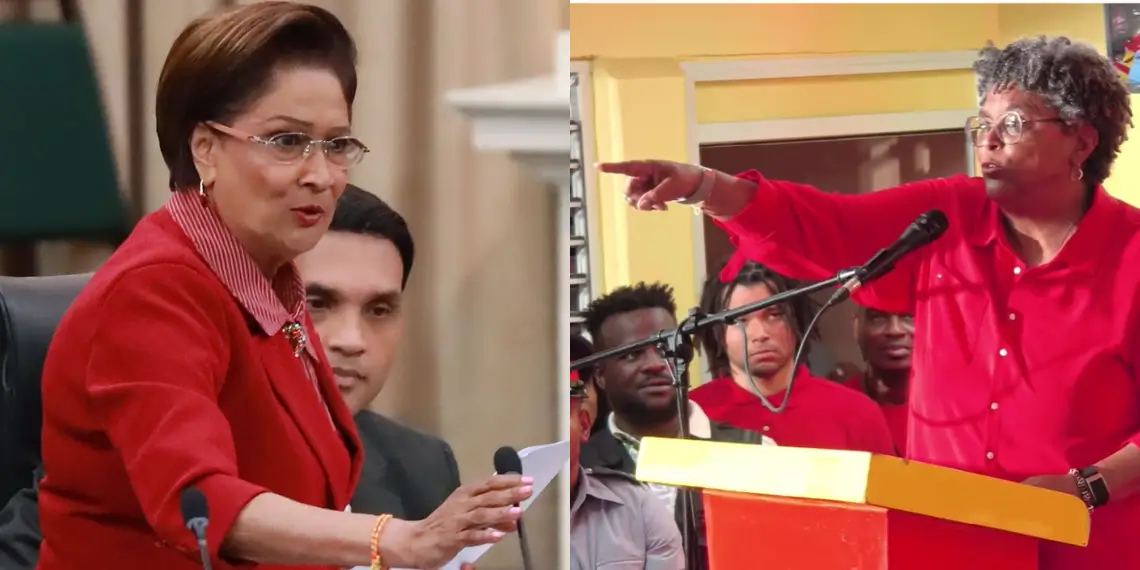
PORT OF SPAIN, Trinidad and Tobago — Kamla Persad-Bissessar denies UNC backing for Barbados’ opposition Democratic Labour Party ahead of the Barbados February 11 general election, rejecting suggestions that Trinidad and Tobago’s governing United National Congress is attempting to shape the outcome.
Prime Minister Kamla Persad-Bissessar said the UNC respects democratic processes and is not supporting any party contesting the Barbados vote. The exchange was initially disclosed by the Trinidad and Tobago Guardian.
The denial follows remarks by Barbados Prime Minister Mia Mottley during a Barbados Labour Party political meeting, where she suggested the opposition DLP had adopted political messaging that appeared to echo the UNC’s branding in Trinidad and Tobago. The comments have added a regional layer to Barbados’ fast-moving campaign as voters prepare to decide control of the House of Assembly.
Mottley questions what “yellow is the code” signals
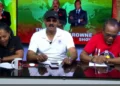
Mia Mottley raised the issue at a Barbados Labour Party meeting at Tweedside Road in St Michael on February 5, where she referenced a recent interview by DLP leader Ralph Thorne aired on Trinidad and Tobago Television. She said the repeated use of the phrase “yellow is the code” was striking because the language is widely associated with the UNC’s political identity.
In her remarks, Mottley framed the slogan as more than routine campaign talk. She suggested it could be interpreted as a coded signal pointing to questions about campaign financing or external backing, and she challenged what she described as any attempt to align Barbadian politics with outside interests.
Mottley invoked the legacy of Barbados’ first prime minister, Errol Walton Barrow, arguing that Barbados’ political movements should not be treated as subsidiaries of any other regional political organization. She also noted that Barrow stood alongside past Trinidad and Tobago leaders on Caribbean unity and regional diplomacy, but said that did not mean Barbados should be politically subordinate to any leader or party outside the island.
Mottley further pointed to the DLP’s branding, noting the party’s logo features a deep blue background with yellow or gold elements. She suggested that color cues can carry meaning in Caribbean politics, and she cast the dispute as a sovereignty and transparency issue rather than a debate over aesthetics.
Padarath backs denial as Persad-Bissessar denies UNC backing
Public Utilities Minister Barry Padarath reinforced the Trinidad and Tobago government’s position, warning regional political figures against drawing conclusions based on inference, especially where party colors and campaign styles overlap across the Caribbean.
Padarath said the UNC has stated both publicly and privately that it does not interfere in the elections of any other sovereign nation. He argued that similarities in party colors across the region are common and should not be used as a basis to suggest coordination, financing, or operational involvement.
Pressed on whether Trinidadian entertainers with political ties could appear in Barbados ahead of election day, Padarath said individuals who perform for pay abroad do not automatically represent the UNC or endorse a political party in another country. He said entertainers who have entered politics remain free to take professional engagements, but he maintained that such appearances should not be treated as official party activity unless explicitly framed that way.
Padarath also directed a message to Mottley, saying Barbados’ election outcome should reflect the will of Barbadian voters and that Trinidad and Tobago respects Barbados as a sovereign nation. He said the UNC has no intention of interfering with the February 11 vote.
Regional context and why the dispute matters to voters
The dispute is not the first time the UNC has faced allegations tied to regional elections. In 2025, then St Vincent and the Grenadines prime minister Ralph Gonsalves alleged that UNC-linked financiers were supporting the opposition New Democratic Party ahead of elections there. He also claimed that Trinidadian political figures and entertainers were involved in campaigning, allegations that UNC-related figures rejected.
In the Barbados case, the allegations remain rooted in political remarks and public suspicion rather than any evidence placed in the public domain showing formal UNC involvement in DLP campaign operations or financing. Still, the controversy matters because claims of external influence can harden distrust and intensify demands for transparency, particularly around campaign financing and political messaging.
With Barbados voting on February 11, the exchange has the potential to shape how some voters interpret campaign narratives in the final stretch. Even when unproven, insinuations of foreign backing can become a political issue of its own, influencing turnout, messaging, and public scrutiny.
Ralph Thorne had not issued a public response to the specific allegation by publication time. He indicated he was in a meeting and would reply, but no response had been provided.