













ST. GEORGE’S, Grenada — Grenada added to U.S. visa bond list status means some travelers could be required to post up to $15,000 before receiving U.S. visitor visas, creating a costly new barrier to short-term travel.
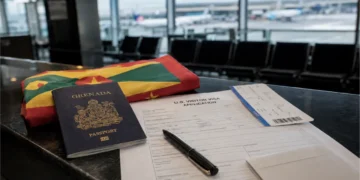
The U.S. State Department said the expanded program will take effect on April 2 and apply to B1 and B2 visas used for business and tourism. Under the policy, selected applicants may be required to pay a refundable bond ranging from $5,000 to $15,000 before a visa is issued.
For Grenadians, the immediate consequence is cost. The new rule could make short-term travel to the United States significantly harder to afford, especially for people already facing airfare, lodging, and other travel expenses.
What Grenada added to U.S. visa bond list means for travelers
The U.S. State Department said the visa bond policy is intended to ensure travelers comply with visa conditions and return home on time. The bond is to be refunded if the traveler follows the terms of the visa or does not travel.
Even so, the requirement introduces a major upfront financial hurdle. For some Grenadians, that could place family visits, tourism, and business travel out of reach before an application even reaches the final stage.
The policy does not guarantee a visa approval. It does, however, add another layer of scrutiny and financial pressure to a process that already carries significant costs for ordinary applicants.
Grenada joins Cambodia, Ethiopia, Georgia, Lesotho, Mauritius, Mongolia, Mozambique, Nicaragua, Papua New Guinea, Seychelles, and Tunisia as the latest countries added to the program. They join 38 nations already covered, including Caribbean countries such as Antigua and Barbuda, Dominica, and Cuba.
U.S. says bond program targets overstays and cuts costs
According to the U.S. State Department, the visa bond program has already shown results in lowering overstay rates. Officials said nearly 1,000 foreign nationals have received visas under the system, and 97 percent of bonded travelers returned home on time.
The department contrasted that with more than 44,000 visitors from the 50 countries now covered by the policy who overstayed during the final year of former President Joe Biden’s administration. U.S. officials cited those figures as part of the justification for the April 2 expansion.
Washington also argued that the policy will reduce enforcement costs. The U.S. State Department said it costs the U.S. taxpayer more than $18,000 on average to remove a person who is unlawfully present in the country, and estimated the expanded bond system could save up to $800 million each year.
Officials said more countries could be added in the future based on immigration risk factors. That suggests the program may continue to expand as part of a broader U.S. visa enforcement strategy.
Grenadians with family and business ties could feel impact fast
The effect on Grenada is likely to go beyond immigration policy language. Many Grenadians travel to the United States for family visits, short-term business, tourism, and other personal obligations, meaning the new bond requirement could quickly affect real travel decisions.
For lower and middle-income applicants, the refundable nature of the bond may offer little comfort because the central challenge is securing the money upfront. That could delay travel, discourage applications, or force some people to abandon plans altogether.
The policy also places Grenada more firmly inside a U.S. immigration framework that links access to travel with financial guarantees and compliance concerns. For a country with a strong diaspora and commercial links to the United States, that shift could have wider social and economic implications.
The information was initially disclosed by the U.S. State Department in a fact sheet released Wednesday.