














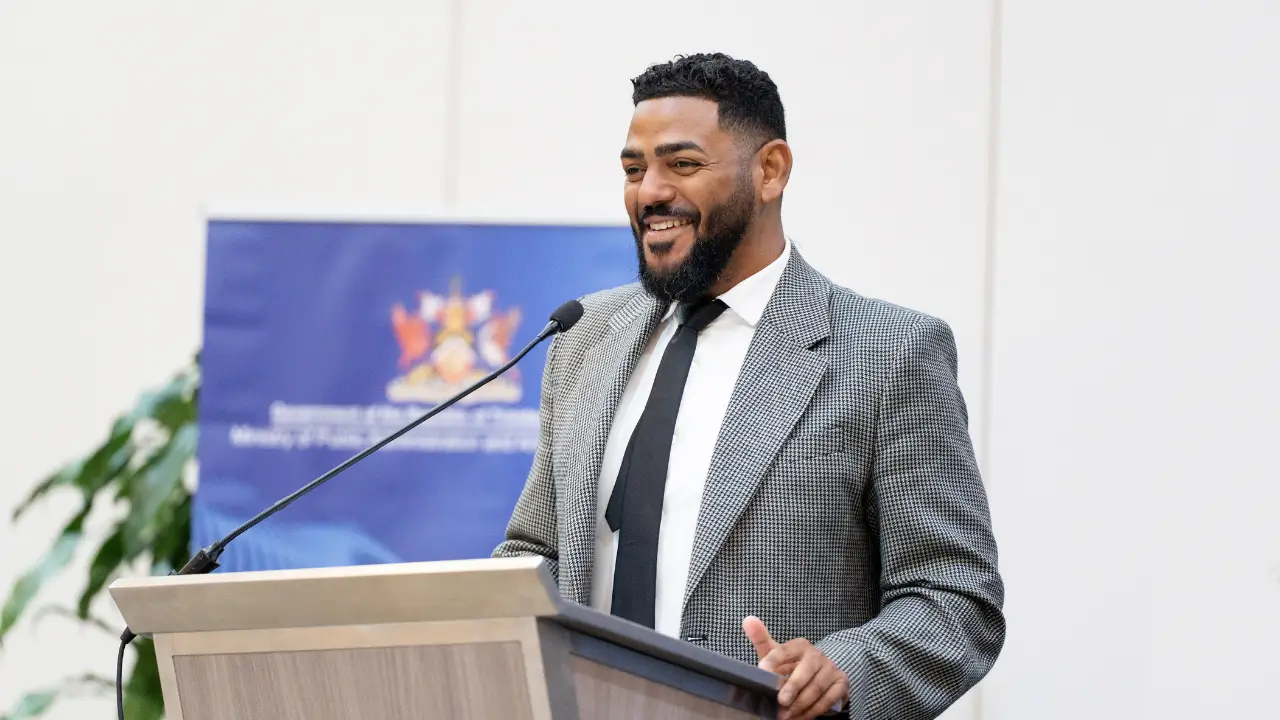
PORT OF SPAIN, Trinidad and Tobago — Dominic Smith Joins WEF Leadership Class, with the Trinidad and Tobago minister of public administration and artificial intelligence earning selection to the World Economic Forum’s Young Global Leaders Class of 2026 in a move that expands the country’s visibility in global technology and governance circles.
Smith was named among 118 individuals from more than 50 countries chosen for the competitive three-year programme, the WEF Young Global Leaders Class of 2026, which develops emerging leaders across government, business, and civil society. The selection gives Trinidad and Tobago a higher-profile seat in conversations shaping innovation, public policy, and economic modernization.
For a small Caribbean state seeking to modernize public services and strengthen competitiveness, the appointment carries significance beyond personal prestige. It signals that Trinidad and Tobago’s digital transformation efforts are gaining international attention.
Trinidad’s Digital Ambitions Gain Momentum as Dominic Smith Joins WEF Leadership Class
The Young Global Leaders programme, run by the World Economic Forum, connects participants to academic modules, policy forums and cross-border initiatives focused on major global challenges.
That network can create opportunities for countries looking to attract partnerships, learn from successful reforms, and build stronger policy frameworks in fast-moving sectors such as artificial intelligence and digital governance.
Smith said the recognition reflects the country’s determination to compete in the global digital economy.
“This recognition is a signal that Trinidad and Tobago is stepping forward with purpose in the global digital economy,” he said in a statement.
He added that the experience would allow the country to share its progress, learn from international peers, and bring back ideas to support a more connected and responsive public service.
Global Recognition Brings New Expectations for Reform Delivery
While the selection is a diplomatic and reputational win, it also raises expectations for domestic progress.
Citizens and businesses often judge digital reform not by speeches or international recognition, but by whether public services become faster, simpler and more accessible. Greater global visibility can intensify scrutiny over how quickly those promises are delivered.
The government has promoted a long-term vision of a citizen-centered digital state powered by innovation, collaboration, and technology. Smith’s new platform is likely to place that agenda under closer watch both locally and abroad.
Influential Cohort Highlights Strategic Opportunity
Smith joins a 2026 class that includes Iceland Prime Minister Kristrún Frostadóttir, Japan Vice Minister of Foreign Affairs Arfiya Eri, Finland Employment Minister Matias Marttinen, Reliance Retail executive Isha Ambani, and Goldman Sachs executive Sabine Ceric.
For Trinidad and Tobago, inclusion in that network offers strategic value. Relationships formed through the programme could help support future cooperation in governance, investment, technology, and public-sector innovation.
As nations race to adapt to rapid technological change, Smith’s selection suggests Trinidad and Tobago intends to be part of that future conversation and will now face greater pressure to prove it can translate ambition into measurable progress.