










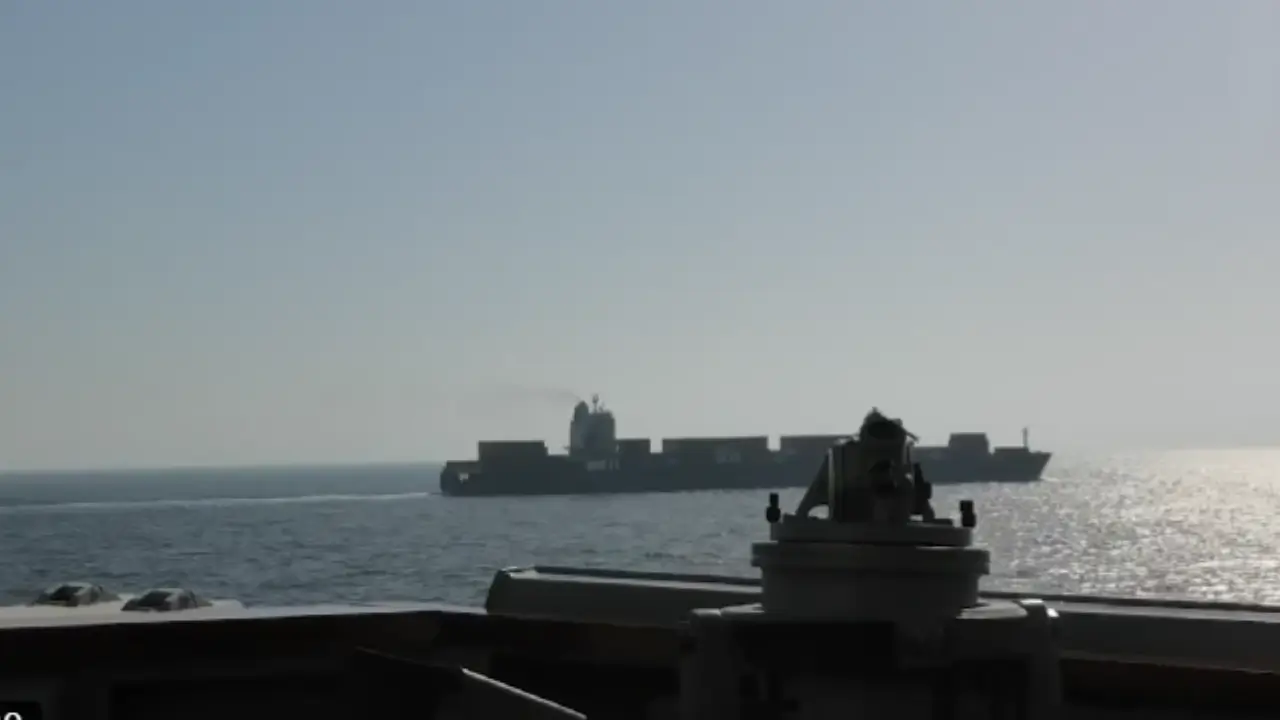
TAMPA, Fla. — U.S. forces escalated enforcement in the Arabian Sea after the Navy intercepted and boarded a cargo ship in an operation officials said proved the growing reach of the blockade. The move came after the U.S. seizes Iranian vessel incident involving an Iran-flagged ship accused of ignoring repeated warnings while heading toward Bandar Abbas.
According to U.S. military officials, the guided-missile destroyer USS Spruance intercepted the vessel, identified as M/V Touska, on April 19 as it moved north through the Arabian Sea at about 17 knots.
Officials said American forces issued multiple warnings over a six-hour period and informed the crew the ship was violating blockade restrictions. The vessel allegedly failed to comply with repeated orders to stop or change course.
U.S. Seizes Iranian Vessel After Warnings Ignored
After the warnings went unanswered, U.S. forces ordered the crew to evacuate the engine room before firing rounds from the destroyer’s 5-inch MK 45 gun into the propulsion area, disabling the vessel.
U.S. Marines from the 31st Marine Expeditionary Unit later boarded the ship. The vessel remains in American custody, according to the official statement.
The operation highlights how commercial shipping is increasingly being pulled into a wider geopolitical confrontation. Encounters at sea can quickly raise insurance costs, disrupt cargo schedules, and heighten risks for civilian crews operating in the region.
Pressure Mounts on Gulf Shipping Routes
Bandar Abbas is Iran’s principal commercial port and a critical gateway for imports and exports. Increased interdictions involving vessels headed there could slow trade activity and create added uncertainty for global freight operators.
The Arabian Sea and nearby Strait of Hormuz remain among the world’s most important maritime corridors, especially for oil and energy shipments. Even isolated confrontations can send wider signals through supply chains and commodity markets.
The seizure adds to a fast-moving regional confrontation that has already included major U.S. combat operations against Iran. U.S. officials said the latest seizure forms part of a broader maritime campaign.
Since the blockade began, American forces have redirected 25 commercial vessels, ordering them to turn around or return to Iranian ports.
That suggests a sustained enforcement strategy rather than a one-time incident. For governments, businesses, and shipping companies watching the region, the latest action indicates tensions are now producing direct consequences far beyond diplomacy.