












WASHINGTON, D.C. — A federal judge has ordered the Trump administration to restart green card processing for dozens of legal immigrants whose applications were placed on indefinite hold under a sweeping immigration freeze tied to the United States travel ban, dealing a significant legal setback to a policy that affected more than two million pending cases.
Maryland District Judge George L. Russell III issued the 39-page ruling on Friday, publishing it Monday. He found that U.S. Citizenship and Immigration Services had no lawful authority to impose a categorical, open-ended suspension of green card adjudications on 83 plaintiffs, all of whom are already living in the United States and are nationals of countries designated under the expanded travel ban.
What the Judge Decided
Russell was unequivocal in his conclusion that USCIS exceeded its authority. He wrote that the agency has discretion in how it decides immigration cases, but that discretion does not extend to simply refusing to decide them at all. The court rejected the government’s argument that federal judges have no power to intervene, holding instead that USCIS carries a statutory obligation to process applications within a reasonable time.
The ruling orders USCIS to resume active work on the plaintiffs’ applications immediately, though the judge stopped short of requiring final decisions within 30 days, acknowledging that cases are at varying stages and some will require additional time. Crucially, the order does not guarantee approval for any applicant. It requires only that USCIS adjudicate, that is, make a decision, whether to approve or deny, rather than leaving people in perpetual administrative limbo.
For the broader population of affected immigrants who were not plaintiffs in this case, USCIS may technically continue applying the freeze. The ruling is not a nationwide injunction. However, advocates say it carries significant weight as precedent, and a handful of similar cases are moving through courts in California, Massachusetts, and other jurisdictions.
The Green Card Freeze and Its Billion-Dollar Cost
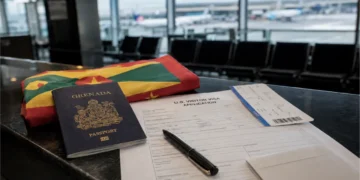
The USCIS processing halt, introduced through policy memoranda issued in December 2025 and expanded on January 1, 2026, placed an indefinite hold on all immigration benefit requests filed by nationals of 39 countries carrying total travel bans or visa restrictions under Presidential Proclamations 10949 and 10998. The affected applications included green card adjustments of status, employment authorisation renewals, petitions for skilled workers, and, in some cases, naturalization proceedings.
A civil campaign called Project Press Unpause, which has tracked the freeze since its implementation, estimates USCIS collected more than one billion U.S. dollars in application fees from over two million cases it was not processing. A spokesperson for the group, identified as Lavida, described the freeze as punishing people based solely on their country of birth, something applicants cannot control, and said many of those affected had been living and working lawfully in the United States for more than five years, paying taxes and, in several instances, receiving national interest waivers for their contributions to scientific and medical research.
USCIS defended the pause publicly, stating it was necessary to ensure that all nationals from designated high-risk countries are vetted and screened to the maximum degree possible before their cases advance. The agency and its parent department, the Department of Homeland Security, had not responded to requests for comment by Monday afternoon.
Broader Legal Landscape
This ruling joins a growing body of federal court decisions pushing back against the USCIS freeze. Separate preliminary injunctions were granted in April 2026 in the Northern District of California and the District of Massachusetts, covering smaller groups of plaintiffs. In the California case, Judge Van Keulen found the freeze likely violated the Administrative Procedure Act on multiple grounds, including unreasonable delay, unlawful withholding, and failure to follow notice-and-comment rulemaking procedures.
The legal challenges are particularly significant for Caribbean nationals in the United States, including Saint Lucians, who may hold pending green card or employment authorisation applications stalled under the policy. Saint Lucia is not among the 39 countries named in the travel ban, but legal advocates have warned that Caribbean nationals born in or holding travel documents from affected countries face the same processing freeze regardless of their current nationality or residency.
Immigration attorneys across the region have urged affected applicants to consult legal counsel, maintain current status documentation, and avoid international travel while applications remain pending, as re-entry complications under the current regulatory environment remain a real risk.
The case is being closely monitored by immigration law practitioners across the Eastern Caribbean and the wider diaspora community in the United States.
This story will be updated as USCIS responds and as related court proceedings advance.