













CASTRIES, St Lucia — The UAE quit OPEC on Friday, May 1, ending a 58-year membership in the world’s most consequential oil alliance and triggering immediate uncertainty across global energy markets. For Saint Lucia, an island with no domestic oil production and total dependence on imported fuel, the structural consequences of that decision will be felt at every level of daily economic life.
Decades of Quota Conflict as UAE Quits OPEC
The UAE joined OPEC in 1967 as the Emirate of Abu Dhabi, formally entering under its current name in 1971. For decades, membership aligned with the country’s interests. In recent years, it did not. The central source of tension was production quotas. OPEC and the broader OPEC+ alliance, which includes Russia and a group of non-OPEC producers, coordinate output levels to manage global oil supply and stabilize prices. For the UAE, which had invested heavily in expanding its production infrastructure, those quotas functioned as a hard ceiling on national revenue.
UAE Energy Minister Suhail Mohamed Al Mazrouei addressed the decision in comments broadcast by CNBC. “The decision to be outside any constraint is something that is important for us to ensure that we are attaining the market conditions at the right time and at the right pace,” he said. The UAE had set a target of five million barrels per day in production capacity by 2027, a figure it could not pursue within OPEC’s framework. Outside the cartel, no ceiling applies.
The decision was confirmed by UAE state media and the country’s Energy Ministry on Tuesday, April 29.
Third-Largest Producer Withdraws at a Critical Moment
At the time of its departure, the UAE ranked as OPEC’s third-largest producer, behind Saudi Arabia and Iraq, with a production capacity of approximately 4.8 million barrels per day. The exit removes one of the three most consequential production voices in the alliance.
Energy research firm Rystad Energy assessed the structural damage as significant. The UAE’s withdrawal reduces OPEC’s collective spare capacity, the output buffer the cartel deploys in response to supply shocks, to roughly one million barrels per day across its remaining 13 members. That diminished cushion weakens OPEC’s ability to act as a stabilizing force in global energy markets, a role the organization has held since its founding in 1960.
The geopolitical context surrounding the departure adds further weight to the decision. The announcement came as the ongoing conflict involving the United States, Israel, and Iran has generated what analysts describe as a historic energy shock. Iranian attacks on shipping lanes through the Strait of Hormuz, a chokepoint carrying approximately one-fifth of the world’s crude oil and liquefied natural gas, have disrupted the UAE’s own export routes.
Energy strategist Kingsmill Bond of think tank Ember Future said the UAE was positioning itself for the post-conflict energy environment. “They are clearly preparing for the period after the war, because now that we have reached peak oil demand and we are entering a new environment, they want to be free from the constraints of OPEC,” Bond said. Details of Bond’s comments were initially disclosed by Ember Future.
Diverging political alignments between the UAE and Saudi Arabia, particularly over Yemen and the UAE’s formalization of ties with Israel through the 2020 Abraham Accords, had further strained the internal cohesion that once defined the cartel.
Saint Lucia Faces the Downstream Consequences
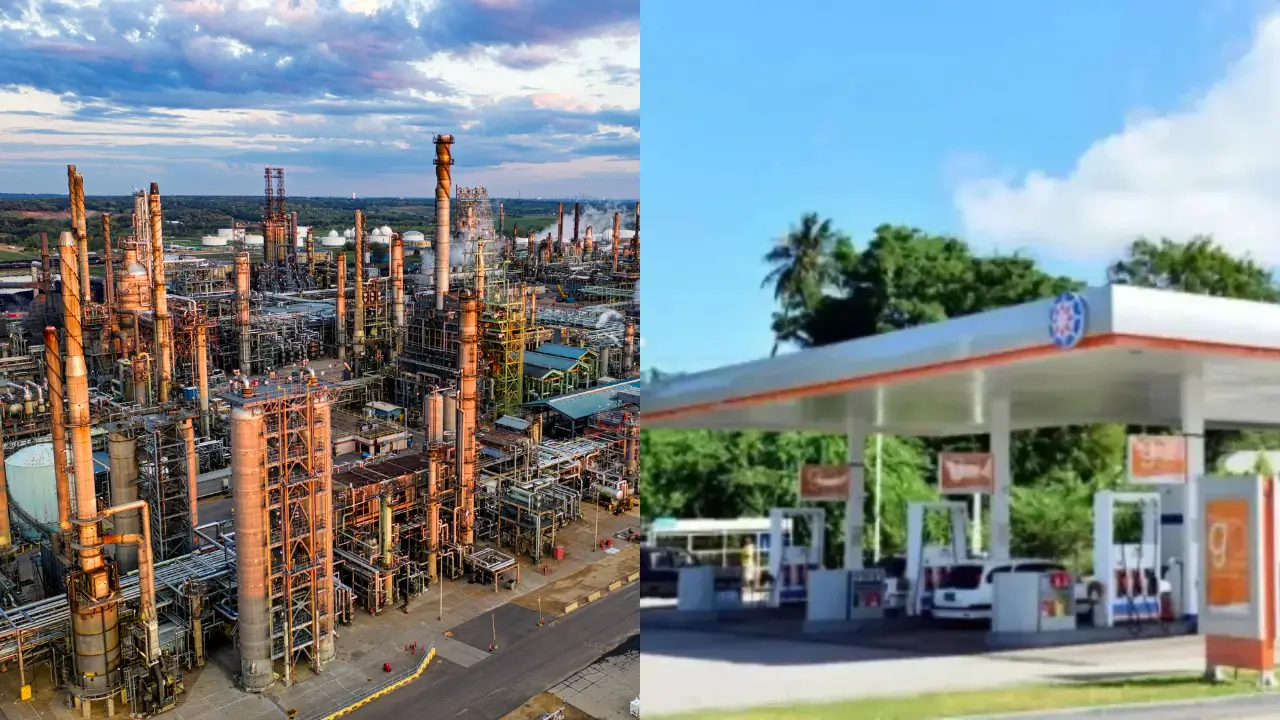
Saint Lucia imports every unit of fuel it consumes. There are no domestic oil fields, no national refinery, and no strategic reserve. Every fluctuation in global crude prices, every disruption in shipping routes, and every structural shift in the international energy order translates into direct cost changes for Saint Lucian consumers, businesses, and public services.
When global oil prices rise, fuel import costs rise with them. When shipping lanes are disrupted, supply chain costs increase. When producers capable of generating 4.8 million barrels per day step outside a collective pricing framework, the volatility potential in both directions expands. Brent crude was trading above $111 per barrel at the time of the announcement, elevated by war-driven supply disruption and market uncertainty. OPEC losing one of its most capable producers reduces the cartel’s credibility as a price management mechanism, introducing further unpredictability into what businesses pay for electricity and what Saint Lucians pay at the fuel pump, as already evidenced by the LUCELEC fuel surcharge increase that pushed April electricity bills higher across the island.
Caribbean nations have registered the economic consequences of every major oil market disruption in recent decades, from the 1973 Arab oil embargo to the 2022 post-pandemic price surge. The UAE’s departure represents the kind of structural reconfiguration that does not produce immediate price movements but reshapes the underlying conditions that determine Saint Lucia fuel prices and what those costs mean for the price of goods and services across the economy.
OPEC retains Saudi Arabia, Iraq, Iran, Kuwait, and nine other members and continues to influence approximately 30 percent of the global oil supply. Through the OPEC+ framework, that figure rises to 41 percent. The cartel has survived the exits of Qatar, Indonesia, Ecuador, Angola, and Gabon in prior years. It is not finished. However, it enters the next phase of global energy transition with significantly reduced production capacity under collective management, and the UAE, now unconstrained, is positioned to compete directly with it in open markets.
The regional implications for import-dependent economies like Saint Lucia will require continued monitoring as production decisions, pricing signals, and geopolitical developments evolve in the months ahead.