













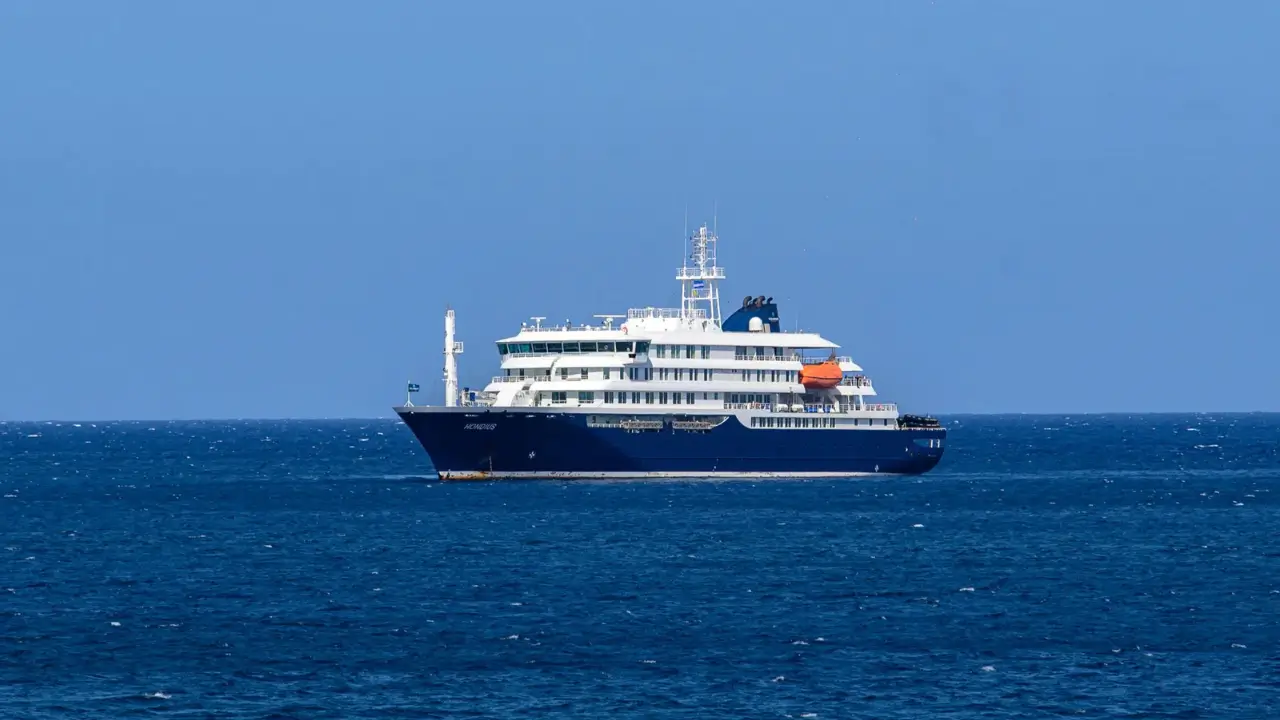
GENEVA — A hantavirus outbreak aboard the Dutch-flagged cruise ship MV Hondius has killed three people and triggered an international containment effort, with the vessel now sailing toward Spain’s Canary Islands carrying nearly 150 passengers and crew. The World Health Organization confirmed the outbreak involves the Andes strain, a rare South American hantavirus capable of limited human-to-human transmission.
The ship departed Ushuaia, Argentina, on April 1 for an expedition voyage that included Antarctica and remote South Atlantic islands. According to WHO data released this week, illness onset among affected passengers occurred between April 6 and April 28, with symptoms ranging from fever and gastrointestinal distress to pneumonia, acute respiratory distress syndrome, and shock.
Three deaths and a widening case count
The first fatality was a 70-year-old Dutch man who fell ill on board with fever, headache, abdominal pain, and diarrhea, South Africa’s Health Department told CNN. He died on April 11, and his body was removed from the ship on April 24 when it called at Saint Helena, a British Overseas Territory in the South Atlantic. His wife disembarked at the same time and later boarded a flight to Johannesburg, where she died on April 26 shortly after arrival. A German national became the third confirmed fatality on May 2.
The European Centre for Disease Prevention and Control reported on May 6 that seven cases had been logged in the cluster, including the three deaths, one critically ill patient, and additional symptomatic individuals. A separate case was later confirmed in Switzerland involving a passenger who had already disembarked, bringing the total to eight cases across at least three continents. Two Singaporean residents in their 60s are also being tested and have been placed in self-isolation, that country’s Communicable Diseases Agency said.
Canary Islands resistance and Spain’s hantavirus outbreak response
The MV Hondius initially planned to dock in Tenerife to repatriate its 146 remaining passengers, who represent 23 nationalities, including Spanish, British, American, German, and Dutch citizens. Canary Islands regional president Fernando Clavijo publicly refused entry, citing risks to residents and gaps in information about the outbreak. Spain’s central government overruled the regional position, with Health Minister Monica Garcia announcing the ship would dock at Granadilla port on Tenerife within three days for medical screening and repatriation.
WHO Director-General Tedros Adhanom Ghebreyesus said investigators believe the index cases, the Dutch couple, contracted the virus during a months-long birdwatching trip through Argentina, Chile, and Uruguay before boarding the vessel. Argentina’s Ministry of Health and the Malbran Institute have begun rodent testing along the couple’s travel route, which spanned from late November 2025 to early April 2026.
What hantavirus is and the wider risk picture
The Andes virus is carried primarily by long-tailed pygmy rice rats in southern South America. Human infection typically occurs through inhalation of aerosols contaminated with rodent urine, droppings, or saliva. The ECDC noted that no antiviral treatment exists and that supportive care remains the primary intervention. Incubation can last from one to six weeks, complicating contact tracing for passengers who have already returned home.
WHO has assessed the global risk as low but acknowledged that human-to-human transmission may have occurred among those on board, a feature documented previously in a 2018 outbreak in Epuyen, Argentina, that killed 11 people. The U.S. Centers for Disease Control and Prevention said it is coordinating support for the 17 American passengers still aboard the vessel. Georgia health authorities are monitoring two state residents who disembarked earlier in the voyage and have so far shown no symptoms.