











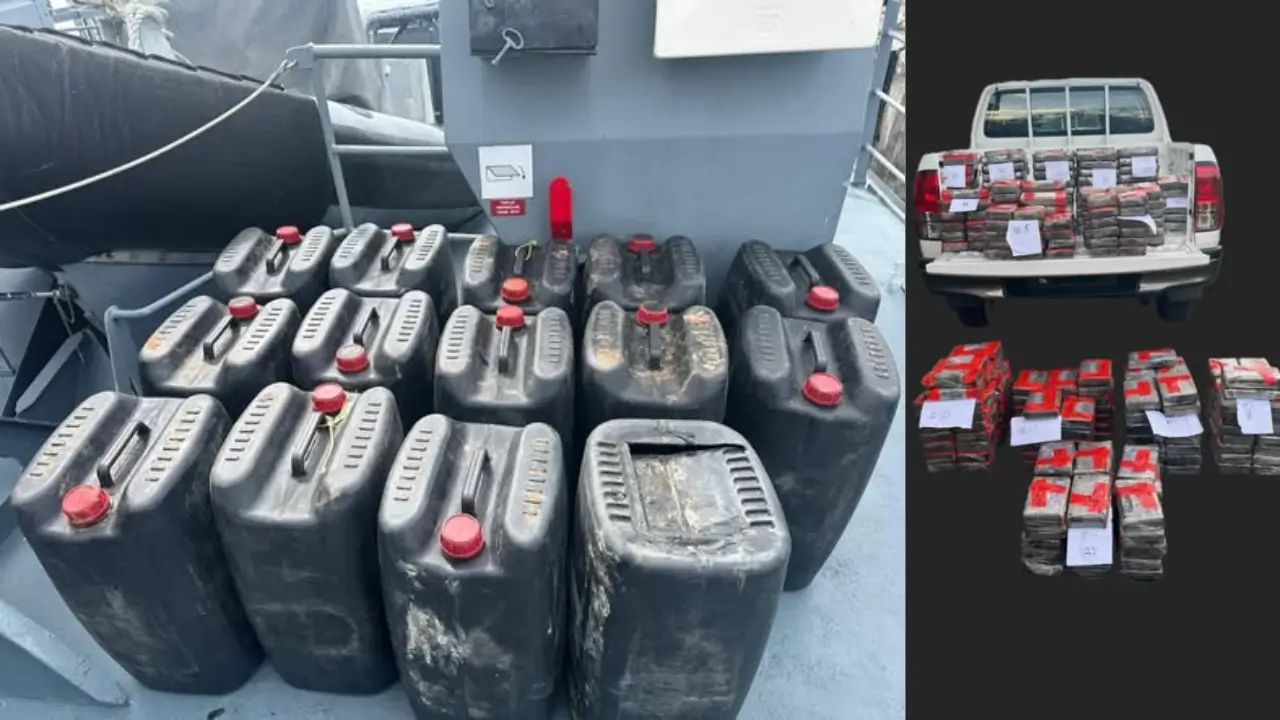
KINGSTOWN, St Vincent and the Grenadines — A major St Vincent cocaine seizure involving approximately 434 kilogrammes of suspected cocaine has intensified regional security coordination, as local police and U.S. Southern Command move to disrupt maritime trafficking networks operating across the Eastern Caribbean.
The Royal St. Vincent and the Grenadines Police Force (RSVGPF) confirmed that the drugs were seized during a targeted intelligence-led operation off the Cumberland coast on Monday, April 20. Officers intercepted a yacht and discovered 396 packages of suspected cocaine concealed onboard.
Two non-national men, identified by authorities as a Venezuelan national and a Grenadian national, are currently in police custody assisting with ongoing investigations. Officials have not released their identities.
Cumberland operation highlights scale of St Vincent cocaine seizure
Police described the operation as a significant breakthrough in their efforts to combat organized drug trafficking within St Vincent and the Grenadines and its territorial waters.
The RSVGPF said the volume of narcotics recovered underscores the scale of the threat facing the Eastern Caribbean, where traffickers continue to exploit maritime routes to move large quantities of drugs between South America and North American or European markets.
The Cumberland coastline, located along the island’s western corridor, has historically been identified as a vulnerable entry point due to its proximity to open sea routes and limited monitoring coverage in certain areas.
Authorities commended the officers involved, citing vigilance, discipline, and professionalism in executing the operation. The police force said the seizure demonstrates its ongoing commitment to detecting and dismantling illegal drug networks operating in and around the country.
U.S. coordination expands after St Vincent cocaine seizure
U.S. Southern Command confirmed that the operation aligns with broader regional security efforts aimed at intercepting narcotics shipments before they reach international distribution channels.
Officials said collaboration under frameworks such as the Caribbean Basin Security Initiative continues to strengthen intelligence sharing, maritime surveillance, and coordinated law enforcement responses among Caribbean nations.
The use of a private yacht in this case reflects a wider trend in trafficking methods, where criminal networks rely on smaller, less conspicuous vessels to evade detection while transporting significant quantities of narcotics across island chains.
U.S. authorities are also working with regional partners through the Americas Counter Cartel Coalition, which focuses on disrupting transnational criminal organizations involved in drug trafficking and related illicit activities.
Why the seizure matters for the Caribbean
The St Vincent cocaine seizure prevented a substantial quantity of narcotics from moving through regional waters, but it also reinforces the Caribbean’s continued role as a key transit corridor for international drug trafficking.
A recent cocaine wash-up near Bequia, previously reported after a U.S. Southern Command operation in St Vincent waters, further highlighted the persistence and adaptability of trafficking networks operating across the region.
For small island states, such incidents place increasing pressure on law enforcement resources, border security systems, and regional cooperation mechanisms designed to combat organized crime.
The growing involvement of U.S. agencies signals a sustained strategy of deeper engagement in Caribbean security affairs, particularly as traffickers adjust their methods and expand their operational reach.
Investigations into the Cumberland seizure remain active. Authorities have not indicated whether the suspects are linked to a wider trafficking network or if additional arrests are expected.