
















WASHINGTON — The YOLO caucus is small, informal, and unofficial, but its rising profile inside the Republican Party is emerging as one of the clearest threats to President Donald Trump’s legislative agenda on Capitol Hill, with senators and House members increasingly willing to defy the White House on issues ranging from the war in Iran to immigration funding and tariffs.
The label is shorthand for the catchphrase “you only live once,” and it has come to describe a loose group of Republican lawmakers who, for various reasons, have decided they no longer need to fall in line behind Trump on contested votes. Their independence is colliding with the slim margins that Senate Majority Leader John Thune and House Speaker Mike Johnson must work with to advance the president’s priorities ahead of the November 2026 midterm elections.
A Caucus Forged by Defiance and Defeat
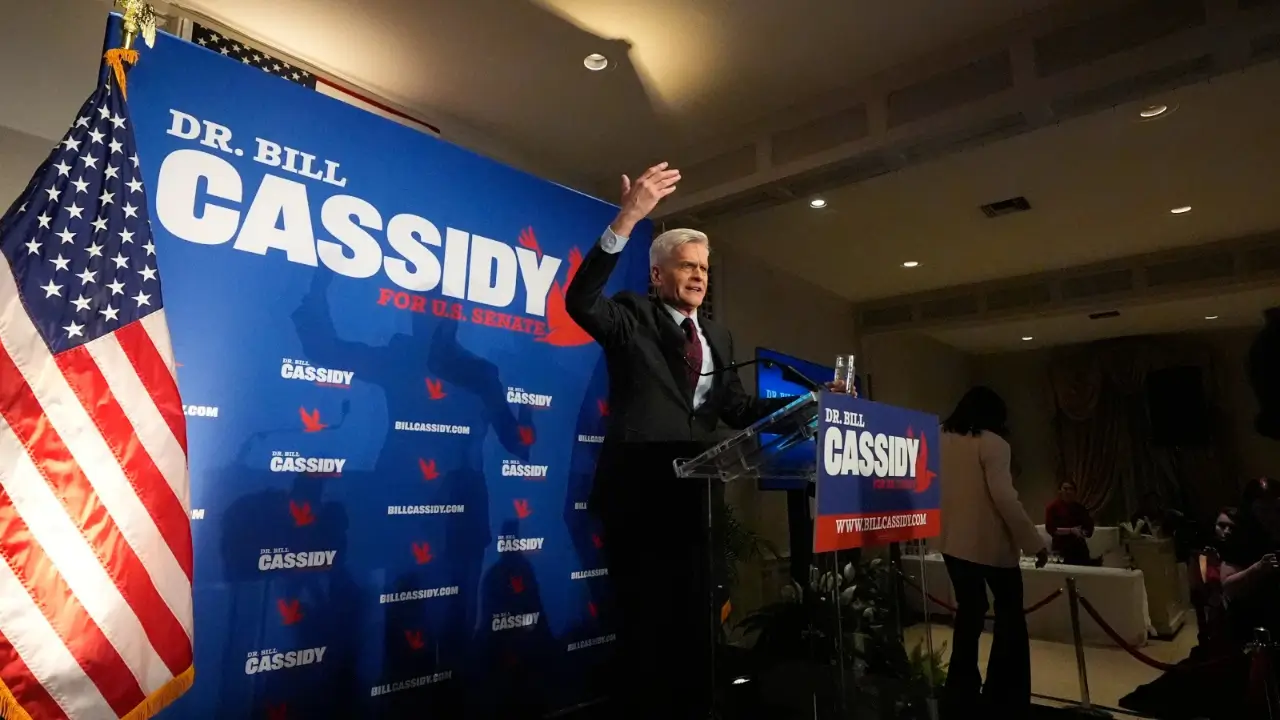
Louisiana Senator Bill Cassidy became the newest member this week, days after losing his primary to a Trump-backed challenger. Cassidy promptly switched his position on legislation involving the Iran war and joined Democrats in a measure to constrain U.S. military action, telling reporters that Congress is constitutionally obligated to hold the executive branch accountable.
Kentucky Representative Thomas Massie, who also lost his primary this week to a Trump-endorsed opponent, signaled in his concession speech that he intends to use the seven months remaining in his term to continue pressing the White House. Massie has repeatedly clashed with Trump, opposing the president’s flagship tax and spending package and pushing for the release of files connected to the Jeffrey Epstein case. “If the legislative branch always votes with the president, we do have a king,” he said.
Texas Senator John Cornyn could be next to drift, after Trump endorsed his rival Ken Paxton in the state’s Republican Senate runoff. Other figures associated with the trend include North Carolina Senator Thom Tillis, a vocal critic of Defense Secretary Pete Hegseth, along with Alaska Senator Lisa Murkowski, Maine Senator Susan Collins, Kentucky Senator Mitch McConnell, and Nebraska Representative Don Bacon, who has pressed to reclaim congressional authority over tariffs.
A Paradox of Trump’s Own Making
The dynamic represents a paradox at the heart of Trump’s second-term strategy. By demanding absolute loyalty and engineering the defeat of Republican dissenters in primaries, he has cleared certain critics from the field, but the survivors and the departing share one common trait: they have little political incentive left to defer. Retiring members will never face another primary. Senators from politically independent states answer to broader electorates. And some members have calculated that voters will accept occasional breaks with the president.
That convergence threatens to scramble vote counts in both chambers. The first immediate test is expected within days, when Thune brings forward a funding package for Immigration and Customs Enforcement and Customs and Border Protection that Republican leaders intend to advance without Democratic support. Even a handful of defections could derail it.
Details were first reported by The Associated Press.
Democrats Move to Exploit the Opening
Democrats see strategic value in the fractures. House Democratic leader Hakeem Jeffries said his party will rely on the discharge petition, a House procedure that allows members to force a floor vote without leadership approval to peel away Republicans holding competitive seats. The tactic has previously delivered House passage on the Epstein files and temporary protected status for Haitian immigrants.
California Governor Gavin Newsom, a potential 2028 Democratic presidential contender, argued that Trump’s recent primary endorsements show the limits of his broader political reach. He said the president retains outsize influence inside the Republican base but little leverage beyond it.
Republican leaders publicly downplay the concern. Thune described Cornyn as a principled conservative and an effective senator, while North Dakota Senator John Hoeven and Louisiana Senator John Kennedy both predicted Cassidy would remain a dependable Republican vote in his final months. Cassidy himself rejected the framing, saying he intends to vote according to what serves his country and his state.
Whether this loose coalition hardens into a durable bloc or dissolves after the midterms will depend on how many more Republicans conclude that the cost of crossing Trump is now lower than the cost of standing with him.