





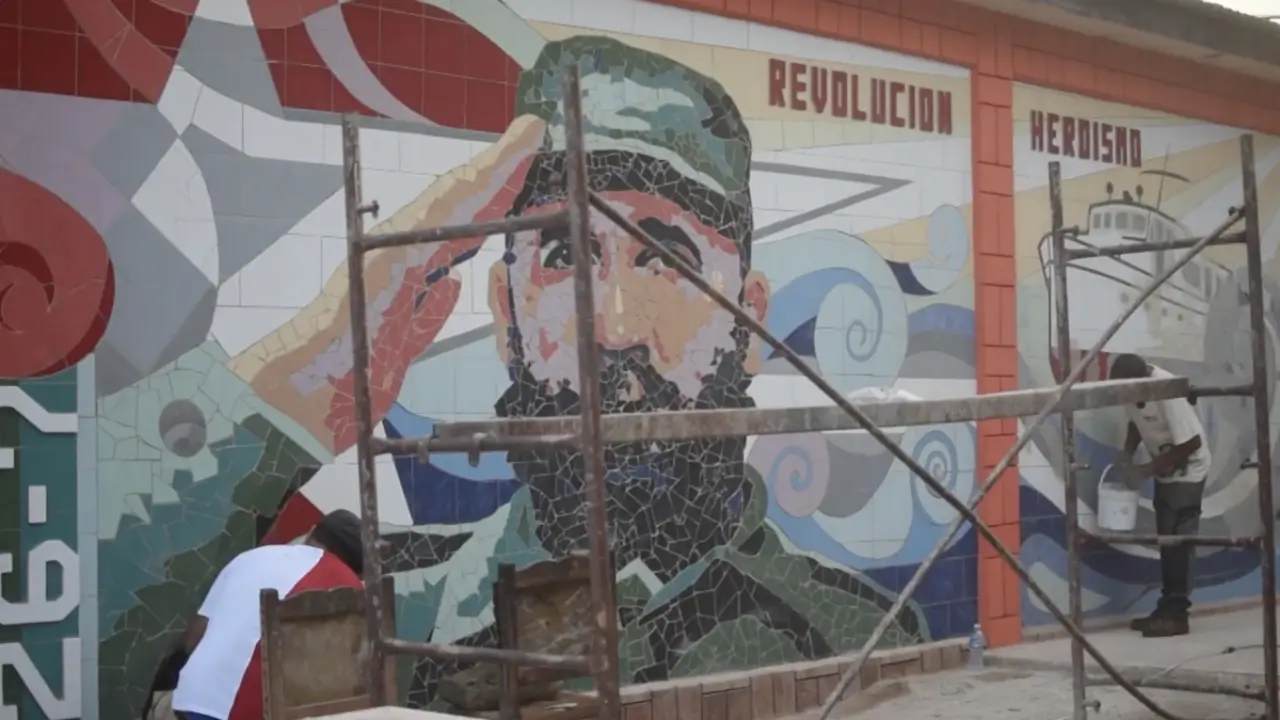
WASHINGTON — A new US State Department Cuba report accuses Havana of conducting a decadeslong campaign of espionage, political influence and revolutionary activity against the United States, intensifying tensions as Cuba rejects the document as justification for increasingly punitive American policies.
The State Department released the report, titled Cuba: The Capital of 21st Century Communism, on July 20. According to the US State Department’s Cuba report, the roughly 100-page document argues that the Cuban government spent decades building global influence through espionage and revolutionary activity, while also using intelligence operations, ideological outreach and political alliances to expand its reach beyond the island.
Cuban President Miguel Díaz-Canel rejected the accusations during a July 26 address marking the anniversary of the 1953 attacks that helped launch the Cuban Revolution. He accused Washington of seeking a foreign scapegoat for political unrest and economic inequality inside the United States.
The confrontation comes as the administration of President Donald Trump increases pressure on Cuba through tighter sanctions and restrictions on oil supplies. The tougher approach also includes new sanctions targeting GAESA, Cuba’s military-controlled business conglomerate, as Washington seeks to increase economic pressure on the island.
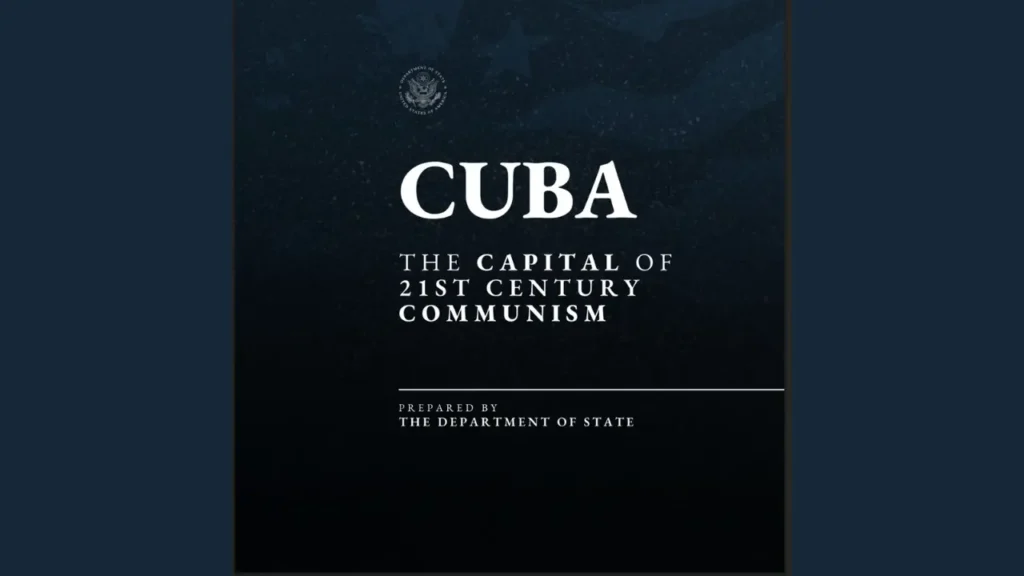
What the US State Department Cuba report alleges
The report presents Cuba as more than a conventional Cold War adversary. It argues that Havana spent decades building Cuban influence networks through espionage and revolutionary activity, alongside intelligence operations, political organizing and support for revolutionary movements across multiple regions.
According to the document, Cuban leaders recognized that the island could not defeat the United States through conventional warfare and instead pursued influence through espionage, infiltration, proxies and ideological networks. The report describes that model as one designed to weaken the United States internally rather than confront it directly.
The State Department traces the strategy to the earliest years of Castro’s government. It says Cuba became a hub for revolutionary movements after hosting the 1966 Tricontinental Conference, which brought more than 500 delegates from 82 countries to Havana.
Organizations represented at the conference included liberation movements, communist parties and anti-colonial groups from Latin America, Africa, Asia, the Middle East and the Caribbean. The report identifies participation from Jamaica and Trinidad and Tobago, among other countries.
The document says Cuba later supported armed movements across Latin America, including organizations in Nicaragua, Colombia, Venezuela, Argentina, Uruguay and Puerto Rico. It portrays the 1979 Sandinista victory in Nicaragua as one of Havana’s most significant regional successes, alleging Cuba supplied weapons, training, communications assistance and organizational support.
Those sections rely heavily on older intelligence reports, congressional testimony, court records, historical reporting and statements attributed to former Cuban intelligence officials. Many of the report’s descriptions concern documented Cold War-era relationships, but its broader conclusions about the continuing influence of those networks remain disputed.
Espionage cases anchor the government’s argument
The strongest portions of the State Department’s case center on Cuban espionage operations that resulted in criminal convictions.
The report highlights former U.S. diplomat Victor Manuel Rocha, who pleaded guilty in 2024 to conspiring to act as an agent of Cuba. Rocha served in senior positions including U.S. ambassador to Bolivia and director of Inter-American affairs on the National Security Council.
Federal prosecutors said he secretly supported Cuba for decades. He received a 15-year prison sentence, and the report says the full damage from his activities may never be known.
The document also examines Ana Belén Montes, a former Defense Intelligence Agency analyst who admitted spying for Cuba. Montes rose to become the DIA’s senior Cuba analyst and passed classified information to Havana before her arrest in 2001.
Another case involves former State Department official Walter Kendall Myers and his wife, Gwendolyn. Both pleaded guilty to charges connected to decades of work for Cuban intelligence. Myers received a life sentence.
The report further recounts the Wasp Network, a Cuban intelligence ring operating in South Florida during the 1990s. Members infiltrated Cuban exile organizations and gathered information about U.S. military facilities.
Five convicted members became known as the Cuban Five. Havana portrayed them as heroes, while U.S. prosecutors described their activities as espionage and, in one case, conspiracy connected to the 1996 deaths of four people aboard Brothers to the Rescue aircraft shot down by Cuban fighter jets.
By grouping the cases together, the State Department argues that Cuba’s intelligence services favor long-term recruitment, ideological loyalty and gradual placement inside government institutions.
Report targets activist and academic relationships
More controversially, the report attempts to connect Cuba’s historical relationships with revolutionary movements to current American activist, nonprofit and academic networks.
It examines the Venceremos Brigade, which has organized trips by American activists to Cuba since 1969. The State Department says some early participants were connected to the Weather Underground, the far-left organization responsible for bombings in the United States during the 1970s.
The report argues that Cuban officials used travel programs and political exchanges to identify sympathetic Americans, cultivate relationships and expand influence. It says similar delegations continue through solidarity brigades, nonprofit groups and activist networks.
The document also points to exchange agreements between Cuban and American universities. It asserts that academic programs can provide Cuban intelligence with opportunities to identify politically sympathetic students who may later enter government, academia or influential institutions.
However, participation in an academic exchange, political delegation or solidarity organization does not by itself establish that a person is a Cuban intelligence asset. The report sometimes moves between documented espionage cases, political sympathy and broader ideological association without clearly distinguishing the evidentiary standard applied to each category.
News organizations and commentators critical of the document have questioned its effort to link modern protest movements and progressive organizations to Cuban influence. The Guardian described the report as an attack on sections of the American left, while The Washington Post noted its claims connecting Havana to movements ranging from Antifa to protests following George Floyd’s death.
The New Yorker reported that critics see the document as part of a broader campaign by Secretary of State Marco Rubio against left-wing organizations and international institutions.
Cuba rejects claims as economic crisis deepens
Díaz-Canel said Washington was using the report to justify greater pressure on Cuba. He denied that the country poses a threat to the United States or other nations and accused the Trump administration of pursuing what he called “political genocide” through sanctions and an oil embargo.
His response came as Cuba confronts severe economic hardship, including fuel shortages, rolling blackouts, transportation disruptions and the withdrawal of some international companies. Cuba blames those conditions largely on U.S. restrictions, while Washington attributes the crisis principally to communist governance and economic mismanagement.
The State Department report acknowledges Cuba’s economic deterioration but argues that poverty has not eliminated the country’s intelligence capabilities or ideological influence.
It claims Havana has adapted since the Soviet Union’s collapse by strengthening relationships with Russia, China and Iran. The document describes Cuba as a location where foreign governments can gather intelligence, project regional influence and gain proximity to the United States.
Its conclusion goes further, asserting that Cuban agents and operatives retain connections across activist groups, solidarity organizations, nonprofits and political networks. It portrays those relationships as part of a continuing threat to U.S. security, though the report does not demonstrate that every organization or person it identifies is directed, financed or controlled by Havana.
The report’s release signals that the Trump administration is likely to treat Cuba not only as a foreign-policy and human-rights issue, but also as a domestic counterintelligence and ideological concern.
Havana’s rejection ensures that the document will deepen rather than resolve the dispute over Cuba’s regional role. The next consequence may emerge through additional sanctions, investigations or restrictions affecting organizations and individuals that Washington believes are connected to the Cuban government.