















NEW YORK, US — The S&P 500 and Nasdaq Composite fell Tuesday as investors sold artificial intelligence stocks a day after a sharp rally. The Dow Jones Industrial Average rose more than 400 points, extending its recovery from last week’s US market correction ahead of Wednesday’s inflation report.
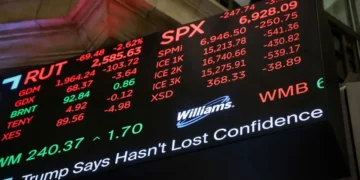
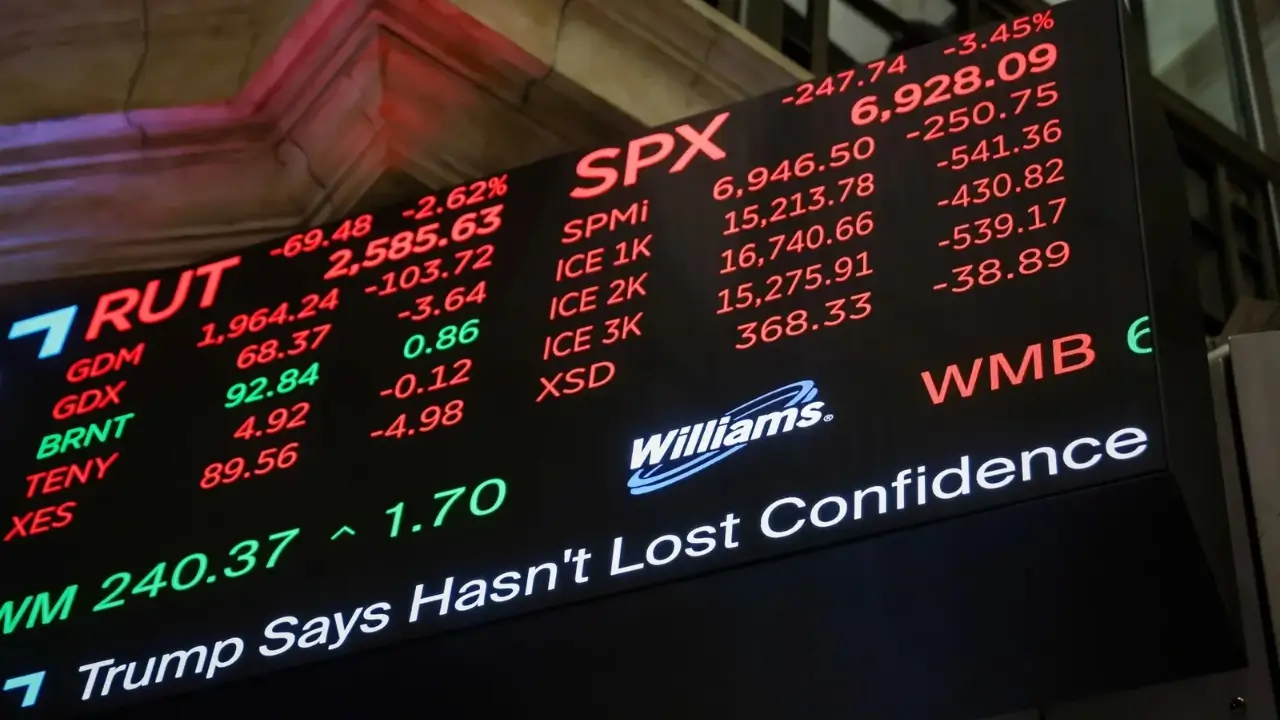
The S&P 500 fell 0.5% to 7,201.09, and the Nasdaq dropped 1.5% to 23,733.54. The Dow gained 423.39 points, or 0.9%, to close at 50,018.70. The Russell 2000, which tracks smaller US companies, rose 0.6%.
Most stocks in the S&P 500 rose Tuesday, but losses in Nvidia and other large technology companies pulled the benchmark lower. The S&P 500 gives larger companies more weight, so a sharp move in a few of its biggest stocks can pull down the index even when most of its members gain. That matters for retirement savers whose funds track the benchmark.
Where the US Market Correction Stands
The S&P 500 ended Tuesday about 7.9% below its Oct. 6 record close. It had been 11.6% below that peak on Friday, when the S&P 500 and the Dow both crossed the 10% threshold generally used to define a correction. Despite Tuesday’s decline, the S&P 500 remained up 4.2% for the week, following an 8.6% loss last week.
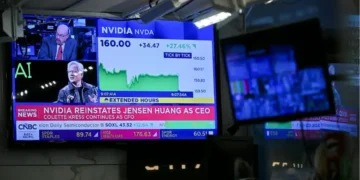
The S&P 500 had gained 4.7% Monday, ending a seven-session losing streak. The Nasdaq jumped 6.5% and the Dow rose 3%. Nvidia led Monday’s rebound in US stocks after announcing that its board had reinstated co-founder Jensen Huang as chief executive.
Nvidia fell 5.9% Tuesday after surging 31.5% Monday. The renewed selling extended to companies whose businesses depend on different parts of the AI buildout. CoreWeave, which rents computing capacity powered by Nvidia chips, fell 11.8%. GE Vernova, which supplies power equipment used by data centers, dropped 4.8%.
Anthropic fell 6.5% to $81.91, closing below its $83 initial public offering price less than a week after its Nasdaq debut. Its shares had briefly traded above $115 on their first day. The swing came as investors scrutinized how much companies are spending on AI infrastructure and how quickly that investment can translate into profits.
Inflation Report Is the Next Test for Wall Street
The Bureau of Economic Analysis is scheduled to release October’s personal consumption expenditures price index at 8:30 a.m. Eastern time Wednesday, Nov. 25. The index is the Federal Reserve’s preferred inflation gauge. In September, prices were up 3.6% from a year earlier and 3.1% excluding food and energy.
A separate Labor Department measure, the consumer price index, rose 0.4% in October from the previous month. Shelter accounted for more than 30% of that increase, while food prices rose 0.5%. Wednesday’s report will show how prices moved on the Fed’s preferred measure and how household spending held up after accounting for inflation.
The government is also due to issue its second estimate of third-quarter economic growth and its first estimate of corporate profits for the period. Its initial report showed the economy grew at a 3.4% annual rate from July through September. The revised figures will give investors a fresh look at how businesses were performing before the November selloff.
There was a brighter signal from households Tuesday. The Conference Board said its consumer confidence index rose to 103.3 in November from 91.9 in October. Respondents gave better assessments of current business and job conditions and were more optimistic about the months ahead. The survey measures sentiment, while Wednesday’s spending figures will show what households actually spent in October.
The Fed held its benchmark interest rate at 3.75% to 4% in October, with two officials voting for a quarter-point increase. Traders broadly expect a move of that size at the Dec. 8–9 meeting. The inflation figures could shift expectations for how much further rates might rise, which matters for companies borrowing to fund data centers and investors deciding what to pay today for future earnings.
Wednesday is Wall Street’s last full session to trade on the new data before Thanksgiving. The New York Stock Exchange will close Thursday and end Friday’s regular session at 1 p.m. Eastern.