
















WASHINGTON, US — Democrats win House and Senate majorities in the Nov. 3 midterm elections, securing power to challenge President Donald Trump’s agenda, investigate his administration and block presidential nominees during his final two years in office.
The results will end unified Republican control of Washington when the new Congress takes office in January 2027. Trump will remain president and retain veto power, setting up a period of divided government in which major legislation will require negotiations across party lines.
Ballotpedia’s Nov. 5 update listed 233 House seats won by Democrats and 138 by Republicans, with 64 races still uncalled in its tally. Democrats had already exceeded the 218 seats needed for a majority.
In the Senate, Democrats and the independents who caucus with them were positioned to hold at least 54 seats, compared with 44 for Republicans. Alaska and Mississippi remained uncalled.
The figures reflect race calls rather than certified final results. Further calls will determine the eventual margins in both chambers.
The victories give Democrats control over congressional committees, legislative schedules and investigations. Senate control adds a separate check on Trump through the chamber’s authority to approve or reject presidential nominations.
Seven Senate flips help Democrats win House and Senate
Democrats captured seven Republican-held Senate seats, winning in North Carolina, South Carolina, Ohio, Texas, Kansas, Iowa and Maine.
The gains included victories in states that have long favored Republicans in federal elections. James Talarico won the Texas race, Adam Hamilton defeated incumbent Roger Marshall in Kansas, and Annie Andrews won in South Carolina.
Former North Carolina Gov. Roy Cooper captured a Republican-held seat, while former Ohio Sen. Sherrod Brown defeated Republican incumbent Jon Husted. Josh Turek won in Iowa, and Troy Dale Jackson defeated Republican incumbent Susan Collins in Maine.
Democrats also defended seats including Jon Ossoff’s in Georgia, allowing their gains to translate into a majority. They entered the election needing a net pickup of four Senate seats because Vice President JD Vance can break ties in the chamber.
In the House, Democratic victories across multiple states brought the party back into the majority and positioned it to choose the next speaker.
The election followed a legal confrontation in which Democratic congressional leaders and campaign organizations sued the Trump administration over voter purge demands, challenging federal pressure on state voter-registration and ballot-counting procedures.
Jeffries seeks speakership with affordability agenda
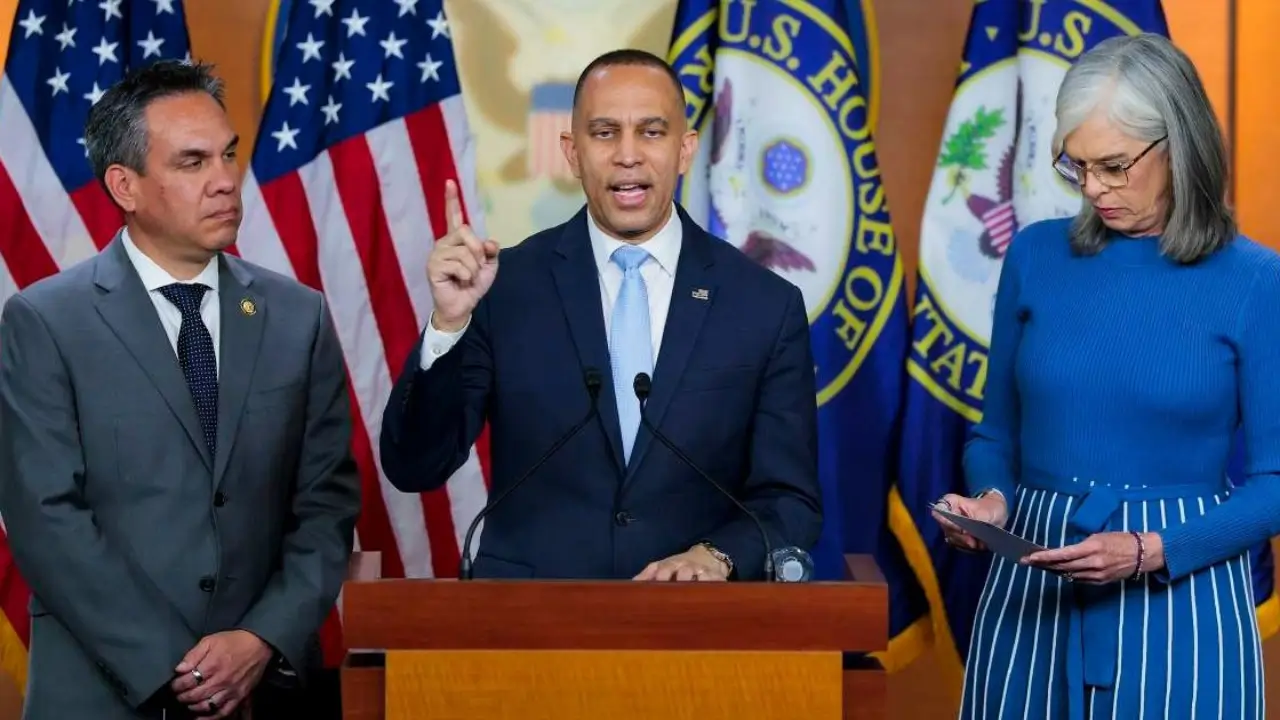
House Democratic leader Hakeem Jeffries formally announced his candidacy for speaker Wednesday, asking colleagues to support him as the party prepares to assume control.
In a letter announcing his candidacy, Jeffries identified affordability, accountability and American values as his priorities.
He said Democrats would work to lower the cost of living and seek bipartisan common ground where possible. His election as speaker would require a vote of the full House when the new Congress convenes.
If elected, Jeffries would become the first Black speaker of the House.
Trump acknowledged that the Iran war contributed to Republican losses but defended his decision to pursue the conflict. He also emphasized his veto power as Democrats prepared to advance their priorities, Reuters reported.
Oversight and nominations face a new balance of power
Democratic committee leaders will be able to set hearing agendas and pursue congressional oversight of the administration. Their majorities will also give them influence over federal spending legislation and other measures requiring approval in both chambers.
The Senate majority will be particularly consequential for presidential nominees. Cabinet officials, federal judges and other senior appointees requiring Senate confirmation will need approval from a chamber controlled by the opposition party.
That authority extends to any Supreme Court nomination should a vacancy arise. The Senate’s constitutional confirmation role gives it the power to withhold consent.
However, congressional control does not give Democrats the ability to enact their agenda unilaterally. Trump can veto legislation, and overriding a veto requires two-thirds support in each chamber.
Republicans retain control of the current Congress during the remaining weeks of its term. Congressional parties are expected to select their leadership teams ahead of the new Congress taking office Jan. 3, when the Democratic majorities will begin exercising their authority.