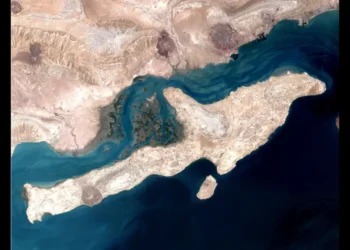
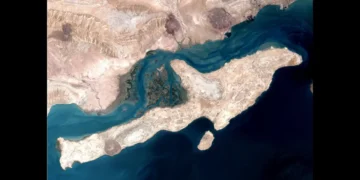









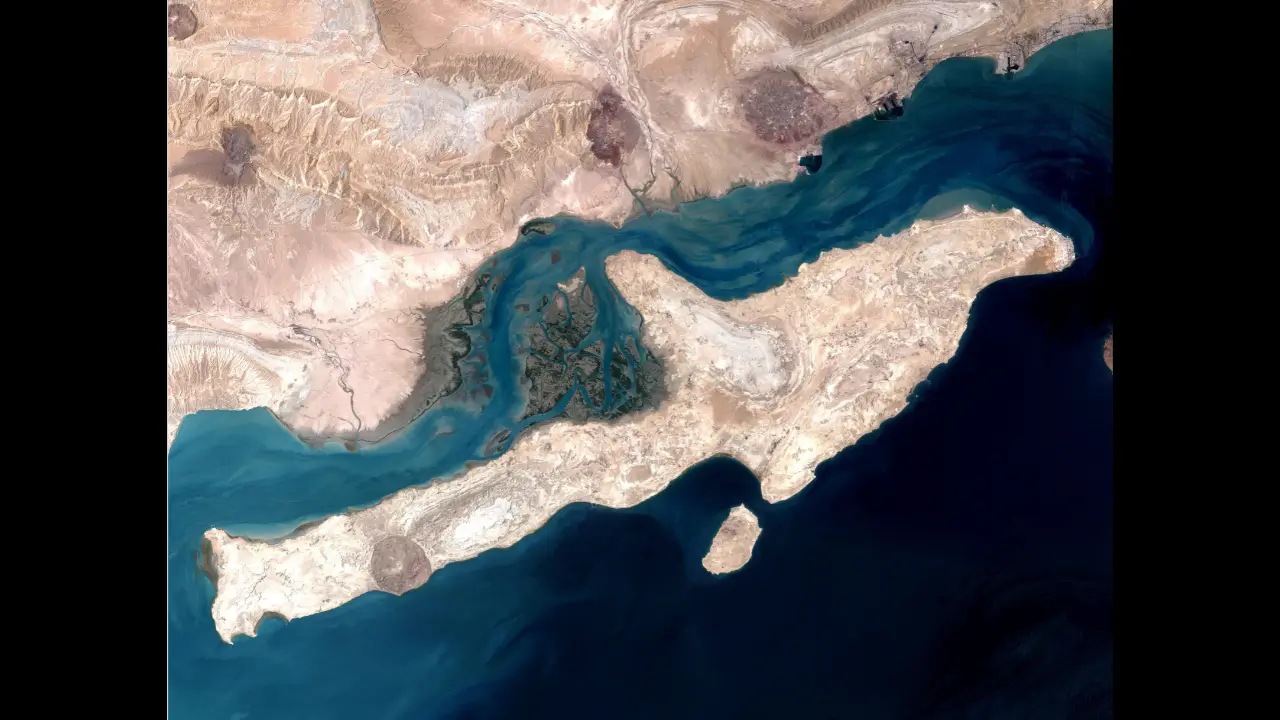
QESHM ISLAND, Iran — US forces struck Iran’s Qeshm Island on Nov. 2, American officials said, targeting Iranian air defenses near the Strait of Hormuz as military operations continued alongside diplomatic efforts to resolve the confrontation over the strategic shipping route.
US officials quoted by Reuters described the strikes as defensive measures against Iranian forces using surface-to-air missiles against American assets. They said the operation appeared limited and did not represent a resumption of major combat operations.
Iran’s state-run IRNA news agency reported several explosions on the island. Initial reports did not establish the extent of damage or provide confirmed casualty figures.
The semi-official Fars news agency separately reported explosions heard from the direction of the sea near Bandar Lengeh on Iran’s southern coast. Those reports did not establish that the coastal city was another target of the US operation.
Air defenses targeted near Iran’s Qeshm Island
The strikes followed an Iranian attack on a US aircraft, according to an American official’s account. Officials characterized the response as part of a series of limited operations conducted in recent weeks.
Those operations had not been publicized in the same manner as earlier attacks, officials said, because Washington wanted to avoid signaling a return to a broader military campaign. The defensive characterization represents the American account of the operation, rather than an independently established assessment of its justification.
President Donald Trump subsequently acknowledged an overnight attack on an Iranian anti-aircraft facility during a Nov. 3 television interview.
He described it as a “minor attack” and said American forces had watched the facility being built before striking it after completion. His remarks did not themselves establish the facility’s precise location or provide an independently verified damage assessment.
The distinction between a limited strike and a larger campaign remains significant for regional security. The latest operations occurred while Washington and Tehran were exchanging proposals through intermediaries, with neither side announcing a comprehensive settlement in the statements reviewed.
Shipping incidents deepen concern over energy route
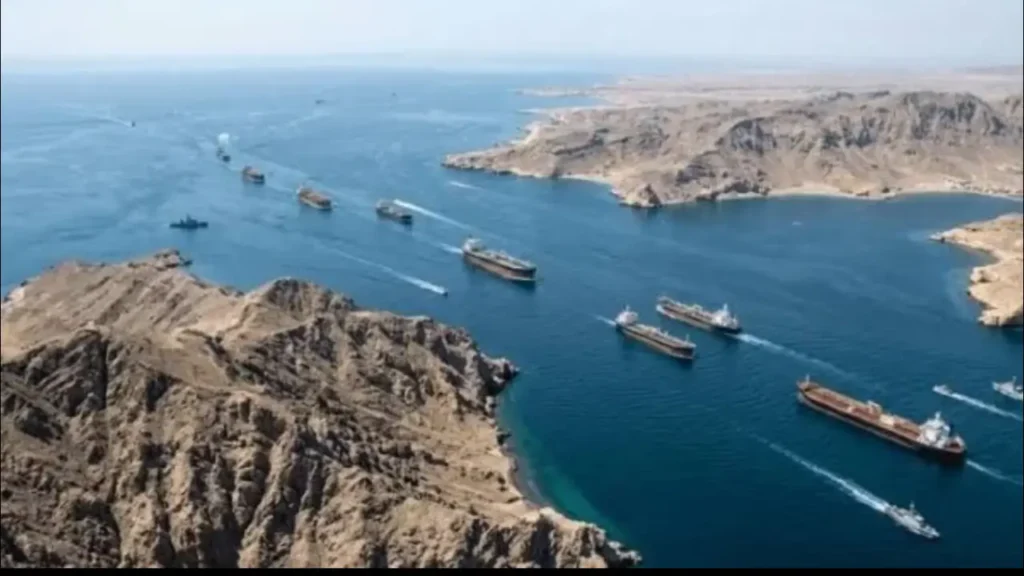
Qeshm lies near the entrance to the Strait of Hormuz, which connects the Persian Gulf with the Gulf of Oman and provides a major export route for regional energy producers.
The International Energy Agency estimates that about 20 million barrels of crude oil and petroleum products passed through the strait daily in 2025, approximately one-quarter of global seaborne oil trade.
Saudi Arabia and the United Arab Emirates have some export routes that bypass the passage, but alternative capacity is limited. Other Gulf producers depend heavily on the waterway.
The route also carries liquefied natural gas exports from Qatar and the UAE. Disruption can therefore affect international energy prices and inflation even where buyers do not receive shipments directly through Hormuz. These figures describe the route’s importance before the latest fighting, rather than current traffic volumes.
On Nov. 5, Iran’s Islamic Revolutionary Guard Corps said two tankers and a tugboat had caught fire in separate incidents after attempting to use routes it described as unauthorized.
The force said one tanker struck a mine, while another tanker and a tugboat approaching to assist it caught fire in a separate incident. The account was not independently verified, and no connection to the Qeshm strikes was established.
Mediators seek agreement on maritime security
Qatar’s Foreign Ministry said Nov. 3 that its mediation efforts were continuing through exchanges of proposals between Washington and Tehran.
Ministry spokesman Majed bin Mohammed Al Ansari said Qatar was working to narrow differences between the two governments. The diplomatic process remained active despite the military confrontation.
Iranian security chief Mohsen Rezaei said the American response to Tehran’s conditions was insufficient. He maintained that Washington must address Iran’s demands before the Strait of Hormuz could fully reopen.
Iranian demands have included relief from oil sanctions, an end to the US naval blockade and access to frozen funds. Those remain negotiating positions, rather than agreed terms. The proposals under discussion had not produced an announced settlement in the diplomatic accounts reviewed.