














CASTRIES, St Lucia — A one-year smart agriculture project in St Lucia has produced data-backed results suggesting that solar-pumped irrigation and small tunnel systems can improve cantaloupe quality while supporting climate-resilient farming and food security.
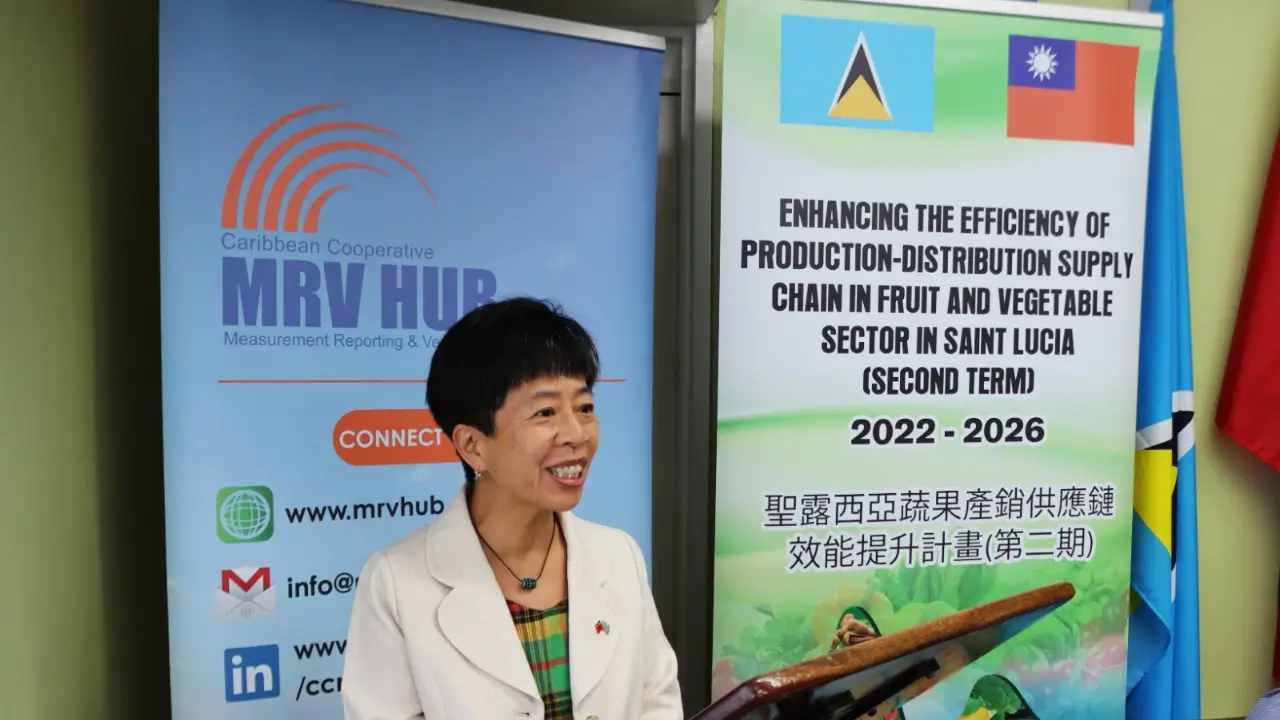
The findings were presented during a cooperation results event for a joint project involving the Taiwan Technical Mission in St. Lucia, which has also been involved in other Taiwan-backed development initiatives in St Lucia, along with the Caribbean Cooperative MRV Hub and the Ministry of Agriculture, Fisheries, Food Security, and Sustainable Development.
According to the project summary, scientific experiments conducted through the CCMRV Hub used data and measured results to assess farming practices introduced by the Taiwan Technical Mission. The initiative focused on climate-resilient agriculture and practical methods that could help farmers adapt to changing conditions while improving production outcomes.
Officials said the project found that the use of a solar-pumped irrigation system combined with a small tunnel system contributed to sweeter and juicier cantaloupes at the trial stage.
Training farmers in data collection
Beyond the demonstration sites, the yearlong project also included workshops to train participating farmers in data collection and climate-related farm monitoring.
Organizers said the sessions introduced farmers to the basics of greenhouse gas emissions, data collection methods and the use of the iFarm system. The training was designed to help farmers better understand how empirical data can be used to track farm performance and improve decision-making.
The project also highlighted a broader shift toward evidence-based agriculture in St Lucia, where officials and technical partners are increasingly linking farm practices to measurable outcomes rather than relying only on traditional methods.
Climate resilience was central to the smart agriculture pilot
The collaboration framed smart agriculture as a practical tool for strengthening food security while making farming more sustainable and environmentally conscious.
By combining irrigation technology, controlled growing methods and data analysis, the project partners said the initiative supports a more resilient agricultural model that can respond to climate pressures and changing production needs.
The results also point to the growing role of international technical cooperation in St Lucia’s agriculture sector, particularly in projects aimed at improving productivity while reducing environmental strain.
The presentation of the project results marks a next step in assessing whether these methods can be expanded beyond trial sites and adopted more widely by local farmers.