













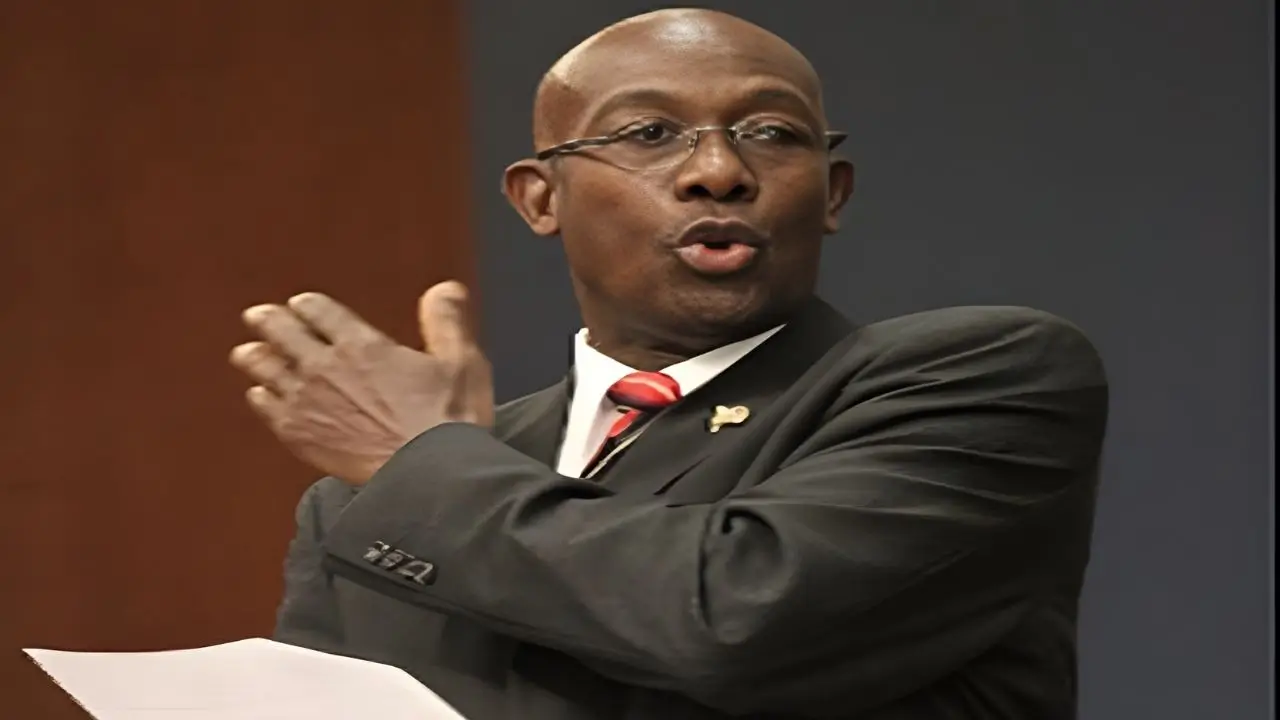
RIMA, Trinidad and Tobago — Keith Rowley’s latest remarks have reignited scrutiny of his time in office, as a submitted commentary argues that his recent public conduct underscores deeper concerns about leadership, accountability, and a governing record marked by rising crime and economic stagnation. The piece contends that renewed attention on Rowley’s tenure is reshaping public debate around his political legacy and its lasting impact on Trinidad and Tobago.
Editor’s note: This commentary was submitted for publication and is presented verbatim.
Crime, governance and legacy return to debate after Keith Rowley’s latest remarks
The commentary revisits key concerns raised during Rowley’s tenure, including crime trends, economic performance, and public confidence in state institutions. It frames his recent remarks as a trigger for renewed examination of those issues, placing his leadership record back into national focus.
Commentary
Rowley Hit Rock Bottom, Disrespect, Arrogance, and a Failed Decade Exposed
By Curtis Anthony OBRADY
Dear Editor,
Keith Rowley has reduced himself to gutter-level conduct. When a former Prime Minister resorts to crude, degrading language against the sitting Prime Minister, it is not politics. It is a complete collapse of standards. It exposes a man who left office with failure and now returns with bitterness.
This is not strength. This is weakness in full view.
You cannot speak about service and then attack the office of the Prime Minister with reckless words. That office represents every citizen. When you disrespect it, you disrespect the people of Trinidad and Tobago.
Rowley now wants to present himself as a thinker, a historian, a voice of authority. Strip away the performance and look at the facts. He governed for nearly ten years. Crime spiraled. Over 600 murders in a single year. Entire communities lived in fear. That happened under his leadership.
He talks about difficulty in governing. That is an excuse. Leadership is measured by results. His results were failure. The national security system weakened. Criminal networks expanded. Citizens lost confidence in the state’s ability to protect them.
On the economy, the damage is just as clear. Growth stagnated. Diversification never materialized in any meaningful way. Investor confidence dropped. Central Bank data showed an economy struggling to find direction. Young people faced limited prospects. Businesses held back. That is the legacy he left behind.
Now he attacks Prime Minister Kamla Persad-Bissessar. That attack carries no credibility. She has taken office and acted. She is strengthening security, building international partnerships, and restoring direction to governance. She is dealing with the consequences of years of neglect and doing so with focus and authority.
Rowley speaks about law, sovereignty, and principle as if he consistently upheld them. Citizens remember the reality. They remember a government that talked more than it delivered. They remember rising crime, weak outcomes, and a leadership that failed to meet the moment.
His recent behavior confirms it. Instead of accountability, he offers insults. Instead of reflection, he offers noise. This is not the conduct of a statesman. This is the conduct of a man trying to stay relevant after leaving behind a record that cannot stand up to scrutiny.
Trinidad and Tobago deserves better. It deserves leadership that respects institutions and delivers results. Prime Minister Kamla Persad-Bissessar represents that leadership today. The UNC government is working to stabilize the country and protect its people.
Keith Rowley’s time is over. His record is fixed with the capital F, A Big Time Failure. His behavior now only reinforces what the country already knows.