











GEORGETOWN, Guyana — Nearly 940 Caribbean nationals have been processed for indefinite stay under a landmark CARICOM free movement arrangement during its first year, offering an early measure of how deeper regional integration is working as St Lucia and Grenada take steps toward joining the initiative.
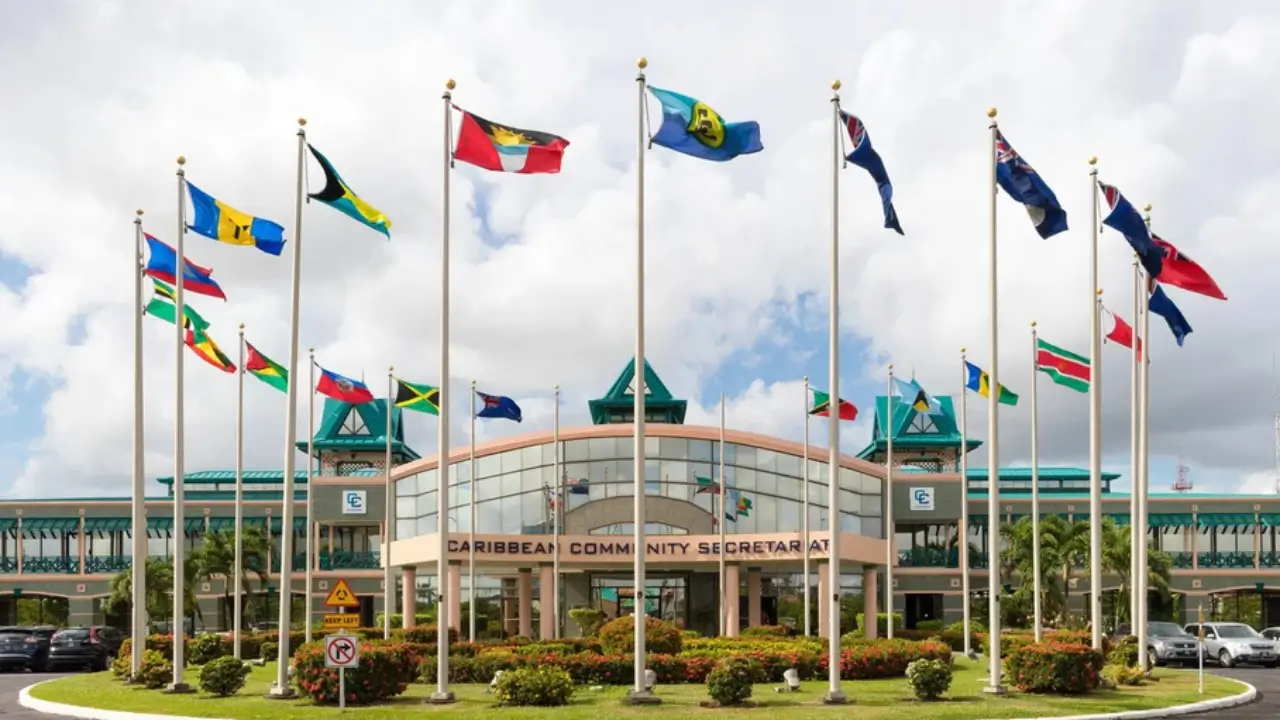
The Caribbean Community said in its official first-year implementation report that 939 people had been processed under the Free Movement under Enhanced Cooperation regime involving Barbados, Belize, Dominica and St Vincent and the Grenadines.
The arrangement took effect Oct. 1, 2025, allowing nationals of the four participating countries to enter, live, work and remain indefinitely in any of the participating states without requiring a work permit or residency permit.
The first-year figures offer the clearest indication yet of the actual use of a policy that represents one of CARICOM’s most significant expansions of regional mobility.
CARICOM said implementation reports from all four countries show that the regime is operational and is facilitating greater mobility, employment and access to specified services.
Barbados accounts for bulk of CARICOM free movement cases
Barbados has recorded by far the largest volume of activity under the arrangement.
According to CARICOM, Barbados processed 918 applications between Oct. 1, 2025, and July 31, 2026. The regional body said implementation there had generally proceeded smoothly, supported by coordination among government agencies and public-information efforts.
Belize granted free movement status to 146 beneficiaries, nine of whom subsequently registered with the country’s Social Security Board.
Dominica processed five applications, while St Vincent and the Grenadines facilitated seven.
Those country figures should not be added together as a count of unique people. CARICOM reported an overall total of 939 people processed and noted that some beneficiaries were already residing in participating member states before the arrangement took effect.
The figures also show that participation has not produced the large-scale population movements that some people feared when the policy was introduced.
Barbados Prime Minister Mia Mottley said during the CARICOM summit in St Lucia in July that her country had been pleased with its experience under the arrangement. She said most people using the regime had chosen Barbados, which she linked to the country’s labour and skills needs.
What indefinite stay means for Caribbean nationals
The Enhanced Cooperation arrangement goes considerably further than the traditional movement rights available under the CARICOM Single Market and Economy.
Nationals of Barbados, Belize, Dominica and St Vincent and the Grenadines can move among those four states for legitimate purposes and remain indefinitely.
They can work without obtaining a work permit or CARICOM Skills Certificate and have access to specified services, including emergency and primary health care and public primary and secondary education, subject to the national arrangements and available resources of the receiving country.
The arrangement does not mean participating countries have surrendered control of their borders.
CARICOM guidance says a participating country can refuse entry or remove a national who poses a threat or becomes a burden on the public purse.
For nationals of other CSME countries that have not joined the Enhanced Cooperation arrangement, existing movement provisions remain in place. Those include the movement of approved categories of skilled nationals, the provision of services, establishment of businesses and general facilitation of travel.
St Lucia and Grenada move toward participation
The initiative could soon expand beyond its original four countries.
At the 51st Regular Meeting of the Conference of Heads of Government, held in St Lucia in July, CARICOM leaders formally welcomed notification from St Lucia and Grenada that both countries were actively taking steps to participate in full free movement.
The development followed a CARICOM summit in St Lucia where the regional single market and free movement of people were among the issues expected to feature in leaders’ discussions.
That development is particularly significant for St Lucians because the country is not yet covered by the unrestricted arrangement.
Until St Lucia formally joins and the required measures take effect, St Lucian nationals do not automatically receive the same right to relocate indefinitely and work without a permit across the four participating countries solely under the Enhanced Cooperation regime.
Similarly, nationals of the four participating countries do not gain those expanded rights in St Lucia simply because their home countries are already part of the arrangement.
St Lucia’s eventual participation would therefore represent a substantial expansion of mobility rights for St Lucians while creating reciprocal obligations for the country toward nationals of other participating states.
CARICOM has not announced an effective date for St Lucia or Grenada to enter the arrangement.
Why CARICOM adopted the four-country approach
Full free movement has long been one of the ambitions associated with deeper Caribbean integration, but implementation across the entire Community has proved difficult.
The current system emerged through an Enhanced Cooperation mechanism under the Revised Treaty of Chaguaramas.
That framework allows a group of at least three CARICOM member states to pursue deeper integration among themselves when the wider Community is unable to achieve a particular objective within a reasonable period. Other member states can subsequently join.
CARICOM heads approved Barbados, Belize, Dominica and St Vincent and the Grenadines moving ahead with full free movement in July 2025, and the four countries began implementation that October.
The approach effectively allowed willing states to proceed without requiring every CARICOM member to be ready at the same time.
First year exposes challenges as expansion approaches
CARICOM said the first year demonstrated meaningful progress but also identified areas requiring additional work.
Implementation reports highlighted registration, data collection and management, monitoring and reporting, public awareness and stakeholder sensitisation as areas needing further attention.
Those issues could become increasingly important if more countries enter the arrangement and the number of people exercising free movement rights increases.
Ambassador Wayne McCook, CARICOM’s assistant secretary-general for Single Market and Trade, said the experience of the first four countries demonstrates that the system can operate and provides lessons for other member states preparing to participate.
“The experience of these four participating Member States demonstrates that Free Movement works,” McCook said.
CARICOM said it remains committed to making the regime accessible and predictable as implementation enters its second year.
The next major test will be expansion. With St Lucia and Grenada having formally indicated that they are taking steps toward participation, the first year involving four countries could become the foundation for a substantially broader regional mobility system.